Salad Has No Kill Step: What Washing Produce Can and Cannot Do
Wash produce under running water, and know what that buys you: less soil, fewer surface microbes, not sterility. No rinse, soak, or produce wash reliably removes Salmonella, E. coli, or Cyclospora, and nothing removes pathogens sealed inside cut or damaged tissue. Cooking to 158°F does. So the real decisions are which foods you eat raw, who in your household eats them, and what you swap in during an active outbreak. The category stays; the preparation moves.
Cooking is the only kill step
Heat to 158°F kills Cyclospora and the major bacterial pathogens. No washing method does.
Washing is risk reduction, not sterilization
Running water removes soil and some surface microbes. Skip soaps, bleach, and produce washes; none beats water, and produce absorbs residues.
Risk groups should eat cooked during outbreaks
Pregnancy, immunosuppression, age past 65, and young children shift from raw greens to cooked while an outbreak source is unidentified.
Respond to recalls by lot, not by category
Match brand, code, and dates. Toss the match, substitute the ingredient, keep eating vegetables.
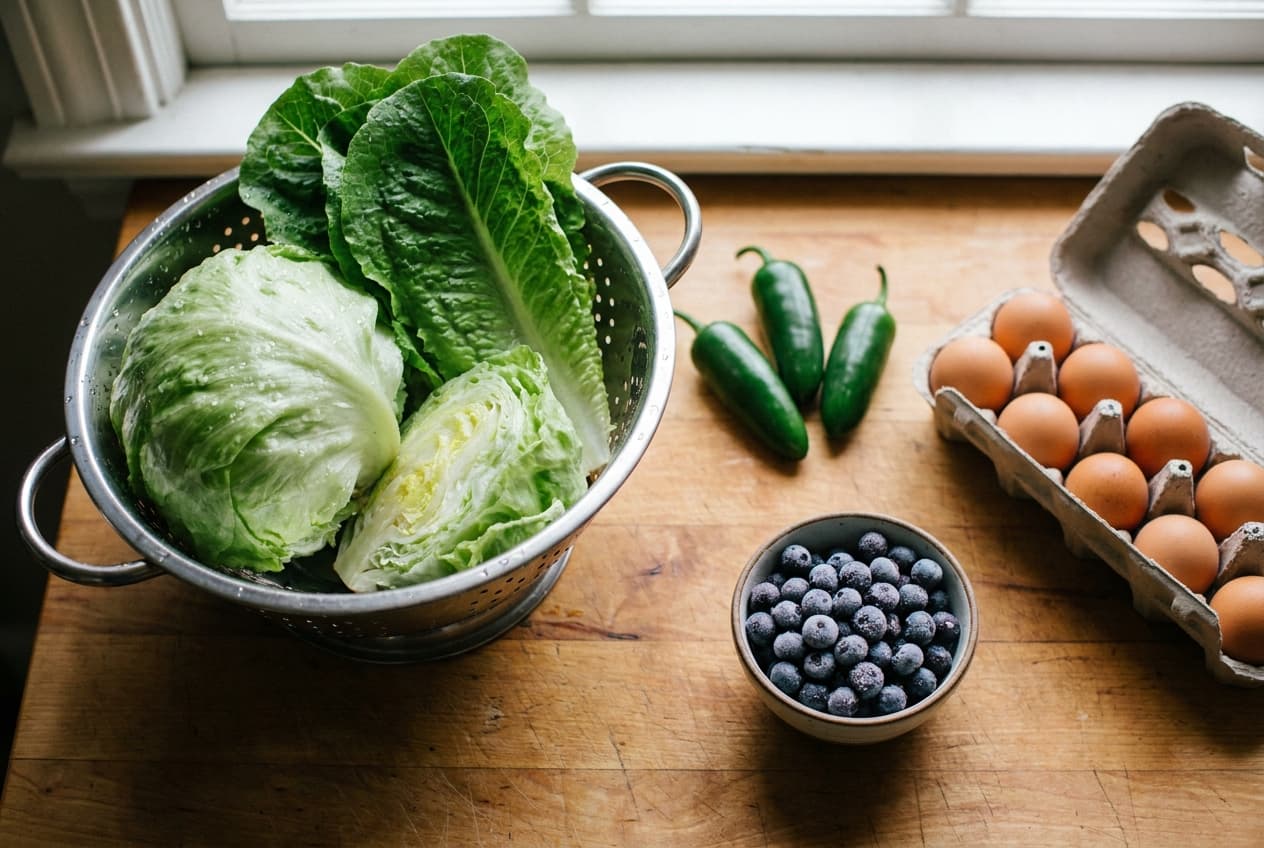
Why raw produce keeps causing outbreaks
Chicken is dangerous and everyone knows it, so chicken gets cooked, and cooking is a wall. Pathogens on lettuce face no wall. Between the field and your fork, nothing reliably kills what got on a vegetable you eat raw.
Contamination can arrive before harvest, from irrigation water, runoff, wildlife, or workers, and after harvest, from equipment, pooled wash water, and the cutting and shredding that turn one contaminated head into a thousand bags. Cut edges leak nutrients that feed bacterial growth, and some pathogens end up internalized in the leaf where no rinse can reach them.
No single company explains this. The vulnerability is built into the category, which is why leafy greens account for an outsized share of U.S. foodborne illness in attribution models, with lettuce driving most of it, and why the pattern repeats across seasons, countries, and farming systems.
Where contamination enters, and where you come in
Most of the risk is decided long before the grocery store. The kitchen controls a thin final slice.
Field
Irrigation water, runoff, wildlife, soil, workers
The most common entry points, addressed by agricultural water rules still phasing in through 2027.
Harvest and processing
Equipment, pooled wash water, cutting and shredding
One contaminated lot can spread through shared water and blades to many downstream bags.
Distribution
One ingredient, many products, many states
Centralized supply chains turn a single farm problem into a multistate recall list.
Your kitchen
Rinsing, separation, refrigeration, cooking
The only step you control. Cooking is the one intervention here that actually kills pathogens.
The kill step table
A kill step is a point in the chain that reliably destroys pathogens. Most food categories have one. The foods that keep showing up in outbreak headlines mostly do not.
Which foods have a kill step
Cooked meat and poultry
- Kill step
- Full cooking
- What that means in practice
- The wall that makes inherently risky foods routine.
Cooked vegetables
- Kill step
- Heat to 158°F or higher
- What that means in practice
- Kills Cyclospora and the major bacterial pathogens. The safest way to eat produce.
Raw leafy greens and salad
- Kill step
- None
- What that means in practice
- Washing reduces risk and cannot eliminate it. Safety was decided upstream.
Raw sprouts
- Kill step
- None, plus warm wet growing conditions
- What that means in practice
- The seed and the growing environment incubate bacteria. Highest-risk raw produce there is.
Frozen berries eaten raw
- Kill step
- None; freezing preserves pathogens
- What that means in practice
- Freezing is not a kill step. Cook or bake them for higher-risk eaters.
Melons and cut fruit
- Kill step
- None after cutting
- What that means in practice
- The knife carries rind contamination inward. Wash the rind, refrigerate cut fruit promptly.
| Food | Kill step | What that means in practice |
|---|---|---|
| Cooked meat and poultry | Full cooking | The wall that makes inherently risky foods routine. |
| Cooked vegetables | Heat to 158°F or higher | Kills Cyclospora and the major bacterial pathogens. The safest way to eat produce. |
| Raw leafy greens and salad | None | Washing reduces risk and cannot eliminate it. Safety was decided upstream. |
| Raw sprouts | None, plus warm wet growing conditions | The seed and the growing environment incubate bacteria. Highest-risk raw produce there is. |
| Frozen berries eaten raw | None; freezing preserves pathogens | Freezing is not a kill step. Cook or bake them for higher-risk eaters. |
| Melons and cut fruit | None after cutting | The knife carries rind contamination inward. Wash the rind, refrigerate cut fruit promptly. |
158°F / 70°C is the temperature FDA and CDC cite for killing Cyclospora, which also resists the chlorine used in commercial produce washing.
What washing actually does
Washing produce under cold running water removes soil, debris, and some fraction of surface microbes. That is worth doing, and it is the whole benefit. It does not sterilize a leaf, it cannot reach internalized bacteria, and Cyclospora in particular shrugs off the sanitizer concentrations used in commercial wash water. Those sanitizers exist mostly to keep one dirty batch from contaminating the shared water, not to disinfect each piece.
By the time a contaminated vegetable is in your sink, every decision that mattered was made weeks earlier and hundreds of miles away. Wash for the soil. Do not expect the rinse to undo the supply chain.
Use running water and your hands. Rub gently, dry with a clean towel; drying removes additional microbes.
Skip soap, dish detergent, bleach, and commercial produce washes. None shows a meaningful pathogen advantage over water, produce absorbs residues, and soap can make you sick on its own.
Do not rewash bagged greens labeled prewashed or triple-washed. Your sink and cutting board are more likely to add contamination than a rewash is to remove any.
Discard the outer leaves of lettuce and cabbage heads; they carry the most field contact.
Wash before cutting, not after. A knife drags surface contamination through the interior, melons especially.
Never try to wash a recalled product safe. A recall means contamination is suspected inside that lot; no kitchen process reverses it.
Raw vs cooked, by risk group
The same salad is a different decision depending on who is eating it. Severe foodborne outcomes concentrate in pregnancy, immunosuppression, older adults, and young children, so the reasonable threshold moves with the eater, and with whether an active outbreak has an identified source.
A reasonable produce posture
Pregnant
- During an active unresolved outbreak
- Cooked greens, no raw sprouts, skip unverifiable restaurant salads
- Steady state
- Washed raw produce fine; keep avoiding raw sprouts
Immunocompromised
- During an active unresolved outbreak
- Cooked vegetables as the default
- Steady state
- Cooked-leaning; raw from sources you trust, no raw sprouts
Adults past 65
- During an active unresolved outbreak
- Shift salads to cooked greens, slaws from unaffected produce
- Steady state
- Washed raw produce fine; caution with sprouts and cut fruit left out
Young children
- During an active unresolved outbreak
- Cooked vegetables, no raw sprouts
- Steady state
- Washed raw produce fine; no raw sprouts
Everyone else
- During an active unresolved outbreak
- Avoid the implicated product exactly; eat everything else
- Steady state
- Wash it, eat it, and keep the vegetable habit
| Who | During an active unresolved outbreak | Steady state |
|---|---|---|
| Pregnant | Cooked greens, no raw sprouts, skip unverifiable restaurant salads | Washed raw produce fine; keep avoiding raw sprouts |
| Immunocompromised | Cooked vegetables as the default | Cooked-leaning; raw from sources you trust, no raw sprouts |
| Adults past 65 | Shift salads to cooked greens, slaws from unaffected produce | Washed raw produce fine; caution with sprouts and cut fruit left out |
| Young children | Cooked vegetables, no raw sprouts | Washed raw produce fine; no raw sprouts |
| Everyone else | Avoid the implicated product exactly; eat everything else | Wash it, eat it, and keep the vegetable habit |
An unresolved outbreak means investigators have not yet named a food. Once a specific lot is named, precision replaces breadth: avoid the named product, relax about the category.
When a recall reaches your kitchen
Recalls are lot-level events, and your response should be too. The whole thing fits in the time it takes to unload the groceries.
Substitutions that keep the diet intact
Iceberg or bagged salad
- Swap in
- Cabbage slaw, cooked kale or chard, roasted broccoli, frozen greens, or an unaffected lettuce once one is named
Fresh peppers
- Swap in
- Cooked serrano or bell pepper, dried chiles, or a processed hot sauce made with a validated kill step
Berries under advisory
- Swap in
- A different frozen lot, cooked or baked berries, or citrus for the week
The salad habit itself
- Swap in
- Grain and bean bowls with roasted vegetables, soups, slaws; the pattern matters more than the ingredient
| If this is implicated | Swap in |
|---|---|
| Iceberg or bagged salad | Cabbage slaw, cooked kale or chard, roasted broccoli, frozen greens, or an unaffected lettuce once one is named |
| Fresh peppers | Cooked serrano or bell pepper, dried chiles, or a processed hot sauce made with a validated kill step |
| Berries under advisory | A different frozen lot, cooked or baked berries, or citrus for the week |
| The salad habit itself | Grain and bean bowls with roasted vegetables, soups, slaws; the pattern matters more than the ingredient |
Frozen vegetables are nutritionally comparable to fresh, sometimes better after fresh sits a week in the fridge. Stocking them is what makes substitution effortless.
Read the actual notice, not the headlinebrand, lot or plant code, package dates, and where it was sold.
Check the fridge, then the freezer and pantry. Long-dated products, frozen fruit and infant formula especially, stay in homes for months after stores pull them.
Toss or return exact matches, even if they look and smell fine. Contaminated food usually does.
Clean shelves, drawers, and containers the product touched; Listeria in particular persists in refrigerators.
Then substitute and move on. The recalled item was one lot of one food, not a verdict on vegetables.
The part that is not your job
Consumer hygiene is the last thin slice of a long chain. The decisive controls are upstream: agricultural water standards, still phasing in through 2027; environmental monitoring and inspections; cold-chain discipline; and lot-level traceability, whose federal rule has been postponed to 2028. When official advice ends at wash your vegetables thoroughly, it relocates responsibility to the one point in the chain where no kill step exists.
So wash the lettuce, cook for the vulnerable, respond to recalls by lot, and spend any leftover worry as a citizen rather than a scrubber. The systems that grow, cut, pool, and ship produce are where safety is actually decided.
How I’d decide
Who it’s for
Anyone rattled by a recall-heavy summer, cooking for a mixed-risk household, or wondering whether salad is still a reasonable food.
Who should skip it
Raw sprouts are the one raw-produce category I treat as off the menu for pregnancy, immunosuppression, adults past 65, and young children. During an active outbreak with an unidentified source, those same groups should shift from raw leafy greens to cooked ones.
Measure before / after
Nothing on a lab slip. The check is your lot codes against the actual notice on the FDA and USDA recall pages: brand, code, date range. Five minutes against the printed carton beats a week of vague worry.
What I’d do first
I kept eating salad through this summer's outbreaks. I check recalled lot codes against what is actually in my kitchen, I keep frozen vegetables stocked so a swap costs nothing, and I skip produce washes entirely. While Cyclospora clusters with no identified source stay open, I move higher-risk patients to cooked greens, and I order cooked at restaurants where I cannot vouch for the salad.
What would change my mind
A trial showing any consumer washing method reliably removes internalized bacteria or Cyclospora from leafy greens would change my washing advice. Nothing published comes close. What would change my outbreak posture is lot-level traceability actually arriving in 2028, which should shorten the window between first illness and named product.
Frequently Asked Questions
Does washing lettuce remove Salmonella or E. coli?
Not reliably. Running water removes soil and some surface bacteria, but pathogens attach to rough leaf surfaces, hide in cut edges and stomata, form biofilms, and can be internalized in the leaf tissue where no rinse reaches. Washing lowers the dose; it does not sterilize. The only kitchen step that reliably kills these organisms is cooking.
Should I rewash bagged salad that says prewashed?
No. Commercially prewashed greens have already been through cleaner wash systems than a home kitchen, and your sink, colander, and cutting board are more likely to add contamination than a rewash is to remove any. If a prewashed product is contaminated, it happened upstream, and a home rinse will not fix it.
Do vinegar soaks or produce washes work better than plain water?
No consumer method shows a meaningful pathogen advantage over running water and friction. FDA specifically advises against soap, detergent, bleach, and commercial produce washes: produce is porous enough to absorb residues, and the washes add cost and false confidence without adding removal. Cold running water, your hands, and a clean towel are the evidence-based version.
Is it safe to eat salad during an outbreak?
It depends on whether a source has been named and who is eating. Once investigators name a specific product, avoid that product exactly and eat everything else. While an outbreak is active with no identified source, the calculus shifts for pregnancy, immunosuppression, adults past 65, and young children: cooked greens carry the nutrition without the exposure. Heat to 158°F kills Cyclospora and the major bacterial pathogens; no salad bar can say the same.
Are frozen vegetables safer than fresh?
Freezing is not a kill step, so frozen produce eaten raw, berries in a smoothie for instance, carries risk and has caused outbreaks. But most frozen vegetables get cooked, and cooking is the kill step. Nutritionally, frozen is comparable to fresh and sometimes better after fresh has spent a week in the fridge, which makes frozen the cheapest insurance policy for keeping vegetable intake up during a recall.
Who should not eat raw sprouts?
Pregnant people, anyone immunocompromised, adults past 65, and young children. Sprouts are the one raw-produce category with contamination built into the method: the seed can carry bacteria, and sprouting conditions, warm, wet, and nutrient-rich, are ideal for growth. Cooking sprouts thoroughly makes them safe; rinsing does not.
References & citations
- 1.FDA. Selecting and Serving Produce Safely.
- 2.FDA. Cyclospora: resistance to routine disinfection and inactivation at 70°C / 158°F.
- 3.Yang X, Scharff R. Foodborne illnesses from leafy greens in the United States: attribution, burden, and cost. J Food Prot, 2024.
- 4.Dong M, et al. Fates of attached E. coli O157:H7 on intact leaf surfaces revealed leafy green susceptibility. Food Microbiol, 2024.
- 5.Bouzari A, Holstege D, Barrett DM. Vitamin retention in eight fruits and vegetables: refrigerated vs frozen storage. J Agric Food Chem, 2015.
- 6.Wang DD, et al. Fruit and vegetable intake and mortality. Circulation, 2021.
- 7.CDC. Cyclospora outbreak linked to iceberg lettuce (2026); Salmonella outbreak linked to jalapeños (2026).
Related Guides
Turn the guide into the right next decision.
If this page raised a real clinical question, start with the practice details. If you are still learning, get the weekly letter. If you are comparing tests, use the testing hub before buying another panel.