29:5821K views
Latest episode
The Drug Lowered Lp(a). So Why Didn't the Trial Prove a Heart Benefit?
Oct 9, 2026Open episode
Conversations on longevity medicine, preventive care, metabolic health, heart risk, hormones, exercise, nutrition, and clinical AI. We start with how things work, not with the headlines.
65 episodes
My patient hiked, lifted weights, and watched what he ate. He still needed a heart stent. High Lp(a) was a big risk factor. So when pelacarsen's HORIZON trial lowered Lp(a) but still “failed”, I wanted to know what that meant for someone like him. In this episode, I explain what the trial actually tested, what we still don't know, and why the timing of prevention matters. I also look at the FDA's approval of an oral PCSK9 pill to lower LDL, the limits of biological-age scores, and what I'd still do with a high Lp(a) result today. Could starting earlier change the answer? Maybe. It doesn't let us assume a drug works. The full results, including harms, still matter. *Chapters*: 00:00 A Fit Patient Who Still Needed a Stent 00:45 What HORIZON's Result Means 03:26 Why Lp(a) Still Matters 05:17 How Much Lowering, and When? 07:54 Earlier Prevention and Lifetime Risk 10:45 FOURIER: When LDL Lowering Did Reduce Events 15:13 What a Big Trial Can Leave Unanswered 18:37 Why the LDL Pill Got Approved 20:44 Biological Age: Prediction vs. Intervention 21:19 What I'd Do With High Lp(a) 25:32 Statins, Niacin, and the Limits of Marker Lowering 26:37 Current Treatment and the Next Trials Get The Longevity Letter and the heart-test guide: https://hillarylinmd.com/heart-tests I'm Hillary Lin,MD, a physician focused on longevity and preventive care. Longevity is about choice. Subscribe for clear explanations of science and medicine to help you make informed health choices today and keep choosing how you live as you age. More years. More choices. _This video is for education, not personal medical advice._
I’ve heard plenty of big promises about peptides. What I’m seeing in practice is a lot less dramatic, with an important exception: GLP-1s. In this conversation with Dr. Mayoni Gooneratne, we talk about what the evidence can tell us, why the source of an injectable matters, and how GLP-1s fit into conversations about women’s health, nutrition and muscle. We also get into the difference between off-label prescribing, compounded medicines and products sold for research use, and why a promising idea is only one part of the decision. Original conversation hosted by Dr. Mayoni Gooneratne and shared with permission. Learn more about Dr. Mayoni: https://drmhumanhealth.co.uk/dr-mayoni *Chapters* 00:00 Peptides Beyond GLP-1s 00:30 Off-Label Prescribing & FDA Approval 01:36 Compounding Pharmacies vs. "Research Use" Labs 04:35 Sourcing Safety & Why Batch Testing Matters 06:37 What Can Go Wrong? (ICU Case) 07:33 Beyond Compounds: Lifestyle Medicine First 09:02 Women’s Health, Perimenopause & GLP-1s 11:05 Sustainable Weight Loss & Muscle Preservation 13:48 Final Advice: Beating the Peptide FOMO *References* FDA: off-label use — https://www.fda.gov/patients/learn-about-expanded-access-and-other-treatment-options/understanding-unapproved-use-approved-drugs-label FDA: compounding — https://www.fda.gov/drugs/human-drug-compounding/compounding-and-fda-questions-and-answers FDA: BPC-157 briefing — https://www.fda.gov/media/193343/download _This conversation is for education, not personal treatment advice. Discuss medication changes with your clinician._
Your inflammation test is high. Before you try to lower the number, find out what it actually measured. I explain why ESR, CRP, hsCRP and ferritin can tell different stories, what newer tests such as GlycA can add, and why a treatment that lowers a marker still has to prove that people do better. We’ll look at a frightening CRP result that settled on repeat testing, a ferritin result that prompted a closer look, and the heart-disease trials that separate a better lab number from a better outcome. Read the full guide: https://hillarylinmd.com/guides/inflammation-markers-crp-esr-ferritin _Clinical examples combine and change details to protect privacy. This is education, not personal medical advice. Interpret your results with your symptoms, history, other tests and clinician._ *Chapters* 00:00 What a High Inflammation Result Means 00:24 ESR: What the Falling Blood Cells Tell Us 04:41 CRP: Why a High Result Can Disappear 08:42 hsCRP and Cardiovascular Risk 09:23 Ferritin: Iron Stores and Misleading Results 14:02 What hsCRP Predicted, and What JUPITER Tested 18:30 GlycA, Glycan Age and the Limits of Newer Tests 23:03 Do Lower Markers Mean Better Health?
Patients already get health advice from their feeds. What happens when the “doctor” on screen isn't a person? In this Ultralight conversation, Sunita Mohanty and I talk about why real clinicians need a public voice, and how to start when posting feels unnatural and clinic already takes everything you've got. We cover the three layers of a physician's online presence, choosing a platform that fits how you think, using AI for research without handing over your judgment, and why you should make your first videos before paying an agency to make them for you. The point is to build trust with people you can help. Start with why you're posting, learn what works, and keep an audience you can reach beyond an algorithm. Read the companion playbook: https://hillarylinmd.com/guides/social-media-for-physicians For clinicians and health builders, join The CareCore Stack: https://stack.carecore.io/subscribe *Chapters* 00:00 Fake Doctors And Trust Online 03:49 Why Doctors Hesitate To Post 05:11 The Three Layers Of Clinician Content 08:39 Find Your Why And Choose A Platform 13:28 Why Healthcare Needs More Than Viral Content 15:49 Clinicians As Educators And Storytellers 17:30 Getting Started With AI Research And Stories 24:04 Develop Your Taste Before Hiring An Agency 26:32 Build An Audience Beyond Social Platforms Featuring Hillary Lin, MD, in conversation with Sunita Mohanty of Ultralight.
My LDL was 192 even though I felt healthy. That result sent me into the story of PCSK9—a protein discovered outside cholesterol research that became the target of injections, RNA silencing, the first oral PCSK9 inhibitor, and now one-time gene-editing experiments. This episode follows the human genetics, LDL-receptor biology, and three engineering problems behind Lipfendra/enlicitide. The pill has proven potent LDL and ApoB lowering; its dedicated cardiovascular-outcomes trial is still ongoing. 𝘋𝘐𝘚𝘊𝘓𝘈𝘐𝘔𝘌𝘙: 𝘛𝘩𝘪𝘴 𝘷𝘪𝘥𝘦𝘰 𝘪𝘴 𝘧𝘰𝘳 𝘦𝘥𝘶𝘤𝘢𝘵𝘪𝘰𝘯𝘢𝘭 𝘢𝘯𝘥 𝘪𝘯𝘧𝘰𝘳𝘮𝘢𝘵𝘪𝘰𝘯𝘢𝘭 𝘱𝘶𝘳𝘱𝘰𝘴𝘦𝘴 𝘰𝘯𝘭𝘺 𝘢𝘯𝘥 𝘥𝘰𝘦𝘴 𝘯𝘰𝘵 𝘤𝘰𝘯𝘴𝘵𝘪𝘵𝘶𝘵𝘦 𝘮𝘦𝘥𝘪𝘤𝘢𝘭 𝘢𝘥𝘷𝘪𝘤𝘦. 𝘈𝘭𝘸𝘢𝘺𝘴 𝘤𝘰𝘯𝘴𝘶𝘭𝘵 𝘸𝘪𝘵𝘩 𝘺𝘰𝘶𝘳 𝘩𝘦𝘢𝘭𝘵𝘩𝘤𝘢𝘳𝘦 𝘱𝘳𝘰𝘧𝘦𝘴𝘴𝘪𝘰𝘯𝘢𝘭 𝘳𝘦𝘨𝘢𝘳𝘥𝘪𝘯𝘨 𝘱𝘦𝘳𝘴𝘰𝘯𝘢𝘭 𝘮𝘦𝘥𝘪𝘤𝘢𝘭 𝘤𝘰𝘯𝘥𝘪𝘵𝘪𝘰𝘯𝘴, 𝘥𝘪𝘢𝘨𝘯𝘰𝘴𝘪𝘴, 𝘰𝘳 𝘵𝘳𝘦𝘢𝘵𝘮𝘦𝘯𝘵 𝘱𝘭𝘢𝘯𝘴. *Chapters*: 00:00 The Inherited Risk: My LDL Was 192 and the First Oral PCSK9 Is Here 02:36 Nature’s Human Experiment: The Dallas Heart Study & The 88% Risk Drop 05:40 The Zero-PCSK9 Human: What Living with an LDL of 14 Proves 07:10 The Disposal Tag: How PCSK9 Destroys Your Artery Clearance 08:42 The Evolution of PCSK9 Inhibitors: From Antibodies to RNA 12:02 Evolution in a Test Tube: Engineering the First Oral PCSK9 Pill 16:04 The Practical Inversion: Why a Daily Pill Can Be Harder Than an Injection 18:04 One Injection for Life: The Promise and Risk of Permanent Gene Editing 21:12 What This Means for You: Managing Family History, Risk, and Daily Reality
What happens when you run deep, whole-body imaging and genetic sequencing on 10,000 people who feel completely healthy? Dr. Wei-Wu He, Chairman and CEO of Human Longevity, Inc. (HLI), joins Dr. Hillary Lin to break down the realities of precision medicine and the hidden risks lurking in asymptomatic patients. They discuss why standard population medicine might miss your individual risk, how polygenic risk scores are changing cardiovascular prevention, and his vision for democratizing these life-saving screenings for everyone. *About the Guest:* Dr. Wei-Wu He is the Chairman and CEO of Human Longevity, Inc. (HLI), bringing over 40 years of experience in molecular biology and biotechnology to the forefront of proactive healthcare. A seasoned biotech entrepreneur and investor, his career has been dedicated to advancing genomics and precision medicine. Under his leadership, HLI is combining whole-genome sequencing, advanced imaging, and artificial intelligence to democratize data-driven, preventative medicine and extend the human healthspan. 𝘋𝘪𝘴𝘤𝘭𝘢𝘪𝘮𝘦𝘳: 𝘛𝘩𝘦 𝘱𝘢𝘵𝘪𝘦𝘯𝘵 𝘰𝘶𝘵𝘤𝘰𝘮𝘦𝘴 𝘢𝘯𝘥 𝘤𝘢𝘴𝘦 𝘴𝘵𝘶𝘥𝘪𝘦𝘴 𝘥𝘪𝘴𝘤𝘶𝘴𝘴𝘦𝘥 𝘪𝘯 𝘵𝘩𝘪𝘴 𝘦𝘱𝘪𝘴𝘰𝘥𝘦 𝘢𝘳𝘦 𝘤𝘰𝘮𝘱𝘢𝘯𝘺-𝘳𝘦𝘱𝘰𝘳𝘵𝘦𝘥 𝘰𝘣𝘴𝘦𝘳𝘷𝘢𝘵𝘪𝘰𝘯𝘢𝘭 𝘧𝘪𝘯𝘥𝘪𝘯𝘨𝘴 𝘣𝘺 𝘏𝘶𝘮𝘢𝘯 𝘓𝘰𝘯𝘨𝘦𝘷𝘪𝘵𝘺, 𝘐𝘯𝘤., 𝘯𝘰𝘵 𝘪𝘯𝘥𝘦𝘱𝘦𝘯𝘥𝘦𝘯𝘵𝘭𝘺 𝘷𝘦𝘳𝘪𝘧𝘪𝘦𝘥 𝘤𝘭𝘪𝘯𝘪𝘤𝘢𝘭 𝘵𝘳𝘪𝘢𝘭𝘴. 𝘚𝘤𝘳𝘦𝘦𝘯𝘪𝘯𝘨 𝘥𝘢𝘵𝘢 𝘴𝘩𝘰𝘶𝘭𝘥 𝘢𝘭𝘸𝘢𝘺𝘴 𝘣𝘦 𝘪𝘯𝘵𝘦𝘳𝘱𝘳𝘦𝘵𝘦𝘥 𝘣𝘺 𝘢 𝘲𝘶𝘢𝘭𝘪𝘧𝘪𝘦𝘥 𝘤𝘭𝘪𝘯𝘪𝘤𝘪𝘢𝘯. 𝘈 𝘵𝘦𝘴𝘵 𝘦𝘢𝘳𝘯𝘴 𝘪𝘵𝘴 𝘱𝘭𝘢𝘤𝘦 𝘸𝘩𝘦𝘯 𝘪𝘵 𝘤𝘩𝘢𝘯𝘨𝘦𝘴 𝘢 𝘮𝘦𝘥𝘪𝘤𝘢𝘭 𝘥𝘦𝘤𝘪𝘴𝘪𝘰𝘯 𝘢𝘯𝘥 𝘪𝘯𝘤𝘭𝘶𝘥𝘦𝘴 𝘢 𝘳𝘦𝘴𝘱𝘰𝘯𝘴𝘪𝘣𝘭𝘦 𝘧𝘰𝘭𝘭𝘰𝘸-𝘶𝘱 𝘱𝘭𝘢𝘯. *Chapters:* 00:00 What Happens When Healthy People Get Screened? 00:21 The Silent Risks: Aneurysms, Tumors, and Arterial Plaque 03:04 The Compound Effect of "Rare" Diseases 05:09 Lifespan Heritability: Is 50% of Your Life Predetermined? 05:48 Monogenic vs. Polygenic Risk Scores (PRS) 06:49 Predicting Heart Attack Risk 12 Years in Advance 10:52 Family History vs. Your Actual Genome 12:46 Inside HLI: The CEO's Vision for Data Collection 14:13 Case Study: Stool-DNA, Colonoscopy, and Appendiceal Cancer 17:04 Population Medicine vs. Individual Risk *Dr. Lin's Longevity Tips & Newsletter:* http://hillarylinmd.com/go/yt *LinkedIn:* http://linkedin.com/in/hillarylinmd *About Dr. Hillary Lin:* http://hillarylinmd.com *Explore Curator:* https://curator.med/ *Human Longevity, Inc (HLI):* https://www.humanlongevity.com/
Your annual blood work looks perfect—but what happens when you hit a physical stressor, catch a virus, or simply start aging? Most standard labs are designed to detect disease, but they completely miss your physiologic reserve. In this episode, Dr. Hillary Lin sits down with Brooks Leitner to discuss why VO₂ max should be treated as a clinical vital sign. Using VO Health’s early-stage blood-based proteomics as a fascinating case study, we dive into how the body actually delivers oxygen under stress, why wearable estimates aren't the whole truth, and how you can actually build a "bad-day buffer" for your long-term health. 🔍 What We’ll Cover * *The "Normal Labs" Trap:* Why perfect blood work can hide dangerously low physical reserve. * *Your "Bad-Day Buffer":* How to build resilience for unexpected physical stress like illness or surgery. * *The Missing Vital Sign:* Why fitness should be checked right alongside your blood pressure. * *Oxygen Under Stress:* What VO₂ max _actually_ measures across your entire cellular engine. * *The Mortality Signal:* The data linking higher fitness to a longer life, and what the studies really mean. * *VO₂ Max Blind Spots:* Why cardio alone isn't enough to build true physical resilience. * *Data vs. Reality:* Why mismatches between your smartwatch and your actual performance are valuable signals. * *Where to Start:* A practical, zero-equipment method to start building your reserve today. *Chapters* 00:00 Why Normal Labs Miss The Mark 00:47 What Routine Blood Work Gets Wrong About Health 02:03 Defining True Resilience And Hormesis 04:34 The Shocking Decline In Population Fitness 06:32 Cardiorespiratory Fitness: The Missing Vital Sign 10:29 The Oxygen Cascade: How VO2 Max Actually Works 12:55 The Surprising Data Linking VO2 Max To Mortality 15:50 Improving VO2 Max: Is It Possible? 17:55 Weight Loss, Muscle Mass, And Gaming Your VO2 Max 23:54 Heart Rate Training Zones And The Problem With METs 29:21 Why Endurance Training Won't Maximize Your VO2 Max 32:00 What VO2 Max Completely Misses (Strength And Grip) 35:20 Sauna, Altitude, And Drugs For VO2 Max 42:08 Proteomics: Estimating Your VO2 Max From A Blood Test 49:00 Wearables and Their Accuracy in Measuring Fitness 51:53 The Ultimate Zero-Equipment Hack To Build VO2 Max Get Dr. Hillary Lin’s free longevity tips and newsletter: https://hillarylinmd.com/go/yt Learn more about the podcast: https://hillarylinmd.com/podcast LinkedIn: https://www.linkedin.com/in/hillarylinmd/ Learn more about Dr. Hillary Lin: https://www.hillarylinmd.com/ Explore Curator: https://curator.med/ VO Health: https://vohealth.co/
https://hillarylinmd.com/go/heart?post_id=NBjs4wpiHP8 High ApoB but clean metabolic labs. CAC zero but inherited Lp(a). A normal stress test but plaque on CCTA. Which heart test is actually useful for you? I made a free guide to the common blood tests and scans, what each one can miss, and what the result might change. Get the free Heart Attack Prevention Test Guide: https://hillarylinmd.com/go/heart This is where heart-disease prevention gets noisy. In this advanced episode, I walk through how I read conflicting heart-risk signals without letting one lab, scan, or internet camp hijack the whole conversation. The map is simple: particle traffic, the artery wall, blood pressure and metabolic terrain, visible plaque, and the clot we are trying to prevent. We cover ApoB, LDL-C, LDL-P, particle size, Lp(a), APOE4, CAC, CCTA, CIMT, stress testing, inflammation, plaque reversal, statin concerns, supplements, and what actually changes the next decision. Use this as education and a framework for better clinician conversations, not a personal treatment plan. *Chapters* 00:00 Why Heart Tests Seem To Disagree 01:43 The Map: Particles, Wall, Terrain, Plaque, Event 06:22 Where Plaque Actually Begins 10:07 Why Evolution Left Us Vulnerable 13:22 ApoB, LDL-C, LDL-P, Particle Size, Remnants, Lp(a) 25:54 High ApoB With Clean Metabolic Markers 30:51 Blood Pressure, Inflammation, And “Terrain” 35:37 APOE4, Family History, And Inherited Clues 40:38 CAC, CCTA, CIMT, Stress Tests, And AI Plaque Analysis 48:26 How To Read Conflicting Signals In Real Life 50:26 Plaque Reversal, Stabilization, And What Counts As Proof 54:18 Statins, Side Effects, Red Yeast Rice, And Supplement Claims 01:09:45 The Takeaway: Do Not Let One Marker Become The Whole Story Get Dr. Hillary Lin’s free longevity tips and newsletter: https://hillarylinmd.com/go/yt Learn more about the podcast: https://hillarylinmd.com/podcast LinkedIn: https://www.linkedin.com/in/hillarylinmd/ Learn more about Dr. Hillary Lin: https://www.hillarylinmd.com/ Explore Curator: https://curator.med/ --- Watch next: https://youtu.be/AtOTY0x3U3I
This episode features Marina Rivas, cofounder/CEO of Eli Health. Educational only: wellness hormone trend data is not diagnosis or treatment. A single morning cortisol or hormone lab can miss timing, wake time, sleep, stress, training, cycle context, and recovery patterns. But symptoms, abnormal results, HRT/TRT decisions, adrenal concerns, and medication/supplement changes belong with a qualified clinician. We discuss what cortisol curves and hormone trends may reveal, what one lab can miss, and why more testing is not automatically better. We cover: - why hormones are patterns, not single data points - cortisol curves vs cortisol panic - saliva testing and what it can/can’t show - progesterone and testosterone tracking - wellness data vs clinical diagnostics - why validated at-home testing is hard - how AI in healthcare depends on better biological inputs Learn more about the podcast: https://hillarylinmd.com/podcast Newsletter: https://hillarylinmd.com/go/yt LinkedIn: https://www.linkedin.com/in/hillarylinmd/ Eli Health: https://eli.health/ Curator: https://curator.med/ Educational only. This video does not constitute medical advice, diagnosis, or treatment, and no doctor-patient relationship is formed. Chapters: 00:00 Hormones are patterns, not snapshots 00:54 Why annual hormone testing misses context 02:43 How at-home saliva testing works 06:17 Cortisol curves vs cortisol panic 12:14 Why timing and baseline matter 15:05 Stress, training, and overtraining signals 18:43 Progesterone and testosterone tracking 20:40 Trends vs noise in hormone data 23:44 Designing testing people can actually use 24:40 Cortisol, performance, and recovery 28:31 What changes testosterone levels? 31:36 Wellness data vs clinical diagnostics 35:18 AI needs better biological inputs 37:39 Why health hardware takes years to build 39:04 What longevity-minded people should take away — Watch next: https://www.youtube.com/watch?v=XJ-qv9VBKqo
What if your workout is not the problem, but the way you recover from it is? In this episode of The Longevity Show, Dr. Hillary Lin talks with performance coach Kyle Gonzalez about the difference between training that builds healthspan and training that can backfire because recovery, intensity, and context are mismatched. We cover how to build a smarter longevity training week: movement throughout the day, aerobic base, strength, balance, power, glucose control, sleep, recovery, Zone 2, HIIT, sauna, cold exposure, rucking, barefoot training, HRV, protein, creatine, and the recovery hierarchy. The useful frame is not “exercise less.” It is training with enough stress to adapt, enough recovery to benefit, and enough context to avoid turning fitness into another source of burnout. Important: this episode is educational and is not medical advice or a personalized training plan. If you have cardiovascular disease, diabetes, injuries, chronic illness, pregnancy/postpartum considerations, eating-disorder history, or you are considering supplements, peptides, heat/cold exposure, or a major training change, work with a qualified clinician and coach. Chapters 00:00 Is Your Workout Aging You? 01:01 Exercise vs. Movement: What Medicine and Fitness Get Wrong 02:25 The Sedentary Trap: Why 30 Minutes Isn’t Enough 07:10 All Movement Counts: Even When Your Wearable Misses It 09:25 Training for Life, Healthspan, and Peak Span 11:59 Stress + Rest = Growth: Why Recovery Is Training 15:02 Sleep, Breathwork, Mobility, and the Recovery Stack 19:46 HIIT vs. Zone 2: What to Do When You’re Short on Time 21:42 The 1% Rule: 150 Minutes Is Only 1% of Your Week 25:08 Environment Beats Willpower: Designing a Movement-Friendly Life 29:04 Movement Is the Umbrella; Exercise Is One Piece 30:51 Blue Zones, Ground Sitting, and the Shapes Your Body Adapts To 33:27 Why Outdoor Movement Trains Your Brain Too 35:36 Mitochondrial Health: Zone 2, VO2 Max, and Hormesis 41:11 Protein, Hydration, Creatine, and the Recovery Hierarchy 44:48 Which Health Metrics Actually Matter? 46:38 Rapid Fire: Sauna, Cold Plunge, Rucking, Barefoot Training, HRV 52:08 Kyle’s Book: Move, Thrive, and Come Alive Get Dr. Hillary Lin’s free longevity tips and newsletter: https://hillarylinmd.com/go/yt LinkedIn: https://www.linkedin.com/in/hillarylinmd/ Learn more about Dr. Hillary Lin: https://www.hillarylinmd.com/ Explore Curator: https://curator.med/ Kyle Gonzalez: https://thevitalitysystem.co/ Kyle’s podcast: https://podcasts.apple.com/us/podcast/the-vitality-system/id1727272395 Kyle’s book, Move, Thrive, and Come Alive: https://www.amazon.com/Move-Thrive-Come-Alive-Science-Backed/dp/1572843667 — Watch next: https://www.youtube.com/watch?v=2VKsdrOryVw
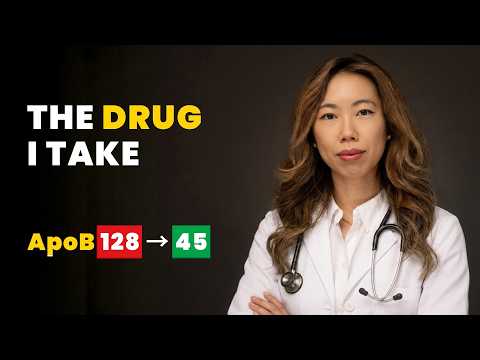
https://hillarylinmd.com/go/heart?post_id=qkSrZdt9DUs There is a drug in clinical trials right now that could permanently fix your cholesterol with a single infusion. Once. That's where we're headed. But there's also a $4 generic that's saved millions of lives — and a twice-a-year injection most patients have never heard of. I'm a Stanford-trained physician. My ApoB was 128. My grandfather died of a stroke. My grandmother died of cardiac arrest. My father is recovering from a heart transplant. In this video, I break down every lipid-lowering option available — without hedging, without liability speak — so you can have an intelligent conversation with your doctor. WHAT YOU'LL LEARN: - Why there's no floor for ApoB — the cholesterol-years concept that changes when you start treatment - The genetics checkpoint: Lp(a), FH, and ancestry factors that change your drug selection entirely - Statins: muscle pain reality, the nocebo effect (SAMSON trial), SLCO1B1 gene, CAC paradox, diabetes signal - Ezetimibe: the most underused $15/month drug in lipid medicine (IMPROVE-IT data) - Bempedoic acid: why it structurally cannot cause muscle toxicity, and what CLEAR Outcomes proved - PCSK9 inhibitors: FOURIER + ODYSSEY data, insurance battle, patient assistance programs - Inclisiran: twice a year, doctor administers — why adherence changes everything - Lp(a) pipeline: pelacarsen, olpasiran, muvalaplin — what's coming for the 1 in 4 - Obicetrapib: oral pill hitting BOTH LDL and Lp(a) - Gene therapy: CRISPR + base editing — one injection, once in your life - Lifestyle: honest ceiling assessment, no guilt - A tiered protocol framework using ApoB as the treatment target - What to actually say to your doctor — 6 specific questions Chapters: 0:00 The cholesterol treatment playbook 05:11 Genetics Checkpoint 07:51 Statins 16:16 Ezetimibe 18:45 Bempedoic Acid 25:46 PCSK9 Inhibitors 37:20 Inclisiran 39:46 Lp(a) 44:00 Emerging Therapies + Gene Therapy 52:32 Lifestyle 56:11 Protocol Framework 59:04 What to Say to Your Doctor LINKS: Part 1 — The Disease (Atherosclerosis): https://youtu.be/fX33g1zFZSo Part 2 — The Testing (Why Your Lipid Panel Isn't Enough): https://youtu.be/AtOTY0x3U3I Part 4 — The Genetics: (COMING SOON) Newsletter — The Longevity Letter: https://hillarylinmd.com/go/yt LinkedIn: https://www.linkedin.com/in/hillarylinmd/ Follow me: Instagram: https://instagram.com/hillarylinmd Twitter/X: https://twitter.com/hillarylinmd Curator: https://curator.med/ DISCLAIMER: This video is for educational purposes only and does not constitute medical advice. Always consult a qualified healthcare provider before starting, stopping, or changing any medication or treatment. Drug dosing, insurance coverage, and clinical guidelines referenced in this video may have changed since filming. I am a physician but I am not your physician. KEY STUDIES REFERENCED: - CTT Meta-analysis: 170,000+ patients, 22% event reduction per 1 mmol/L LDL (Lancet 2012) - IMPROVE-IT: ezetimibe outcomes, 18,000 patients (NEJM 2015) - FOURIER: evolocumab, 27,500 patients, LDL median 30 mg/dL (NEJM 2017) - FOURIER-OLE: 8.6-year follow-up, no safety signal at LDL ‹ 20 (Circulation 2023) - ODYSSEY OUTCOMES: alirocumab, 18,924 post-MI patients (NEJM 2018) - SAMSON trial: 90% of statin symptoms also occurred on placebo (NEJM 2020) - CLEAR Outcomes: bempedoic acid, 14,000 statin-intolerant patients (NEJM 2023) - ORION-10/11: inclisiran, sustained 50-52% LDL reduction (NEJM 2020) - VICTORION-2P: inclisiran outcomes trial, ongoing - OCEAN(a) Phase 2: olpasiran, › 95% Lp(a) reduction (NEJM 2023) - Lp(a)HORIZON: pelacarsen outcomes trial, 8,000+ patients, ongoing - VERVE-101 heart-1: base editing PCSK9 (Lancet ~2024) - NTLA-2001 Phase 1: CRISPR PCSK9 editing (2024) - Ference et al.: Mendelian randomization, lifetime LDL (EHJ 2017) #cholesterol #ApoB #statins #PCSK9 #inclisiran #genetherapy #lipids #longevity #heartdisease #preventivemedicine #atherosclerosis #cardiovascular #LDL #lipidplaybook — Watch next: https://www.youtube.com/watch?v=fX33g1zFZSo
The Modern Lipid Playbook Part 2: THE TESTING — Why Your Lipid Panel Isn't Enough 🚨 2026 ACC/AHA Dyslipidemia Guidelines just dropped — the first update in 8 years. Eleven specialty societies declared ApoB and Lp(a) standard of care. The standard lipid panel is officially not enough. My patient "David" did everything right for 25 years. His LDL was in the 40s — below even the NEW aggressive target. His stress test was normal. But his Lp(a), a genetic risk marker no one had ever checked, was nearly 3x the danger threshold. His CAC score: 1,522. His widowmaker artery: 75-99% blocked. Weeks later, he needed an emergent stent. His wife? Same household. CAC: zero. His brother? CAC: 2,700. In this episode, I break down every blood test and imaging test for heart disease — what each one measures, what it misses, and why CCTA (coronary CT angiography) with AI should be first-line imaging for anyone at risk. 📋 WHAT YOU'LL LEARN: • Why LDL-C is a calculated estimate from a 1972 equation — and why it misses 1 in 5 patients • ApoB — the $15 test now in the formal clinical risk algorithm • Lp(a) — the genetic marker every adult should know (universal screening recommended) • Why "passing a stress test" may be the most dangerous false reassurance in cardiology • CAC scores — useful but completely blind to the plaque most likely to kill you • CCTA + AI — how it cut heart attacks 41% in SCOT-HEART (sustained at 10 years) • CPT 75577 — AI plaque analysis is now covered by Medicare (effective Jan 2026) • A tiered testing playbook with real costs and insurance tips • How to talk to your doctor when they won't order the right tests Chapters: 00:00 25 Years on a Statin — and Still Missed 00:27 The 2026 Guidelines Changed the Standard 01:56 The Standard Lipid Panel’s 1972 Flaw 06:38 ApoB and Lp(a): The Two Tests That Change the Story 13:24 The Truth About Advanced Panels, HDL, & Triglycerides 16:30 The Metabolic Fire: Fasting Insulin & hs-CRP 20:18 Why “Passing a Stress Test” Creates Dangerous False Reassurance 27:19 The CAC Score: Useful, but Blind to Soft Plaque 33:30 CCTA & AI: The New Gold Standard for Plaque Detection 42:15 Insurance Coverage, Microvascular Disease, and Who Gets Missed 46:29 The Tiered Testing Hierarchy & Your Personal Playbook 🔗 LINKS: Part 1 — Why Atherosclerosis Matters: https://youtu.be/fX33g1zFZSo ClearCardio Interview with Dr. John Osborne: https://youtu.be/ihJmKmRC65w Newsletter — The Longevity Letter: https://hillarylinmd.com/go/yt LinkedIn: https://www.linkedin.com/in/hillarylinmd/ 📱 Follow me: Instagram: https://instagram.com/hillarylinmd Twitter/X: https://twitter.com/hillarylinmd Curator: https://curator.med/ KEY STUDIES REFERENCED: • 2026 ACC/AHA Dyslipidemia Guidelines (11 specialty societies; replaces 2018 guidelines) • Sachdeva et al., AHJ 2009 (LDL less than 130 in 72.1%, less than 100 in 49.9% at MI; N=136,905) • Friedewald et al., Clin Chem 1972 • Martin et al., JAMA 2013 (Martin-Hopkins; N=1.35M) [verify JAMA vs. JAMA Intern Med] • Walldius et al., Lancet 2001 (AMORIS; ApoB/ApoA-I ratio; N=175,553) • UK Biobank multimodal risk prediction, JACC (PRS + ApoB + hsCRP; N≈500,000) • Mora et al., Circulation 2009 (LDL-C/ApoB discordance) • Wilkins et al., JACC 2016 (CARDIA 25-year follow-up) • Ference et al., JACC 2018 (Mendelian randomization, lifetime LDL) • Falk et al., Circulation 1995 (~60-68% of MIs from less than 50% stenosis) • Glagov et al., NEJM 1987 (compensatory remodeling) • SCOT-HEART, NEJM 2018 (41% MI/death reduction; N=4,146) • SCOT-HEART 10-year, Lancet 2025 (sustained benefit) • PROMISE, NEJM 2015 (CCTA vs. functional testing; N=10,003) • MESA (Detrano et al., NEJM 2008; multi-ethnic CAC; N=6,814) • Ridker et al., NEJM 2008 (JUPITER; N=17,802) • Ridker et al., NEJM 2017 (CANTOS; N=10,061) • CTT Meta-analysis (170,000+ participants; 22% reduction per mmol/L LDL lowering) • WISE Study (women, non-obstructive CAD mortality) • PESA Study, Circulation 2015 (N=4,184) • MASALA Study (South Asian cardiovascular risk) • Mandsager et al., JAMA Netw Open 2018 (VO2 max; N=122,007) • PROMINENT Trial, NEJM 2022 (N=10,497) • CRISP-CT, Lancet 2018 (pericoronary fat; N=3,912) • BROADWAY Trial (obicetrapib; conference data — verify full pub status) • KETO-CTA Trial, JACC Advances 2025 (Norwitz/Feldman; LMHR + CCTA) • Varbo et al., JACC 2013 (Copenhagen remnant cholesterol MR) #cholesterol #heartdisease #ApoB #CCTA #longevity #preventivemedicine #atherosclerosis #lipids #CCTAscan #2026guidelines — Watch next: https://www.youtube.com/watch?v=fX33g1zFZSo This video is educational only and not medical advice. Lipid and cardiovascular decisions depend on your full history — please work with your own clinician.
A doctor-led conversation with Jiyeon of NonToxicCityGirl on separating useful low-tox habits from fear-based wellness marketing: plastics, indoor air, noise, cycle syncing, fertility uncertainty, and the basics that matter most. The useful frame is not “everything is poisoning you.” It is: name the specific exposure, understand how strong the evidence is, reduce high-contact/high-heat/high-dose risks where practical, and keep the fundamentals first — movement, sleep, metabolic health, ventilation, and clinician-guided decisions. Note: this conversation includes emerging science, personal stories, and discussions of medications, fertility, cancer metabolism, HRT, rapamycin, LDN, peptides, and supplements. It is educational only and does not constitute medical advice. Do not start, stop, or change prescriptions, fertility treatment, cancer diets, hormones, supplements, or experimental/off-label therapies based on this video; talk with a qualified clinician. Chapters: 00:00 Intro: low-tox living without panic 00:49 Why longevity trends can mislead 03:03 Rational biohacking vs. reckless experimentation 06:49 AI for personal health research — not medical advice 20:03 Why healthcare evidence takes years to reach patients 25:41 How to vet health advice with AI and critical thinking 36:12 Low-tox living: plastics, PFAS, indoor air and noise 47:20 Movement as the highest-ROI longevity tool 51:24 Fertility uncertainty, endocrine disruptors and reproductive optionality 01:08:28 City living, noise, stress and longevity 01:13:14 Body recomposition, sugar, inflammation and metabolic health 01:21:53 Mitochondria, metabolic health and wellness myths About the Show:The Longevity Show with Dr. Hillary Lin takes complex medical research and distills it into practical, easy-to-understand advice for living a longer, healthier life. Covering everything from preventative medicine and metabolic health to the latest breakthroughs in nutrition, exercise, and mental wellness, Dr. Lin gives you the tools you need to thrive. ABOUT DR. HILLARY LIN: Dr. Hillary Lin is a Stanford-trained physician and the Co-Founder/CEO of Curator. She explores the cutting edge of longevity medicine, metabolic health, and mental resilience, translating complex science into actionable protocols for a longer, healthier life. GET PERSONALIZED INSIGHTS: Newsletter: https://hillarylinmd.com/go/yt LinkedIn: https://www.linkedin.com/in/hillarylinmd/ Instagram: https://instagram.com/hillarylinmd Twitter/X: https://twitter.com/hillarylinmd Curator: https://curator.med/ DISCLAIMER: Content is for educational purposes only and does not constitute medical advice. Consult your physician for medical decisions. — Watch next: https://www.youtube.com/watch?v=N3p6okVW9JU
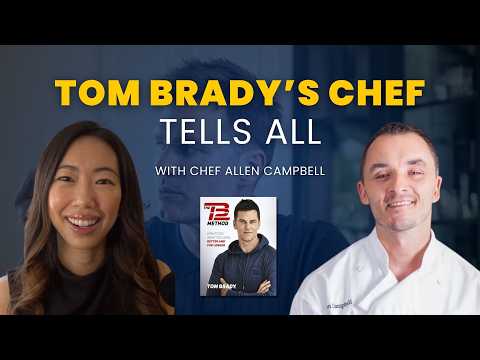
Tom Brady’s diet became internet mythology. In this episode, Chef Allen Campbell, who cooked for Brady during part of the TB12 era, joins Dr. Hillary Lin to separate the celebrity-diet story from what ordinary people can actually use: whole foods, adequate protein, fiber, personalization, restaurant choices, and knowing when restriction goes too far. The point is not to copy Tom Brady, avoid every nightshade, or turn food into another rigid protocol. We talk about what shaped Chef Allen’s approach, why context matters, and how to think about food quality, cooking oils, supplements, keto/carnivore trends, organic shopping, and performance nutrition without pretending one diet fits everyone. Important caveat: this conversation is educational only. AC Kitchen examples and personal experiences are anecdotes, not disease-treatment claims. Discussions of cooking oils, gluten/dairy, pesticides, supplements, IVs, keto, carnivore, or organic foods should not be treated as medical advice or proof that a specific food exposure caused a specific disease. If you have a medical condition, lipid concerns, GI disease, cancer concerns, are pregnant, or are considering major diet changes, supplements, or IVs, work with a qualified clinician. What You'll Learn: - Why celebrity diets are often misread - What to borrow from elite performance nutrition without copying every restriction - Why personalization, calories, protein, fiber, and adherence matter - How to think about restaurant choices and cooking oils with more nuance - Where supplements and specialty diets may fit, and where they can backfire - A practical way to prioritize organic food without panic Chapters: 02:59 Personalized Nutrition Philosophy 07:05 Customizing Nutrition at Scale 10:54 Inflammatory Triggers & The TB12 Myth 22:25 Life as a Chef: Passion vs. Business 27:37 Sourcing Organic & Clinical Diet Protocols 35:29 Protein Sourcing & Caloric Realities 42:51 Nutritional Investing & Self-Worth 46:10 Nutrition Trends and Their Impact About Chef Allen Campbell: Allen Campbell is a chef, entrepreneur, and former private chef connected to the TB12 era. His work focuses on high-performance food, personalization, and making healthier meals more practical. Website: https://allencampbell.com/ Instagram: https://www.instagram.com/chefallencampbell X: https://x.com/chefalcampbell #PerformanceNutrition #TomBrady #Nutrition #Longevity #Healthspan ✨ Get 5 Easy Longevity Tips & Dr. Hillary Lin's Weekly Newsletter for Free: https://hillarylinmd.com/go/yt About the Show: The Longevity Show with Dr. Hillary Lin takes complex medical research and turns it into practical, clinically grounded guidance for living a longer, healthier life. Topics include preventive medicine, metabolic health, cardiovascular risk, brain health, nutrition, exercise, testing, and the tradeoffs behind popular longevity trends. About Dr. Hillary Lin and Curator: Dr. Hillary Lin is a Stanford-trained physician and co-founder/CEO of Curator, a platform helping clinicians and founders build personalized, evidence-informed longevity practices. Follow for clear, science-rich conversations about healthspan, medicine, and the future of care delivery. Connect with Dr. Hillary Lin: 📩 Free Weekly Newsletter: https://hillarylinmd.com/go/yt 🔔 YouTube: https://www.youtube.com/@hillarylinmd 📸 Instagram: https://www.instagram.com/hillarylinmd 💼 LinkedIn: https://www.linkedin.com/in/hillarylinmd/ 𝕏 Twitter/X: https://twitter.com/hillarylinmd ▶ TikTok: https://www.tiktok.com/@hillarylinmd 📘 Facebook: https://www.facebook.com/hillarylinmd 🏥 Curator: https://curator.med/ Disclaimer: This podcast is for informational purposes only and does not constitute medical advice, diagnosis, or treatment. It is not a personalized nutrition plan, disease-treatment recommendation, supplement/IV protocol, cancer-prevention claim, or endorsement of copying any celebrity diet. Dr. Lin discusses her own experience in parts of the conversation; personal experience should be treated as anecdote, not medical or purchasing advice. No doctor-patient relationship is formed. Use of this information is at your own risk. — Watch next: https://www.youtube.com/watch?v=N3p6okVW9JU
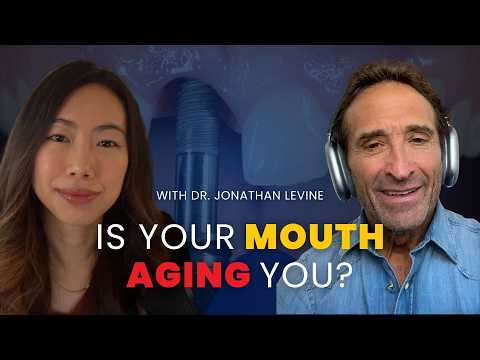
Oral health is one of the most overlooked parts of whole-body prevention. In this episode, I sit down with Dr. Jonathan Levine to talk about the oral microbiome, periodontal inflammation, airway and sleep, fluoride, oral cancer screening, and emerging diagnostics in dentistry. A key theme: the mouth can offer important clues about inflammation, infection risk, sleep/airway issues, and metabolic health — but oral-systemic links should be understood as associations, risk markers, and plausible mechanisms, not simple one-cause/one-disease claims. This conversation is educational and is not a substitute for dental or medical care. We also discuss where newer tools like 3D imaging, AI-assisted dental exams, and salivary testing may fit — and where the basics still matter: routine dental care, brushing, flossing/interdental cleaning, fluoride when appropriate, sleep/airway evaluation when clinically indicated, and collaboration between dentistry and medicine. Mention of a clinic, product, or diagnostic tool in this conversation is not a universal recommendation. Please work with your own dentist/physician for decisions about imaging, airway evaluation, salivary testing, dental procedures, or treatment. Topics Covered: • Why dentistry and medicine became separated — and why that gap matters for prevention. • The oral microbiome and periodontal inflammation as whole-body health signals. • What we know, and don’t know, about links between gum disease, cardiovascular risk, diabetes, dementia, autoimmune disease, and cancer. • How dental exams, 3D imaging, and AI-assisted tools may help identify structural or airway issues. • Airway, mouth breathing, nitric oxide, and sleep — including why interventions should be individualized. • Salivary diagnostics and oral microbiome testing: promising, but still emerging. • Practical oral-health basics: brushing, flossing/interdental cleaning, tongue cleaning, fluoride decisions, mouthwash choices, and regular dental care. • Oral cancer screening and why dental access matters. About Dr. Jonathan Levine: Dr. Jonathan Levine is a prosthodontist, clinical innovator, and oral-systemic health advocate based in New York City. He is the inventor of GLO Science technology, co-founder of Smile House, and co-founder of the GLO Good Foundation. His work focuses on preventive dentistry, oral-systemic health, advanced diagnostics, and expanding access to dental care. Website: https://www.drjonathanlevine.com/ Instagram: https://www.instagram.com/drjonlevine/ JBL New York City: @jblnewyorkcity Smile House Tribeca: @smilehousetribeca GLO Science: @gloscience GLO Science Pro: @glosciencepro GLO Good Foundation: @glogoodfoundation Chapters 00:00 The Overlooked Role of Oral Health in Longevity 03:10 Rebuilding the Dental Care Model 06:19 The Center for Dental Longevity & Smile House 11:14 The Oral-Systemic Connection 14:33 Integrating Dentistry with Overall Health 20:07 The Tech-Enabled Dental Exam 22:28 Airway Health, Nitric Oxide, & Sleep 29:51 The Future of Salivary Diagnostics 31:12 Mission Work in Dental Deserts 34:06 High-Performance Oral Protocols 36:48 The Role of Fluoride in Dental Health 39:17 Epigenetics vs. Genetics in Decay 46:04 Top Takeaways for Oral Longevity About the Show: The Longevity Show with Dr. Hillary Lin takes complex medical research and distills it into practical, easy-to-understand advice for living a longer, healthier life. Covering everything from preventative medicine and metabolic health to the latest breakthroughs in nutrition, exercise, and mental wellness, Dr. Lin gives you the tools you need to thrive. ABOUT DR. HILLARY LIN: Dr. Hillary Lin is a Stanford-trained physician and the Co-Founder/CEO of Curator. She explores the cutting edge of longevity medicine, metabolic health, and mental resilience, translating complex science into actionable protocols for a longer, healthier life. GET PERSONALIZED INSIGHTS: Newsletter: https://hillarylinmd.com/go/yt LinkedIn: https://www.linkedin.com/in/hillarylinmd/ Instagram: https://instagram.com/hillarylinmd Twitter/X: https://twitter.com/hillarylinmd Curator: https://curator.med/ DISCLAIMER: Content is for educational purposes only and does not constitute medical advice. Consult your physician, dentist, or other qualified clinician for medical or dental decisions. — Watch next: https://www.youtube.com/watch?v=N3p6okVW9JU

Free heart-test guide and my weekly Letter: https://hillarylinmd.com/go/heart?post_id=fX33g1zFZSo Compare what each test can tell you, what it can miss, and what to ask at your next visit. The Longevity Letter is where I share what I'm learning about prevention, treatments, and health claims worth questioning. 50% of people who die of a heart attack have zero prior symptoms. They have no chest pain, no shortness of breath, and often, "normal" cholesterol on a standard panel. In Part 1 of 𝘛𝘩𝘦 𝘔𝘰𝘥𝘦𝘳𝘯 𝘓𝘪𝘱𝘪𝘥 𝘗𝘭𝘢𝘺𝘣𝘰𝘰𝘬, I break down why the standard of care is failing to detect the world's #1 killer until it’s too late. I share the science on why atherosclerosis is actually a pediatric disease, the "cumulative exposure" math that proves early prevention is 3x more effective, and the specific blood markers you need to look at instead of just LDL-C. 🔔 𝐒𝐮𝐛𝐬𝐜𝐫𝐢𝐛𝐞 𝐟𝐨𝐫 𝐏𝐚𝐫𝐭 𝟐 (𝐓𝐡𝐞 𝐓𝐞𝐬𝐭𝐢𝐧𝐠 𝐏𝐫𝐨𝐭𝐨𝐜𝐨𝐥): https://www.youtube.com/@hillarylinmd 📩 𝐆𝐞𝐭 𝐖𝐞𝐞𝐤𝐥𝐲 𝐋𝐨𝐧𝐠𝐞𝐯𝐢𝐭𝐲 𝐔𝐩𝐝𝐚𝐭𝐞𝐬: https://hillarylinmd.com/go/yt 𝐎𝐍 𝐓𝐇𝐈𝐒 𝐄𝐏𝐈𝐒𝐎𝐃𝐄: We dismantle the "plumbing" model of heart disease and replace it with the latest science on lipidology and longevity. • 𝐓𝐡𝐞 "𝐒𝐢𝐥𝐞𝐧𝐭" 𝐊𝐢𝐥𝐥𝐞𝐫: Why your body is evolutionarily designed to *hide* heart disease from you. • 𝐓𝐡𝐞 𝐏𝐞𝐝𝐢𝐚𝐭𝐫𝐢𝐜 𝐄𝐯𝐢𝐝𝐞𝐧𝐜𝐞: Autopsy data showing plaque in 20-year-olds (Korean War & PDAY studies). • 𝐓𝐡𝐞 𝐌𝐞𝐜𝐡𝐚𝐧𝐢𝐬𝐦: How ApoB particles get trapped in the artery wall (The "Response to Retention" model). • 𝐓𝐡𝐞 𝐌𝐚𝐭𝐡 𝐨𝐟 𝐑𝐢𝐬𝐤: Why "Cholesterol-Years" matter more than your current numbers. • 𝐋𝐢𝐟𝐞𝐬𝐭𝐲𝐥𝐞 𝐅𝐚𝐜𝐭𝐨𝐫𝐬: How sleep debt and stress physically damage your endothelium. ⏱ CHAPTERS 0:00 The Silent Statistic: Why Your Doctor Is Flying Blind 1:30 My Family's Cardiac Crisis: Why I Had to Find Out for Myself 3:18 The Pediatric Bombshell: This Disease Starts Before Your 20s 7:39 The False Negative: Why "Normal" Labs Give You a Dangerous Pass 9:29 The Mechanism: How Plaque Actually Forms in Your Arteries 11:20 Foam Cells & Time Bombs: Why Soft Plaque Is the Real Killer 13:39 The Three Drivers: ApoB, Inflammation & Endothelial Damage 16:20 Cholesterol-Years: Why Lifetime Exposure Matters More Than Today's Number 17:00 ApoB vs. LDL: Why You're Measuring the Wrong Thing 18:20 Nature's RCT: What People Born With Low LDL Teach Us 20:41 The Compound Interest Effect: Why Early Treatment Is 3× More Powerful 23:09 The Evolutionary Paradox: Why Our Bodies Were Built to Betray Us 25:00 LDL's Hidden Purpose: Why the Molecule Isn't All Bad 28:00 The Invisible Damage: What Stress & Sleep Debt Do to Your Arteries 31:59 The Growth Rate: How Fast Is Your Plaque Actually Advancing? 33:20 The Information War: Why Cholesterol Denialism Is So Seductive 41:00 What This Means for You: The Stakes, The Opportunity & What's Next About the Show: The Longevity Show with Dr. Hillary Lin takes complex medical research and distills it into practical, easy-to-understand advice for living a longer, healthier life. Covering everything from preventative medicine and metabolic health to the latest breakthroughs in nutrition, exercise, and mental wellness, Dr. Lin gives you the tools you need to thrive. 𝐒𝐂𝐈𝐄𝐍𝐓𝐈𝐅𝐈𝐂 𝐒𝐎𝐔𝐑𝐂𝐄𝐒: •𝘌𝘯𝘰𝘴 𝘦𝘵 𝘢𝘭. (1953): Coronary disease among US soldiers • 𝘍𝘦𝘳𝘦𝘯𝘤𝘦 𝘦𝘵 𝘢𝘭. (2017): Low-density lipoproteins cause ASCVD • 𝘍𝘦𝘳𝘯á𝘯𝘥𝘦𝘻-𝘍𝘳𝘪𝘦𝘳𝘢 𝘦𝘵 𝘢𝘭. (𝘗𝘌𝘚𝘈 𝘚𝘵𝘶𝘥𝘺): Subclinical Atherosclerosis in the Absence of Risk Factors • 𝘉𝘰𝘳é𝘯 𝘦𝘵 𝘢𝘭. (1998): Binding of LDL to proteoglycans (Site B) • 𝘛𝘢𝘸𝘢𝘬𝘰𝘭 𝘦𝘵 𝘢𝘭. (2017): Amygdalar activity and cardiovascular events ABOUT DR. HILLARY LIN: Dr. Hillary Lin is a Stanford-trained physician and the Co-Founder/CEO of Curator. She explores the cutting edge of longevity medicine, metabolic health, and mental resilience, translating complex science into actionable protocols for a longer, healthier life. GET PERSONALIZED INSIGHTS: Newsletter: https://hillarylinmd.com/go/yt LinkedIn: https://www.linkedin.com/in/hillarylinmd/ Instagram: https://instagram.com/hillarylinmd Twitter/X: https://twitter.com/hillarylinmd Curator: https://curator.med/ DISCLAIMER: Content is for educational purposes only and does not constitute medical advice. Consult your physician for medical decisions. — Watch next: https://www.youtube.com/watch?v=ihJmKmRC65w
We’ve been told the same story for 50 years: "Saturated fat is bad, vegetable oil is heart-healthy." But if that’s true, why are we in a global energy crisis of chronic fatigue and metabolic stalling? As a longevity physician, I look at the body like an engineer looks at a high-performance machine. When the engine stalls, I don't blame the driver—I look at the fuel. In this masterclass, we dismantle the "Fat Wars" with clinical nuance. I explain why the Seed Oil debate is often missing the most dangerous variable: Oxidation. We explore the "Two-Hit Theory" of heart disease, how unstable fats create "zombie" membranes in your mitochondria, and why your Air Fryer might be an oxidation accelerator. Most importantly, I provide a practical kitchen protocol to help you rebuild your biology from the cell membrane out. In this episode, we cover: • The Two-Hit Theory: Why LDL volume is only half the problem (and why oxidation is the match that lights the fire). • The Membrane Theory: How Linoleic Acid creates "fragile" cells that leak toxic waste (4-HNE) into your brain. • The Migraine Connection: New NIH data on how specific oils chemically activate your pain receptors (TRPV1). • The Smoke Point Lie: Why "high smoke point" oils can still rot your DNA. • The Official Protocol: My Tier 1, 2, and 3 hierarchy for the longevity-focused kitchen. Chapters 00:00 The Energy Crisis Within Us 01:47 The Two-Hit Theory: Why "Healthy" Oils May Be Driving Heart Disease 04:34 Cellular Sabotage: How Unstable Fats Break Mitochondria & Trigger Pain 07:54 Cooking Myths Debunked: Smoke Points, Olive Oil, & Air Fryer Risks 09:50 The Return of Solid Fats: Why Tallow Wins & Crisco Kills 11:37 The Official Protocol: Tier 1, 2, and 3 Oils for Your Kitchen ✨ Get 5 Easy Longevity Tips & Dr. Hillary Lin's Weekly Newsletter for Free: https://hillarylinmd.com/go/yt About the Show: The Longevity Show with Dr. Hillary Lin takes complex medical research and distills it into practical, easy-to-understand advice for living a longer, healthier life. Covering everything from preventative medicine and metabolic health to the latest breakthroughs in nutrition, exercise, and mental wellness, Dr. Lin gives you the tools you need to thrive. About Dr. Hillary Lin and Curator Dr. Hillary Lin is a Stanford MD and CEO/Co-founder of Curator, a platform helping clinicians launch personalized longevity practices powered by evidence-based protocols and AI-driven tools. Follow for insights on transforming care delivery through precision medicine. Connect with Dr. Hillary Lin: LinkedIn: https://www.linkedin.com/in/hillarylinmd/ Instagram: https://www.instagram.com/hillarylinmd Facebook: https://www.facebook.com/hillarylinmd X: https://twitter.com/hillarylinmd TikTok: https://www.tiktok.com/@hillarylinmd Disclaimer: This podcast is for informational purposes only and does not constitute medical advice, diagnosis, or treatment. No doctor-patient relationship is formed. Always seek the advice of your physician or other qualified healthcare provider with any questions you may have regarding a medical condition. Use of this information is at your own risk. — Watch next: https://www.youtube.com/watch?v=N3p6okVW9JU
If you’re sleeping well, eating clean, exercising—and still exhausted—this may be an engine problem, not a fuel problem. This is Part 1 of my Mitochondrial Health Series, where I start with the foundation: mitophagy—your body’s ability to clear damaged mitochondria. In longevity medicine, I call this mitophagy failure: damaged mitochondria (“zombie batteries”) stop producing clean energy and leak signals that can trigger inflammation, brain fog, and that 2 p.m. crash. In this video, I break down: • Why zombie mitochondria can keep you stuck in “sickness behavior” • The key biology: PINK1 + Parkin (how your cells tag and remove broken mitochondria) • My 4-step energy protocol: 14–16 hr overnight fasting, Zone 2 cardio, heat (sauna/hot bath), and urolithin A + spermidine • The NAD+ trap: why NMN/NR can backfire if you “fuel” before you “clean” *Chapters:* 00:00 The "Zombie Battery" Cause of Fatigue 01:54 Why Your Cells Think They Are Dying 04:43 The Cleanup Crew: PINK1 & Parkin 07:02 Protocol 1: The "Janitor" Fast (AMPK vs. mTOR) 08:44 Protocol 2: Why HIIT Might Be Making You Tired 09:59 Protocol 3: Heat Shock Proteins & Sauna 11:30 Protocol 4: Supplements (Urolithin A, Spermidine) & The NAD+ Mistake 15:18 Summary: The 4-Step Energy Protocol ✨ Get 5 Easy Longevity Tips & Dr. Hillary Lin's Weekly Newsletter for Free: https://www.hillarylinmd.com/subscribe *About the Show:* The Longevity Show with Dr. Hillary Lin takes complex medical research and distills it into practical, easy-to-understand advice for living a longer, healthier life. Covering everything from preventative medicine and metabolic health to the latest breakthroughs in nutrition, exercise, and mental wellness, Dr. Lin gives you the tools you need to thrive. *About Dr. Hillary Lin and Curator* Dr. Hillary Lin is a Stanford MD and CEO/Co-founder of Curator, a platform helping clinicians launch personalized longevity practices powered by evidence-based protocols and AI-driven tools. Follow for insights on transforming care delivery through precision medicine. *Connect with Dr. Hillary Lin:* Instagram: https://www.instagram.com/hillarylinmd Facebook: https://www.facebook.com/hillarylinmd X: https://twitter.com/hillarylinmd TikTok: https://www.tiktok.com/@hillarylinmd *Disclaimer:* This podcast is for informational purposes only and does not constitute medical advice, diagnosis, or treatment. No doctor-patient relationship is formed. Always seek the advice of your physician or other qualified healthcare provider with any questions you may have regarding a medical condition. Use of this information is at your own risk.