Prevention
Cyclospora: The Parasite That Survives the Wash
It comes only from people, and it cannot spread between them. The illness it causes fades, comes back, and can run a month or longer.
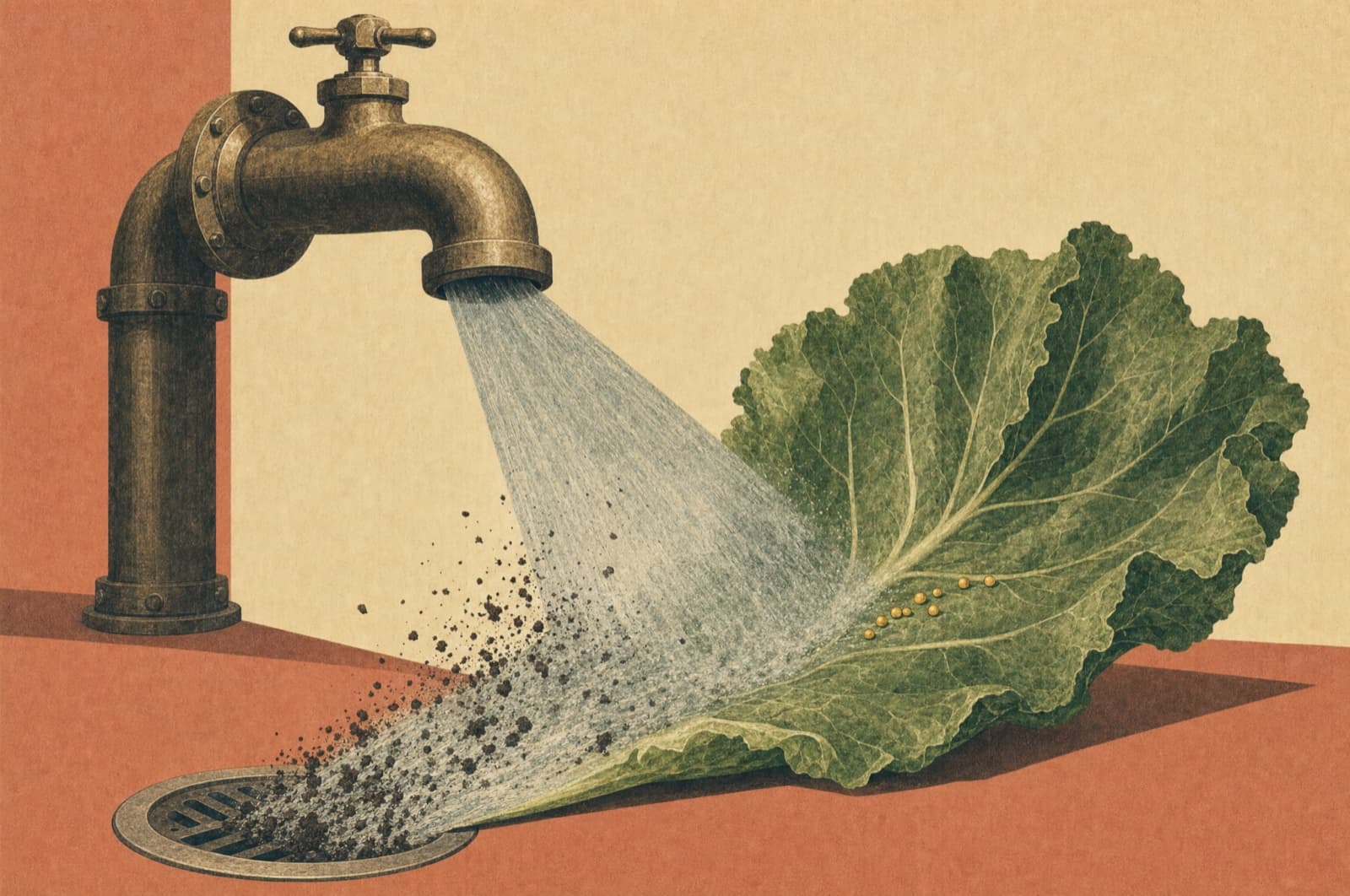
Cyclospora cayetanensis is a one-celled parasite that causes cyclosporiasis, an intestinal illness spread by produce and water contaminated with human feces. It does not pass from person to person: oocysts shed in stool need at least one to two weeks outside a body to become infectious. Washing does not remove it, cooking to 158°F kills it, and trimethoprim-sulfamethoxazole treats it. Suspect it when watery diarrhea relapses for weeks.
A parasite that only comes from people
Cyclospora cayetanensis is a one-celled parasite with a strange requirement: it only comes from people. Salmonella lives comfortably in chickens and Cyclospora does not have that option. Its relevant host is human, so finding it on lettuce means human waste reached the water, soil, hands, or equipment somewhere between field and bag.
Its second strange feature is a built-in delay. Oocysts shed in stool are not infectious yet; they need time maturing in the environment before they can infect anyone. A case in your house does not make the house contagious. The contamination happened upstream, weeks before your plate.
When thousands of cases surface across dozens of states in one season, the cause is not thousands of unlucky kitchens. It is one contaminated ingredient moving through a centralized supply chain.
1–2 weeks
Why washing does not work on this one
Commercial produce washing runs on chlorinated water. The chlorine is there to keep one dirty batch from contaminating the shared wash water; it does not kill Cyclospora. There is no proven way to completely remove or kill it on fresh produce at home either. A careful rinse is still worth doing for soil and bacteria. Against this organism it is not a defense.
Heat is different. FDA and CDC cite 158°F / 70°C as the temperature that kills Cyclospora, which puts cooked greens, roasted vegetables, and baked berries outside its reach. The decisions about who eats raw and who eats cooked, by risk group and outbreak status, live in the companion salad-safety guide.

What this summer actually looked like
The 2026 numbers need separating. One outbreak, traced to iceberg lettuce from a single supplier, accounts for thousands of confirmed cases by itself. The national surge is bigger than that: CDC is tracking more clusters with no identified source, and a reporting lag of about six weeks means the public count trails reality.
The 2026 numbers
Iceberg lettuce outbreak (recalled July 17)
- Confirmed cases
- 6,358
- Hospitalizations
- At least 278, with 2 deaths
- Scope
- Exposure reported in 15 states, as of the August 5 CDC update
National surge since May 1
- Confirmed cases
- 13,895 lab-confirmed
- Hospitalizations
- 740 among confirmed cases
- Scope
- 47 states plus DC, as of mid-August; roughly 10,455 more reports under review
Other active Cyclospora clusters
- Confirmed cases
- 10, 115, and 25 cases in three open investigations
- Hospitalizations
- Not broken out
- Scope
- No identified source yet
| What | Confirmed cases | Hospitalizations | Scope |
|---|---|---|---|
| Iceberg lettuce outbreak (recalled July 17) | 6,358 | At least 278, with 2 deaths | Exposure reported in 15 states, as of the August 5 CDC update |
| National surge since May 1 | 13,895 lab-confirmed | 740 among confirmed cases | 47 states plus DC, as of mid-August; roughly 10,455 more reports under review |
| Other active Cyclospora clusters | 10, 115, and 25 cases in three open investigations | Not broken out | No identified source yet |
The relapsing pattern is the tell
The common stomach bugs announce themselves fast and leave fast. Cyclospora takes about a week to show up, then settles in: watery diarrhea, frequent and sometimes explosive, that fades and returns, appetite loss, and a fatigue that outlasts what you would expect from a bad meal. Untreated, that cycle can run a month or longer. A stomach bug that keeps coming back is the signal to stop waiting and get tested.
The clinical picture
Incubation
- What to expect
- Averages about 1 week; can appear as soon as 2 days, or take 2 weeks or more
Classic symptoms
- What to expect
- Watery diarrhea with frequent, sometimes explosive bowel movements; appetite and weight loss, cramping, bloating, gas, nausea, fatigue, sometimes low-grade fever
Untreated course
- What to expect
- Remitting and relapsing, from days to a month or longer
Severe or prolonged illness
- What to expect
- People with weakened immune systems, older adults, and young children
Treatment
- What to expect
- Trimethoprim-sulfamethoxazole for 7 to 10 days; people living with HIV may need longer courses
| Feature | What to expect |
|---|---|
| Incubation | Averages about 1 week; can appear as soon as 2 days, or take 2 weeks or more |
| Classic symptoms | Watery diarrhea with frequent, sometimes explosive bowel movements; appetite and weight loss, cramping, bloating, gas, nausea, fatigue, sometimes low-grade fever |
| Untreated course | Remitting and relapsing, from days to a month or longer |
| Severe or prolonged illness | People with weakened immune systems, older adults, and young children |
| Treatment | Trimethoprim-sulfamethoxazole for 7 to 10 days; people living with HIV may need longer courses |
Why routine stool tests miss it
Routine stool tests do not find Cyclospora. The lab needs to look for it specifically, with special stains or a PCR panel that includes it, and one negative sample does not rule it out; the parasite is not shed constantly, so providers sometimes need samples across several days.
Treatment is specific too. Trimethoprim-sulfamethoxazole for seven to ten days is the recommended course, and people living with HIV may need longer. If watery diarrhea is relapsing into a second week, especially in produce season, name this parasite to your clinician and ask whether your stool testing actually covered it.
How I’d decide
- Who it's for
- Anyone nursing a stomach bug that keeps coming back in produce season, checking a recall notice against last week's salad, or wondering why this one parasite keeps beating the wash.
- Who should skip it
- Essentially nobody; this is an explainer. The illness itself is hardest on weakened immune systems, older adults, and young children, which is why those groups shift to cooked greens while an outbreak source is open.
- What to measure
- A stool test, but only if you ask correctly. Routine stool testing does not detect Cyclospora; the lab has to look for it specifically, with special stains or PCR, and shedding is intermittent enough that it can take samples across several days to find.
- What I do
- If a patient came to me with watery diarrhea relapsing into a second week during produce season, I would test for Cyclospora by name rather than wait it out. Trimethoprim-sulfamethoxazole for seven to ten days is the treatment, and there is no strong backup for sulfa-allergic patients, which is one more reason to confirm the diagnosis before treating. At home, an active outbreak means the higher-risk people at my table get cooked greens until a source is named.
- What would change my mind
- A validated consumer method that removes or kills Cyclospora on raw produce would rewrite the prevention half of this page. None exists. A proven non-sulfa treatment would rewrite the clinical half; CDC currently lists no highly effective alternative.
In short
It only comes from people. Humans are the relevant host. Cyclospora on produce means human waste reached water, soil, or hands somewhere upstream.
It cannot spread person to person. Oocysts shed in stool need at least one to two weeks outside the body to become infectious. A sick housemate cannot pass it to you directly.
Washing does not remove it. It resists the chlorine used in commercial wash water, and no home method reliably removes it. Cooking to 158°F kills it.
Routine stool tests miss it. Ask for Cyclospora testing by name: special stains or PCR. Trimethoprim-sulfamethoxazole for 7 to 10 days is the treatment.
Common questions
- What is Cyclospora?
- Cyclospora cayetanensis is a one-celled parasite that causes the intestinal illness cyclosporiasis. It spreads through food and water contaminated with human feces, most often fresh produce eaten raw. It is not spread by animals, and it cannot pass directly from person to person, because oocysts shed in stool need at least one to two weeks outside the body before they become infectious.
- Is Cyclospora contagious from person to person?
- No, direct spread is unlikely. Oocysts passed in stool are not immediately infectious; they need at least one to two weeks maturing in the environment first. That biological delay means a sick household member cannot pass the infection to you directly, the way common stomach viruses spread. Infection traces back to contaminated food or water, not to the person who got sick.
- What are the symptoms of cyclosporiasis?
- Watery diarrhea is the headline symptom, and CDC describes the bowel movements as frequent and sometimes explosive. Around it come appetite loss, weight loss, cramping, bloating, gas, nausea, fatigue, and sometimes a low-grade fever. Symptoms start about a week after exposure on average, though they can appear as soon as two days or take two weeks or more. The distinguishing feature is the course: without treatment, symptoms remit and relapse over days to a month or longer.
- How long does Cyclospora last?
- Untreated, cyclosporiasis follows a remitting-relapsing course that can run from a few days to a month or longer. Most people with healthy immune systems do recover without treatment, but the illness can drag, and trimethoprim-sulfamethoxazole shortens it. That is the practical reason to get tested rather than wait out a diarrheal illness that keeps returning.
- How is Cyclospora diagnosed?
- By stool testing that looks for it specifically. Routine stool tests do not detect Cyclospora; the lab uses special stains or a molecular PCR test. The parasite is not found in every sample, so a single negative does not rule it out, and providers sometimes collect samples over several days. If your diarrhea has been relapsing for more than a week, ask whether your testing actually included Cyclospora.
- What is the treatment for Cyclospora?
- Trimethoprim-sulfamethoxazole, usually for seven to ten days in adults with healthy immune systems; people living with HIV may need longer courses. CDC lists no highly effective alternative for people allergic to or intolerant of it, so sulfa allergy is a genuine complication, and confirming the diagnosis before treating matters.
- Does washing produce remove Cyclospora?
- No method reliably does. Cyclospora resists the chlorine concentrations used in commercial produce washing, and there is no proven way to completely remove or kill it on fresh produce at home. Rinsing still helps with soil and some surface bacteria. The only kitchen step that kills Cyclospora is cooking to at least 158°F / 70°C.
Keep reading
Sources
- 1CDC. Clinical Overview of Cyclosporiasis. Feb 29, 2024.
- 2CDC. Clinical Care of Cyclosporiasis. Feb 27, 2024.
- 3MedlinePlus (NIH). Cyclosporiasis.
- 4CDC. HAN00531: Domestically Acquired Cyclosporiasis Cases in Multiple U.S. States, 2026.
- 5CDC. Cyclospora Outbreak Linked to Iceberg Lettuce (2026).
- 6FDA. Cyclospora: resistance to routine disinfection and inactivation at 70°C / 158°F.
Nothing on this page is sold. No test kit, supplement, or produce wash has anything to do with my income.