Nutrition
Should You Eat Before a Workout?
The most oversold hour in fitness. Researchers used MRI to watch fuel inside muscle after a large carbohydrate breakfast. It did not move.
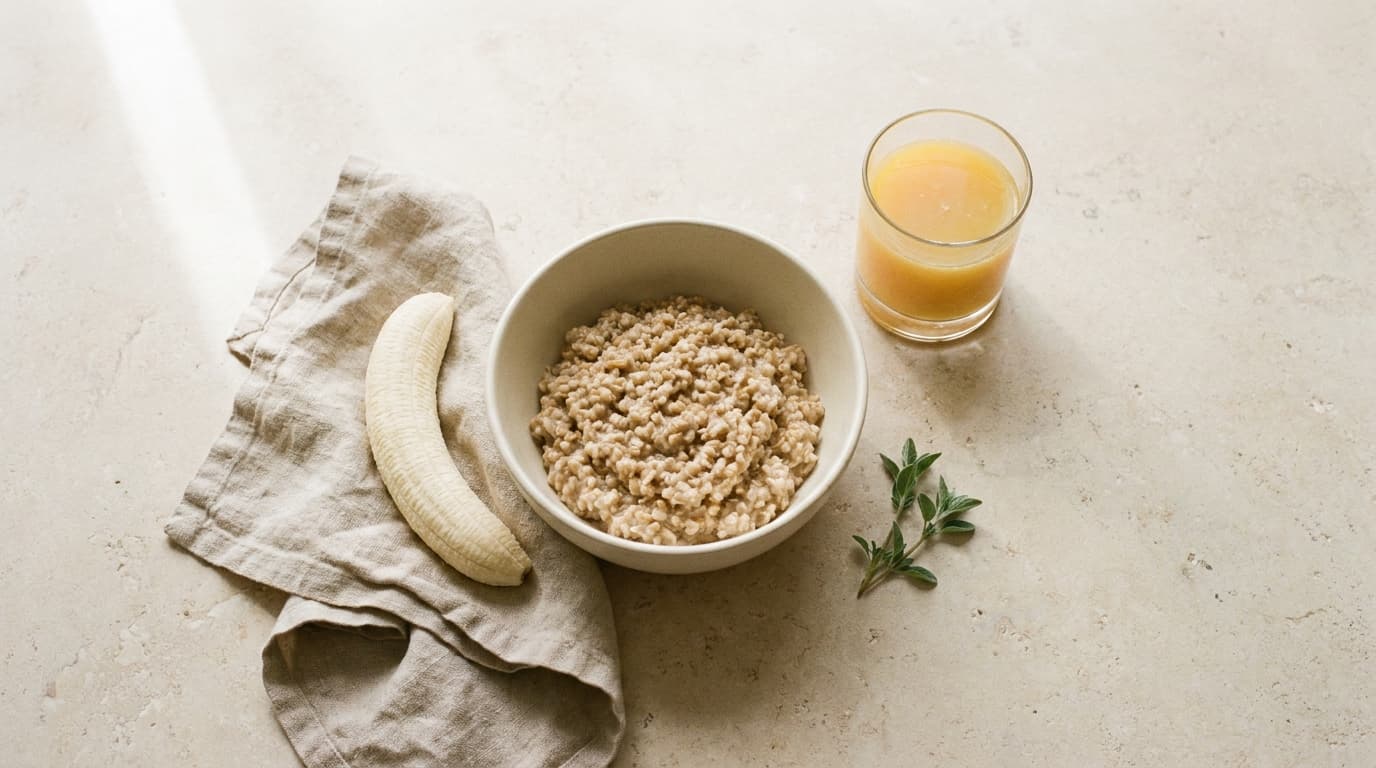
For anything under about 90 minutes, no. Imaging shows a large carbohydrate breakfast does not raise muscle glycogen at all, so you are running on fuel you banked yesterday. Eat first if you like how it feels — it steadies blood sugar and settles your stomach. It is not loading your legs.
What the imaging actually showed
Your muscles store fuel as glycogen. The standard advice is to top off that tank before training.
A team in Maastricht looked directly, using MRI rather than inference. They fed trained cyclists a large carbohydrate breakfast and measured for three hours. Muscle glycogen did not change. Liver did not move either.
Then the harder version: empty the stores with two hours of brutal cycling, then feed an enormous carbohydrate load across twelve hours. The liver refilled fast and overshot within six. Muscle was still about a third empty at hour twelve.
No change
Muscle and liver refill on different clocks
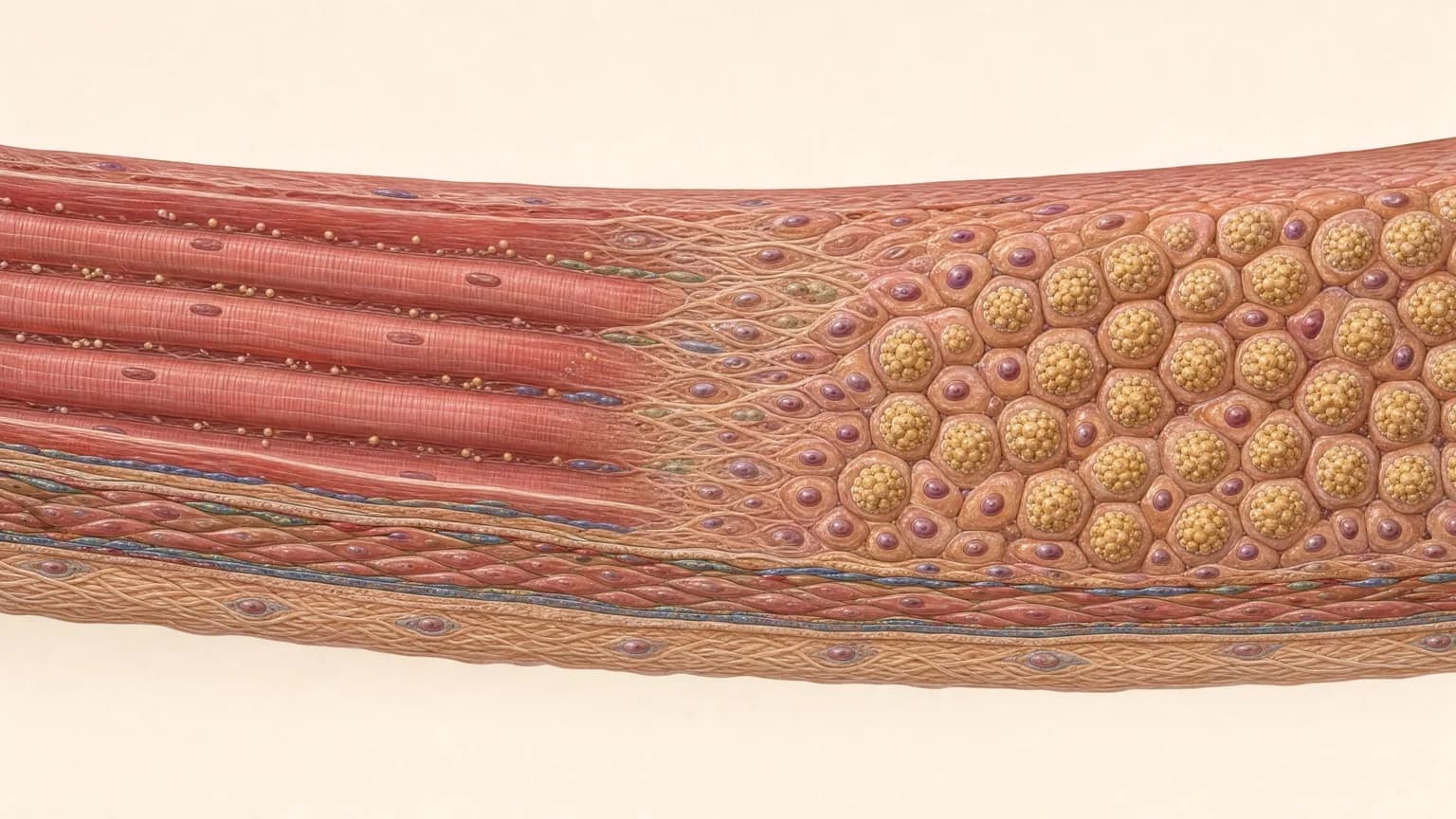
Simplified teaching model. Storage capacity, depletion, and refilling rates vary with training status, diet, and the intensity of the session.
Measured by MRI
Muscle fuel refills on a much slower clock than the liver
Stores were emptied with two hours of hard cycling, then refilled with an enormous carbohydrate load across twelve hours.
Liver
Back past baseline by hour 6
Refilled fast, then kept going past where it started.
Muscle
Still about a third empty at hour 12
Twelve hours and an enormous carbohydrate load later.
So what is the pre-workout meal doing?
Real things, just not the advertised one. It puts sugar in your blood, settles your stomach, and keeps you from thinking about lunch mid-set. Plenty of people train better when they are not hungry.
What it is not doing is powering the session. The meal that mattered for this morning's workout was yesterday's dinner.

When fueling genuinely matters
There is a real exception, and it is narrower than the advice implies.
Session length and what it actually needs
| Session | What is fueling it | Eat beforehand? |
|---|---|---|
| Under 90 minutes | Fuel banked across yesterday | Optional. For comfort, not fuel. |
| Heavy lifting | Stored glycogen, plus a growth signal | Reasonable, if you are building. |
| Past 90 minutes of hard endurance | Fuel genuinely running out | Yes. Simple, fast, liquid. |
| Any session where you feel shaky | Blood sugar, not muscle stores | Yes. Treat it, do not train through it. |
What to do instead
Eat first if you like it. Skip it if you do not. For a normal session you are not leaving anything on the table either way.
What actually changes your body is yesterday and today in total: enough protein, split so each meal clears roughly 30 grams, and enough food to support the training.

How I’d decide
- Who it's for
- Anyone who trains for an hour and has been told to eat a banana first.
- Who should skip it
- Do not default to fasted training if you take insulin or a sulfonylurea, are pregnant, have a history of disordered eating, or get symptomatic lows. Long endurance work is a different question.
- What to measure
- How the session goes: energy through the last set, lightheadedness, whether performance holds week to week. If skipping breakfast means you eat everything by 2pm, that is the finding that matters.
- What I do
- I train fasted most mornings, because it gets me out the door faster. That is the whole reason.
- What would change my mind
- The imaging is hard to argue with for short sessions. What would move me is evidence that training hard fasted costs lean mass over months.
In short
Muscle refills over a day, not an hour. Still about a third empty twelve hours after being emptied.
A big carb breakfast did nothing. Trained cyclists, measured by MRI for three hours. No change in muscle or liver.
The real benefits are different. Blood sugar, stomach comfort, not thinking about lunch mid-set.
Past 90 minutes, the logic flips. Long endurance work is where fast carbohydrate earns its reputation.
Common questions
- Should I eat before a workout?
- For sessions under about 90 minutes, it is optional. Imaging shows a large carbohydrate breakfast does not raise muscle glycogen at all in the hours afterward — you are running on what you ate the previous day. Eat first if it makes you feel better or keeps you from getting hungry mid-session. Just do not treat it as loading your muscles.
- How long does it take to refill muscle glycogen?
- Roughly a day, and longer after a hard depleting session. When researchers emptied stores with two hours of intense cycling and then fed an enormous carbohydrate load over twelve hours, the liver refilled and overshot within six hours — but muscle was still about a third empty at hour twelve.
- Is it bad to work out on an empty stomach?
- Not for most people doing a normal-length session. The considerations are practical: lightheadedness, whether performance holds, and whether skipping breakfast leads to overeating later. It is a different question if you take insulin or a sulfonylurea, are pregnant, or have a history of disordered eating.
- Does eating a banana before the gym help?
- It helps your blood sugar and your stomach, not your muscle fuel stores. If you enjoy it, have it. If you have been forcing one down because you believe you need it, you do not.
- What about protein before a workout?
- Total daily protein is what matters, split across meals so each clears roughly 30 grams. Whether one of those lands immediately before training matters far less than the daily total. Breakfast is the more interesting slot — moving some protein earlier is a cheap bet with one encouraging trial behind it.
Keep reading
Sources
- 1Maastricht carbohydrate breakfast and glycogen imaging study. Am J Physiol Endocrinol Metab, 2025.
- 2Fuchs et al. Carbohydrate intake of 10 g/kg body mass rapidly replenishes liver, but not muscle glycogen. J Physiol, 2025.
- 3Mamerow et al. Dietary protein distribution positively influences 24-h muscle protein synthesis. J Nutr, 2014.
- 4Longland et al. Higher compared with lower dietary protein during an energy deficit combined with intense exercise. Am J Clin Nutr, 2016.
No supplement store. No affiliate ranking. Nothing on this page is sold.