Supplements That Lower LDL Cholesterol: What Works, What Doesn't, and What I Use Instead
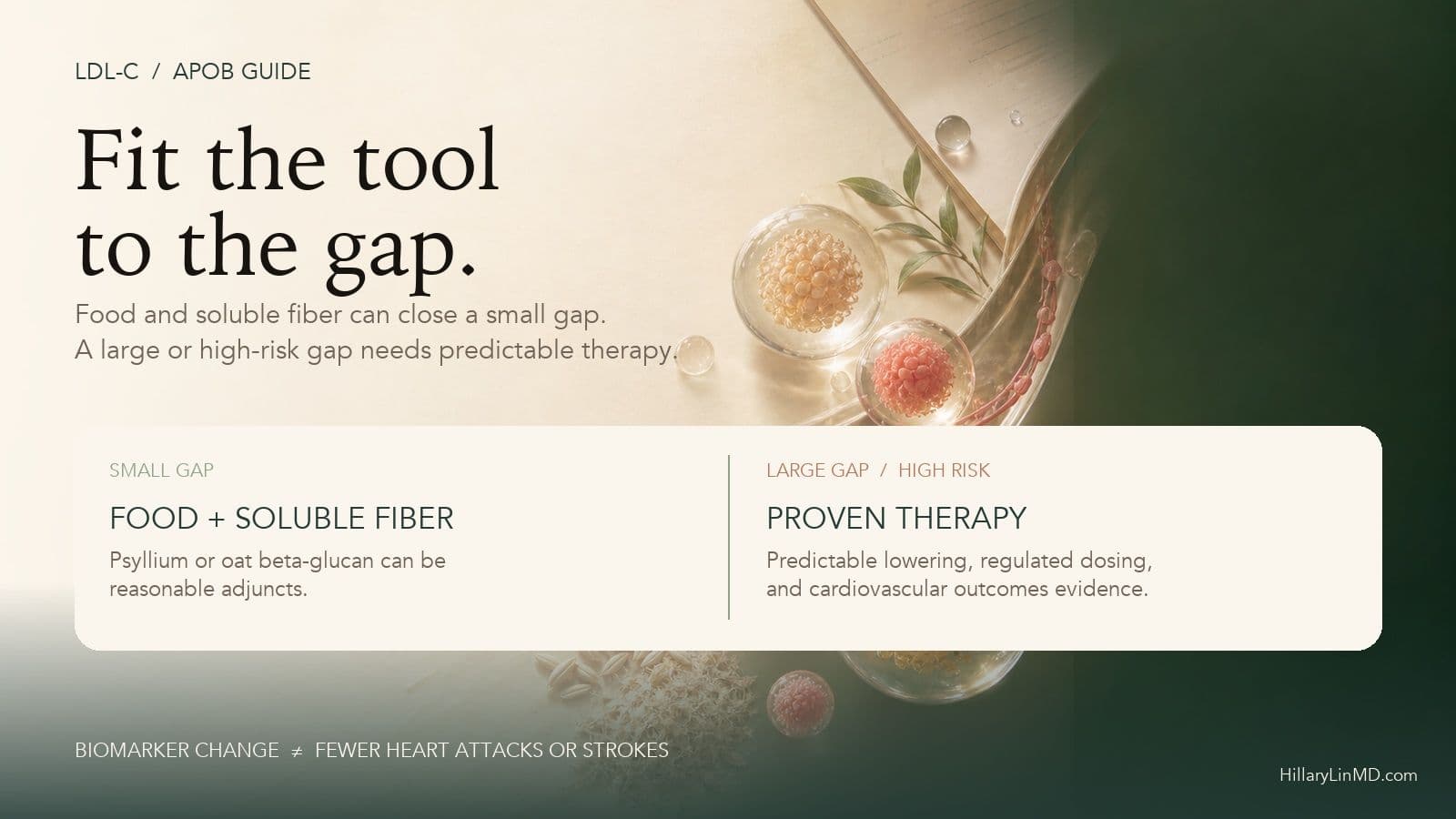
Psyllium and food-based soluble fiber are reasonable adjuncts when the LDL or ApoB gap is small. When 30–50% or more lowering is needed, or cardiovascular risk is high, regulated therapy is usually more effective, predictable, and often safer than a supplement stack.
Best adjunct
Psyllium and food-based soluble fiber can help when the gap is small.
Evidence boundary
Lower LDL is not the same as proving fewer heart attacks or strokes.
Large gap
For 30–50%+ lowering or high-risk disease, regulated therapy is usually the safer, more predictable tool.
The short answer
A few nonprescription interventions genuinely lower LDL cholesterol. Psyllium and oat beta-glucan are the cleanest adjuncts. Plant sterols lower LDL modestly, but they do not have cardiovascular-outcomes trials and they raise circulating plant sterols. Red yeast rice can lower LDL substantially because its active ingredient is chemically identical to lovastatin, but the dose is unpredictable and the product can carry the same muscle, liver, pregnancy, and drug-interaction risks as a statin without the same manufacturing control.
Most other supplements produce small, inconsistent changes, have weak product-specific evidence, or have never shown that they prevent heart attacks or strokes. Niacin is the clearest cautionary example: it improves the lipid panel, but large outcomes trials found no added cardiovascular benefit and more serious adverse events.
My bottom line is not “supplements never work.” It is this:
Do not use a small, uncertain biomarker effect to solve a large, causal exposure problem.
If LDL-C or ApoB is only modestly elevated and overall risk is low, diet quality, soluble fiber, exercise, weight management when relevant, and a carefully chosen adjunct may be enough. If the required LDL reduction is 30%, 50%, or more, or if familial hypercholesterolemia, high Lp(a), plaque, or prior cardiovascular disease is present, supplements are usually the wrong main tool. Evidence-based medication is more potent, more predictable, and often safer than stacking unregulated products.
This is general education, not a personal treatment plan. Severe muscle weakness, dark urine, chest pain, stroke symptoms, pregnancy, known cardiovascular disease, LDL-C around or above 190 mg/dL, or triglycerides near or above 1,000 mg/dL should not be self-managed from a supplement guide.
First, make sure you are treating the right phenotype
LDL can rise because of genetics, diet, metabolic disease, endocrine disease, organ disease, medication exposure, or some combination. Before building a supplement stack, establish a baseline and look for causes that would change the plan.
A useful baseline
- Standard lipid panel: total cholesterol, LDL-C, HDL-C, triglycerides
- Non-HDL-C
- ApoB when particle burden or discordance matters
- Lp(a) at least once in adulthood
- Blood pressure
- A1c or fasting glucose
- Kidney function; urine protein/albumin when clinically indicated
- Liver and thyroid context
- Medication and supplement review
- Pregnancy or pregnancy-planning status
- Three-generation family history focused on premature myocardial infarction, stroke, revascularization, sudden death, and known extreme cholesterol
Secondary causes worth checking
- Hypothyroidism: reduced LDL-receptor activity can impair LDL clearance.
- Nephrotic syndrome or chronic kidney disease: can increase lipoprotein production and change clearance.
- Cholestatic liver disease: can markedly alter cholesterol measurements.
- Diabetes, insulin resistance, obesity, and visceral adiposity: often create a remnant-rich, ApoB-discordant pattern.
- Pregnancy and menopause: can change lipids through normal and pathologic physiology.
- Diet: saturated-fat response varies substantially; ketogenic or very-low-carbohydrate diets can drive large LDL increases in some people.
- Medications: examples include glucocorticoids, retinoids, cyclosporine or tacrolimus, some antipsychotics, some anticonvulsants, some HIV therapies, and selected hormone regimens.
When to suspect familial hypercholesterolemia
Familial hypercholesterolemia, or FH, should move high on the list when untreated adult LDL-C is around or above 190 mg/dL, especially with premature coronary disease in the person or family, tendon xanthomas, or corneal arcus at a young age. A negative genetic test does not exclude clinical or polygenic FH. If FH is plausible, the right next step is not a stronger supplement stack; it is earlier treatment, family cascade screening, and often lipid-specialist input.
How to read the evidence in this guide
I use a simple proof ladder:
- Mechanism: Could this intervention plausibly change cholesterol metabolism?
- Biomarker: Does it lower LDL-C, non-HDL-C, or ApoB in randomized trials?
- Controlled clinical evidence: Was the product, dose, and comparator well defined?
- Hard outcome: Did it reduce myocardial infarction, stroke, revascularization, or death?
- Implementation: Can you buy the same exposure that was studied, at a known dose, without unacceptable interaction or quality risk?
Many supplements reach step 2. Very few reach steps 4 and 5.
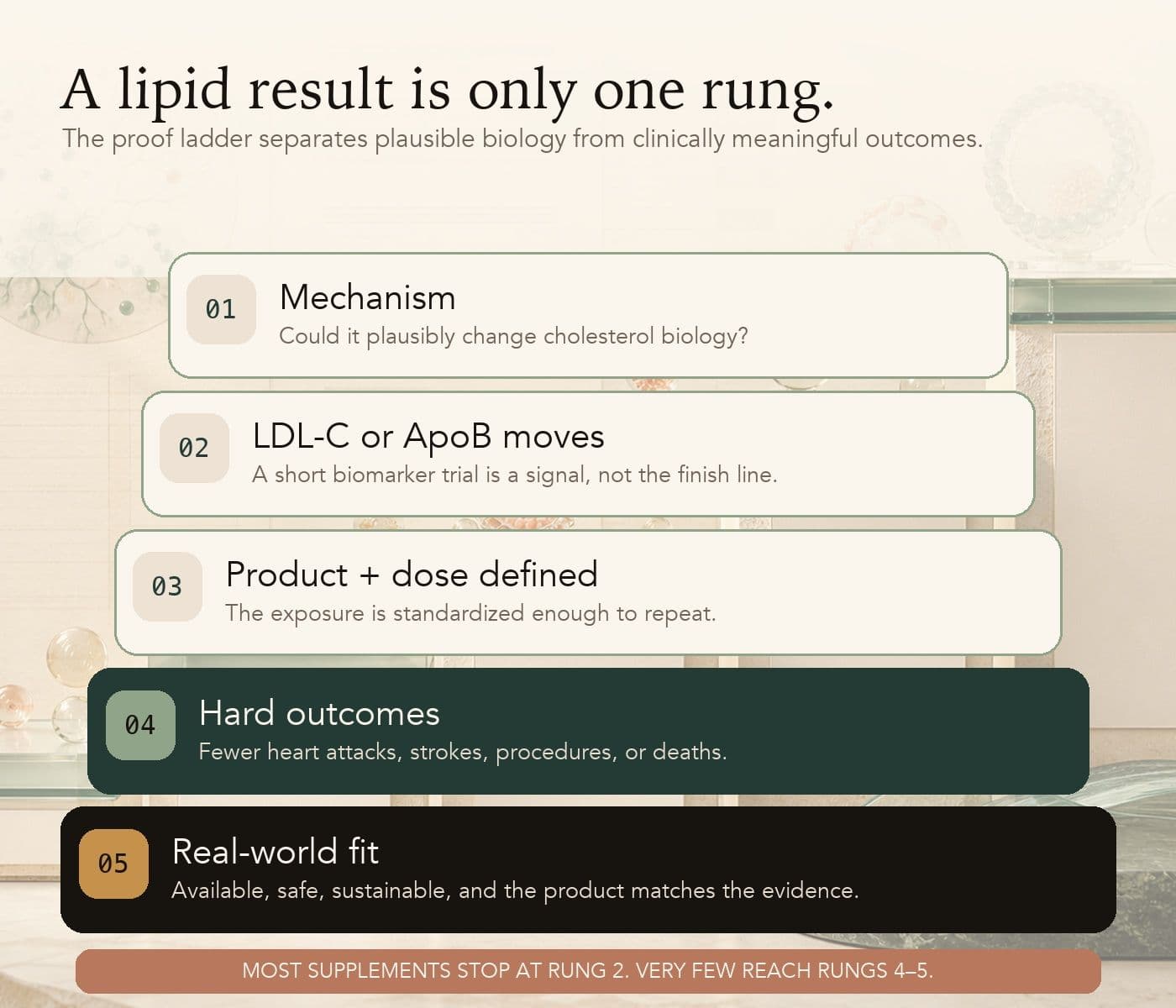
Most supplements show a mechanism and a biomarker change. Far fewer have a standardized exposure and cardiovascular-outcomes evidence.
At-a-glance verdict
LDL-lowering options at a glance
Psyllium, ~10 g/day
- Typical LDL effect
- About −13 mg/dL on average; ApoB about −5 mg/dL
- Hard cardiovascular outcomes?
- No product-specific event trial
- My take
- Reasonable adjunct if tolerated
Oat beta-glucan, ~3–4 g/day
- Typical LDL effect
- About −7 mg/dL; small ApoB reduction
- Hard cardiovascular outcomes?
- Food-pattern evidence, not a beta-glucan outcomes trial
- My take
- Good food-first adjunct
Plant sterols/stanols, ~2 g/day
- Typical LDL effect
- Often −7% to −12%
- Hard cardiovascular outcomes?
- No randomized event trial
- My take
- Works numerically; not my default
Red yeast rice
- Typical LDL effect
- About −15% to −25%; meta-analysis around −29 mg/dL
- Hard cardiovascular outcomes?
- One product-specific Chinese secondary-prevention trial; not transferable to random shelf products
- My take
- An unstandardized statin, not a safer alternative
Berberine
- Typical LDL effect
- Meta-analysis about −18 mg/dL; heterogeneous
- Hard cardiovascular outcomes?
- No cardiovascular-outcomes trial
- My take
- Possible modest adjunct; interaction and quality burden
Soy protein / food substitution
- Typical LDL effect
- Usually −3% to −5%
- Hard cardiovascular outcomes?
- Benefits belong to dietary pattern, not a pill
- My take
- Reasonable food substitution
Garlic
- Typical LDL effect
- Small; some reviews report up to ~10% in higher baseline cholesterol
- Hard cardiovascular outcomes?
- No convincing event evidence
- My take
- Optional for another reason; not a primary LDL tool
Green tea
- Typical LDL effect
- Usually small, often single-digit mg/dL
- Hard cardiovascular outcomes?
- No LDL-treatment outcomes trial
- My take
- Brewed tea is reasonable; concentrated extract adds liver risk
Artichoke extract
- Typical LDL effect
- Meta-analyses around −10 to −13 mg/dL, heterogeneous
- Hard cardiovascular outcomes?
- No event trial
- My take
- Too product-variable for routine use
Bergamot
- Typical LDL effect
- Published estimates range widely and are not credible as a single expected number
- Hard cardiovascular outcomes?
- No event trial
- My take
- Promising signal, weak certainty
Curcumin/turmeric
- Typical LDL effect
- Small and heterogeneous
- Hard cardiovascular outcomes?
- No event benefit
- My take
- Not an LDL strategy; rare liver injury matters
Probiotics
- Typical LDL effect
- Small and strain-specific
- Hard cardiovascular outcomes?
- No event trial
- My take
- Do not buy a generic probiotic for LDL
Omega-3/fish oil
- Typical LDL effect
- Not an LDL-lowering tool; DHA can raise LDL in some settings
- Hard cardiovascular outcomes?
- Mixed by product/population; prescription EPA is not OTC fish oil
- My take
- Use for a triglyceride indication, not LDL
Niacin
- Typical LDL effect
- LDL may fall ~10–15%; HDL rises, triglycerides fall
- Hard cardiovascular outcomes?
- No added benefit in AIM-HIGH or HPS2-THRIVE; more harms
- My take
- Do not self-treat LDL with high-dose niacin
Policosanol
- Typical LDL effect
- No reliable effect in independent RCTs
- Hard cardiovascular outcomes?
- No
- My take
- Skip
| Intervention | Typical LDL effect | Hard cardiovascular outcomes? | My take |
|---|---|---|---|
| Psyllium, ~10 g/day | About −13 mg/dL on average; ApoB about −5 mg/dL | No product-specific event trial | Reasonable adjunct if tolerated |
| Oat beta-glucan, ~3–4 g/day | About −7 mg/dL; small ApoB reduction | Food-pattern evidence, not a beta-glucan outcomes trial | Good food-first adjunct |
| Plant sterols/stanols, ~2 g/day | Often −7% to −12% | No randomized event trial | Works numerically; not my default |
| Red yeast rice | About −15% to −25%; meta-analysis around −29 mg/dL | One product-specific Chinese secondary-prevention trial; not transferable to random shelf products | An unstandardized statin, not a safer alternative |
| Berberine | Meta-analysis about −18 mg/dL; heterogeneous | No cardiovascular-outcomes trial | Possible modest adjunct; interaction and quality burden |
| Soy protein / food substitution | Usually −3% to −5% | Benefits belong to dietary pattern, not a pill | Reasonable food substitution |
| Garlic | Small; some reviews report up to ~10% in higher baseline cholesterol | No convincing event evidence | Optional for another reason; not a primary LDL tool |
| Green tea | Usually small, often single-digit mg/dL | No LDL-treatment outcomes trial | Brewed tea is reasonable; concentrated extract adds liver risk |
| Artichoke extract | Meta-analyses around −10 to −13 mg/dL, heterogeneous | No event trial | Too product-variable for routine use |
| Bergamot | Published estimates range widely and are not credible as a single expected number | No event trial | Promising signal, weak certainty |
| Curcumin/turmeric | Small and heterogeneous | No event benefit | Not an LDL strategy; rare liver injury matters |
| Probiotics | Small and strain-specific | No event trial | Do not buy a generic probiotic for LDL |
| Omega-3/fish oil | Not an LDL-lowering tool; DHA can raise LDL in some settings | Mixed by product/population; prescription EPA is not OTC fish oil | Use for a triglyceride indication, not LDL |
| Niacin | LDL may fall ~10–15%; HDL rises, triglycerides fall | No added benefit in AIM-HIGH or HPS2-THRIVE; more harms | Do not self-treat LDL with high-dose niacin |
| Policosanol | No reliable effect in independent RCTs | No | Skip |
These are approximate group averages, not guarantees. Baseline LDL, formulation, dose, adherence, trial duration, background diet, and concurrent therapy all matter. Effects from separate trials are not automatically additive.
The interventions that are most reasonable
1. Psyllium: the cleanest supplement-like option
Psyllium is a viscous soluble fiber. It forms a gel in the intestine, increases bile-acid loss, and prompts the liver to use more cholesterol to replace bile acids.
A meta-analysis of 28 randomized trials involving 1,924 participants found that a median dose of 10.2 g/day lowered:
- LDL-C by 0.33 mmol/L, about 12.8 mg/dL
- non-HDL-C by 0.39 mmol/L, about 15.1 mg/dL
- ApoB by 0.05 g/L, or 5 mg/dL
That is a real effect. It is also modest. If LDL-C is 145 mg/dL and the target is around 120, psyllium may contribute meaningfully. If untreated LDL-C is 220 mg/dL and the goal is below 100, it is not remotely enough by itself.
Practical use: trials often use roughly 7–12 g/day, divided, with adequate water. Start lower and titrate because bloating, gas, cramping, or loose stools can limit adherence. Psyllium can alter the absorption of medications; spacing it by roughly two hours from oral drugs is a sensible default unless a pharmacist or label gives more specific instructions. Never swallow dry psyllium without sufficient fluid, particularly with swallowing or intestinal-narrowing problems.
Evidence boundary: the data show improved lipid surrogates. There is no large randomized trial showing that adding a specific psyllium product prevents myocardial infarction or stroke.
2. Oat or barley beta-glucan: better as food than as another bottle
A meta-analysis of 58 randomized trials involving 3,974 participants found that a median 3.5 g/day of oat beta-glucan lowered:
- LDL-C by 0.19 mmol/L, about 7.4 mg/dL
- non-HDL-C by 0.20 mmol/L, about 7.7 mg/dL
- ApoB by 0.03 g/L, or 3 mg/dL
Oats, barley, beans, lentils, and other high-fiber foods also improve satiety, bowel health, and overall diet quality. That makes them more attractive than an isolated “cholesterol blend.” The cholesterol effect depends on the amount and viscosity of beta-glucan; a token dusting in a processed snack does not reproduce the trial exposure.
3. Soy protein and food substitution: small effect, good context
Replacing an animal protein or saturated-fat-rich food with soy can lower LDL by roughly 3% to 5%. Part of the benefit comes from what soy replaces. Tofu, tempeh, edamame, and unsweetened soy milk can be useful foods; isolated soy capsules are not necessary.
The same replacement logic matters more broadly. Replacing saturated fat with unsaturated fat, adding legumes and nuts, and building a Mediterranean or Portfolio-style pattern can change more than LDL alone. The goal is not to “eat cholesterol-free.” It is to reduce ApoB exposure while improving the rest of the cardiovascular terrain.
Interventions that lower LDL but are not as reassuring as they look
4. Plant sterols and stanols: a real LDL effect without outcomes proof
At around 2 g/day, plant sterols or stanols typically lower LDL-C by roughly 7% to 12% by competing with cholesterol absorption in the intestine. Meta-analyses also show a modest ApoB reduction.
Why I do not treat that as an automatic recommendation:
- There are no randomized trials showing fewer heart attacks, strokes, or deaths from long-term sterol supplementation.
- Supplements and fortified foods raise circulating plant sterols.
- Sitosterolemia, a rare genetic disorder, causes extreme plant-sterol accumulation and premature atherosclerosis; concentrated sterols are inappropriate in that setting.
- Genetic and Mendelian-randomization work raises concern that higher circulating phytosterols may contribute to coronary risk independently of cholesterol. That does not prove ordinary supplement doses cause events, but it removes the assumption that the exposure is automatically benign.
- Whole vegetables, legumes, nuts, seeds, and other plants are not the problem. This concern is about concentrated sterol products, not avoiding plant foods.
If someone already uses a standardized sterol product, tolerates it, has a small residual LDL gap, and understands the outcomes uncertainty, it can be a reasonable shared decision. It is not my default for a person with plaque or high inherited risk when outcome-proven medication is available.
5. Red yeast rice: it works because it is a statin
Red yeast rice can produce one of the largest LDL reductions in the supplement aisle. A meta-analysis of randomized trials reported an average LDL-C reduction of about 28.9 mg/dL.
The mechanism is not mysterious. Monacolin K is chemically identical to lovastatin. That means red yeast rice can also reproduce statin-type adverse effects and interactions:
- muscle pain, weakness, myopathy, and rarely rhabdomyolysis
- liver-enzyme elevation and liver injury
- CYP3A4-related interactions
- pregnancy risk
- additive toxicity with a prescription statin or other interacting drugs
The quality problem is unusually important. In a 2017 analysis of 28 U.S. brands, monacolin K varied more than 60-fold, from 0.09 to 5.48 mg per 1,200 mg of red yeast rice. Labels generally did not tell consumers the active dose. Some red yeast rice products have also contained citrinin, a nephrotoxic mycotoxin.
There is a positive cardiovascular-outcomes trial of Xuezhikang, a partially purified, specific Chinese red yeast rice extract, in 4,870 patients after myocardial infarction. It reported fewer coronary events. That is not proof that a random U.S. supplement with unknown monacolin and citrinin content reproduces the same exposure or benefit.
The regulatory paradox is revealing: in the United States, red yeast rice products with added or enhanced lovastatin cannot legally be marketed as dietary supplements because lovastatin was approved as a drug first. In practical terms, the supplement works best when it behaves most like the drug, but the more drug-like it is, the more the lack of dose and quality control matters.
My take: if you are willing to take lovastatin-level biology, I would rather use a known-dose medication with defined manufacturing and monitoring than an unlabeled statin exposure.
6. Berberine: a plausible modest effect with a messy implementation layer
A placebo-controlled meta-analysis of 18 trials involving 1,788 participants found that berberine lowered:
- LDL-C by 0.46 mmol/L, about 17.8 mg/dL
- triglycerides by 0.34 mmol/L, about 30 mg/dL
- ApoB by 0.25 g/L, or 25 mg/dL, although the ApoB estimate came from only two small studies totaling 127 participants
Most trials were short, and 15 of 18 were conducted in mainland China or Hong Kong. There are no large cardiovascular-outcomes trials showing that berberine prevents myocardial infarction or stroke.
Berberine commonly causes constipation, diarrhea, abdominal pain, or nausea. More importantly, it can inhibit or affect CYP enzymes and P-glycoprotein, creating interactions with medications that have narrow therapeutic windows or important metabolism, including some immunosuppressants. It should not be treated as a casual add-on during pregnancy or breastfeeding, and neonatal exposure is a concern.
If berberine is used for a defined metabolic reason, the product, dose, interaction review, and follow-up labs should be explicit. I would not use it to delay an outcome-proven lipid therapy in a high-risk person.
Popular options with weak, inconsistent, or misleading evidence
Garlic
A 39-trial meta-analysis reported roughly a 10% reduction in total and LDL cholesterol after more than two months in people with elevated baseline cholesterol. The problem is that “garlic” includes aged extract, powder, oil, and other preparations with different active compounds. More recent analyses remain heterogeneous.
Garlic can cause reflux, odor, and GI symptoms and may add antiplatelet effects, which matters around procedures or with anticoagulants. Aged garlic has intriguing small imaging and blood-pressure studies, but it does not have the outcomes evidence or potency to serve as the main therapy for a large ApoB burden.
Green tea
Brewed green tea may produce a small LDL reduction as part of a healthy dietary pattern. Concentrated green-tea extracts are different exposures. High-dose extract, particularly taken fasting, has been linked to rare acute liver injury. I would not accept liver risk for a small, uncertain LDL change.
Bergamot
Bergamot is a good example of why pooled numbers can mislead. A 14-trial meta-analysis reported a dramatic LDL reduction of 55 mg/dL, but the review itself described inconsistent results and called for better-quality trials. Products, doses, comparators, populations, and trial quality varied. A result that rivals a potent prescription drug should require equally potent evidence. Bergamot does not have that evidence yet.
Artichoke leaf extract
Meta-analyses suggest an LDL reduction around 10–13 mg/dL, but formulations and populations vary, and there are no cardiovascular-outcomes trials. It may cause GI symptoms or allergic reactions, particularly in people sensitive to the Asteraceae family. It is not a reliable main treatment.
Curcumin or turmeric
Meta-analyses find small and heterogeneous changes in lipid markers. There is no proven cardiovascular-event benefit. Enhanced-bioavailability products, including some with piperine, have been linked to rare but potentially severe supplement-associated liver injury. Culinary turmeric is not the same exposure as a concentrated extract.
Probiotics
Meta-analyses report small average lipid changes, but the effect is strain-, dose-, population-, and product-specific. “Probiotic” is not one intervention. A generic bottle containing different organisms than the studied strain cannot inherit the study result. There are no hard cardiovascular-outcomes data for using probiotics as an LDL treatment.
Policosanol
Early Cuban studies reported statin-like LDL reductions. Independent randomized trials did not reproduce them. A North American placebo-controlled trial of 20 mg/day found no significant LDL effect. Skip it.
Interventions that are often confused with LDL treatment
Omega-3 fish oil
Omega-3 fatty acids are mainly triglyceride-lowering agents. DHA-containing products can raise LDL-C in some people, especially when triglycerides are high. Ordinary over-the-counter fish oil has not consistently prevented cardiovascular events in general primary prevention; VITAL found no significant reduction in its primary major-cardiovascular-event composite with 1 g/day marine omega-3.
Prescription icosapent ethyl is a specific high-dose purified EPA drug studied in selected statin-treated patients with elevated triglycerides. Its evidence cannot be transferred to generic fish oil. Higher-dose omega-3 trials also show a dose-related atrial-fibrillation signal.
Use omega-3 for the indication and formulation actually studied. Do not buy it to lower LDL.
Niacin
Pharmacologic-dose nicotinic acid can lower LDL and triglycerides and raise HDL. That makes the laboratory panel look better. It did not improve outcomes when added to contemporary statin-based therapy:
- AIM-HIGH: LDL fell from 74 to 62 mg/dL and HDL rose, but the primary event rate was 16.4% with niacin versus 16.2% with placebo.
- HPS2-THRIVE: LDL was about 10 mg/dL lower and HDL about 6 mg/dL higher, but major vascular events were 13.2% versus 13.7%, not significantly different. Serious problems increased, including worsened diabetes control, new diabetes, GI, musculoskeletal, skin, infection, and bleeding events.
High-dose niacin can also cause flushing, pruritus, hepatotoxicity, hyperglycemia, and hyperuricemia/gout. Sustained-release supplement formulations can be particularly hepatotoxic. This is not a DIY vitamin strategy.
Vitamin D, CoQ10, magnesium, and multivitamins
Correct a documented deficiency or use a supplement for a separate evidence-based indication. Do not expect these to meaningfully lower LDL or ApoB. A supplement can be useful without being a lipid therapy.
Why medication is often more effective — and sometimes safer
The fair comparison is not “natural versus pharmaceutical.” It is:
- How much ApoB/LDL reduction is needed?
- Is the active ingredient and dose known?
- Was the same product studied?
- Are cardiovascular outcomes available?
- Are adverse effects, interactions, and monitoring understood?
- Can the person sustain the regimen?
Medication potency and outcomes evidence
Moderate-intensity statin
- Typical LDL-C reduction
- About 30%–49%
- Cardiovascular-outcomes evidence
- Extensive randomized event evidence
- Main tradeoffs
- Small excess of mostly mild muscle symptoms; interactions; small dose-related diabetes signal
High-intensity statin
- Typical LDL-C reduction
- ≥50%
- Cardiovascular-outcomes evidence
- Extensive randomized event evidence
- Main tradeoffs
- Same issues, greater potency and somewhat greater glycemic/muscle burden
Ezetimibe
- Typical LDL-C reduction
- About 15%–25%
- Cardiovascular-outcomes evidence
- IMPROVE-IT showed fewer events when added after acute coronary syndrome
- Main tradeoffs
- Modest potency; generally low burden
Bempedoic acid
- Typical LDL-C reduction
- About 20%
- Cardiovascular-outcomes evidence
- CLEAR Outcomes showed fewer MACE in statin-intolerant high-risk adults
- Main tradeoffs
- Gout/uric acid, gallstones, liver-enzyme changes, tendon warning
PCSK9 antibody: evolocumab or alirocumab
- Typical LDL-C reduction
- About 50%–60%
- Cardiovascular-outcomes evidence
- FOURIER and ODYSSEY OUTCOMES showed fewer cardiovascular events
- Main tradeoffs
- Injection, access, cost, local reactions
Inclisiran
- Typical LDL-C reduction
- About 50%
- Cardiovascular-outcomes evidence
- LDL lowering proven; dedicated event trials still ongoing as of July 2026
- Main tradeoffs
- Clinician administration, access; outcomes claim not yet established
Oral PCSK9 inhibitor enlicitide / Lipfendra
- Typical LDL-C reduction
- Roughly 56%–59% vs placebo in Phase 3
- Cardiovascular-outcomes evidence
- Product-specific outcomes trial ongoing
- Main tradeoffs
- Daily fasting administration, access, outcomes still pending
Bile-acid sequestrant
- Typical LDL-C reduction
- About 15%–20%
- Cardiovascular-outcomes evidence
- Older cholestyramine trial supports fewer coronary events
- Main tradeoffs
- Constipation, pill/powder burden, drug binding; may raise triglycerides
| Therapy | Typical LDL-C reduction | Cardiovascular-outcomes evidence | Main tradeoffs |
|---|---|---|---|
| Moderate-intensity statin | About 30%–49% | Extensive randomized event evidence | Small excess of mostly mild muscle symptoms; interactions; small dose-related diabetes signal |
| High-intensity statin | ≥50% | Extensive randomized event evidence | Same issues, greater potency and somewhat greater glycemic/muscle burden |
| Ezetimibe | About 15%–25% | IMPROVE-IT showed fewer events when added after acute coronary syndrome | Modest potency; generally low burden |
| Bempedoic acid | About 20% | CLEAR Outcomes showed fewer MACE in statin-intolerant high-risk adults | Gout/uric acid, gallstones, liver-enzyme changes, tendon warning |
| PCSK9 antibody: evolocumab or alirocumab | About 50%–60% | FOURIER and ODYSSEY OUTCOMES showed fewer cardiovascular events | Injection, access, cost, local reactions |
| Inclisiran | About 50% | LDL lowering proven; dedicated event trials still ongoing as of July 2026 | Clinician administration, access; outcomes claim not yet established |
| Oral PCSK9 inhibitor enlicitide / Lipfendra | Roughly 56%–59% vs placebo in Phase 3 | Product-specific outcomes trial ongoing | Daily fasting administration, access, outcomes still pending |
| Bile-acid sequestrant | About 15%–20% | Older cholestyramine trial supports fewer coronary events | Constipation, pill/powder burden, drug binding; may raise triglycerides |
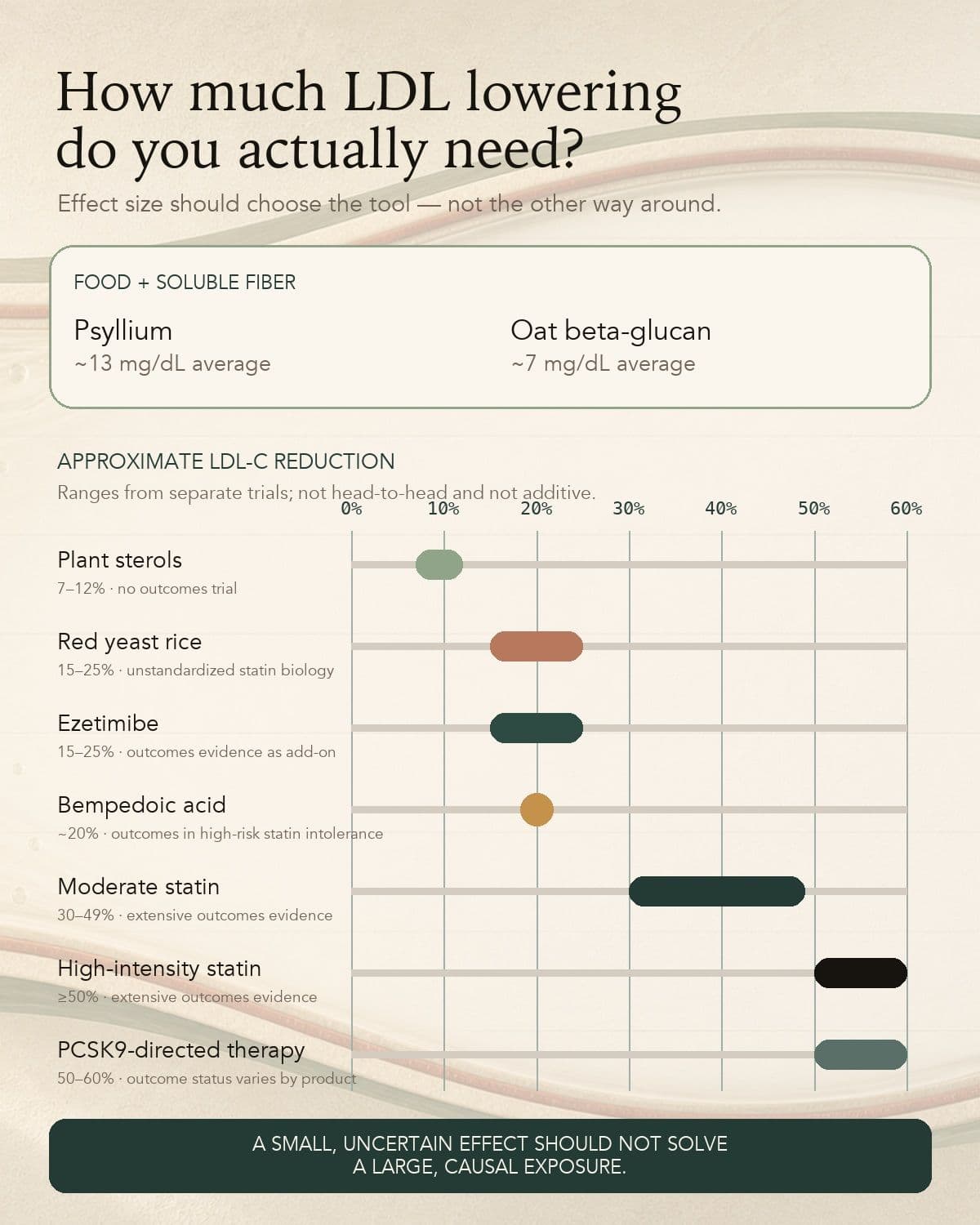
Approximate ranges from different trials. They are not head-to-head or automatically additive; outcome evidence and product consistency also matter.
What the outcomes trials actually showed
- Across 170,000 participants in 26 statin trials, each 1 mmol/L, or about 39 mg/dL, LDL-C reduction reduced major vascular events by about 22% over the trial periods. Absolute benefit was larger when baseline cardiovascular risk was higher.
- IMPROVE-IT: adding ezetimibe to simvastatin after acute coronary syndrome lowered achieved LDL from 69.5 to 53.7 mg/dL; the 7-year primary-event rate was 32.7% versus 34.7%.
- CLEAR Outcomes: bempedoic acid lowered LDL by 21.1 percentage points versus placebo; MACE was 11.7% versus 13.3% over a median 40.6 months in statin-intolerant high-risk adults.
- FOURIER: evolocumab lowered LDL by 59%; the primary event rate was 9.8% versus 11.3% over a median 2.2 years.
- ODYSSEY OUTCOMES: alirocumab after acute coronary syndrome reduced the primary event rate to 9.5% versus 11.1% over a median 2.8 years.
Those are not perfect drugs or universal indications. They are what outcomes evidence looks like: a defined molecule, dose, population, comparator, duration, and clinically meaningful endpoint.
Medication risks deserve honesty too
Statins can cause adverse effects. In a 2022 individual-participant meta-analysis of blinded trials, statins caused a small excess of mostly mild muscle symptoms, concentrated in the first year; more than 90% of reported muscle symptoms among statin-assigned participants were not pharmacologically caused by the statin. The symptoms are still real and deserve a structured assessment rather than dismissal.
Statins also produce a small dose-related rise in glycemia and diabetes diagnoses, concentrated among people already near the diagnostic threshold. That downside belongs in the risk-benefit discussion. It does not erase the event reduction in someone with high cardiovascular risk.
The point is not that drugs are harmless. The point is that their dose, benefit, risk, and alternatives are more measurable.
Why supplement stacks can make care worse
- Delay: months spent trying six weak products can prolong high ApoB exposure when a potent treatment was already indicated.
- Unpredictability: active ingredient, dose, dissolution, contamination, and lot-to-lot consistency may be unknown.
- Interactions: supplements can affect CYP enzymes, P-glycoprotein, anticoagulation, glucose, blood pressure, liver function, and other medication pathways.
- False reassurance: a small LDL change can distract from high Lp(a), smoking, hypertension, diabetes, kidney disease, or established plaque.
- Attribution failure: when five products start together, no one knows which caused the benefit, symptom, liver-enzyme change, or interaction.
- Pill and cost burden: a complex stack can reduce adherence to the few interventions that matter most.
- Evidence laundering: a study of one standardized extract is often used to market every product in the category.
Under U.S. law, FDA does not approve dietary supplements for safety and effectiveness before they are marketed. Third-party testing can improve confidence in identity and contamination control; it does not prove that the product prevents cardiovascular events.
A practical decision framework
Step 1: Define the LDL/ApoB gap
Calculate the percentage reduction actually needed. If LDL-C is 150 mg/dL and the agreed goal is 120, the gap is 20%. A strong dietary change plus soluble fiber may plausibly close much of it. If LDL-C is 210 and the goal is below 100, the gap is more than 50%. Psyllium is useful, but it is not the main solution.
Step 2: Define the risk that makes the gap matter
Increase urgency for:
- known ASCVD or plaque
- untreated LDL-C near or above 190 mg/dL
- suspected FH
- high Lp(a)
- premature family history
- diabetes or chronic kidney disease
- smoking
- hypertension
- persistently high ApoB despite an apparently reassuring LDL-C
Step 3: Use the highest-value low-burden changes
- Replace saturated fat with unsaturated fat rather than simply chasing “low fat.”
- Increase minimally processed plant foods, legumes, nuts, and soluble fiber.
- Add psyllium or meaningful beta-glucan if the expected effect is useful and it is tolerated.
- Exercise for fitness, blood pressure, insulin sensitivity, triglycerides, body composition, and overall event risk even if LDL changes little.
- Treat smoking, blood pressure, diabetes, kidney disease, sleep apnea, and visceral adiposity as co-equal parts of prevention.
Step 4: Choose medication by the amount of lowering and the evidence needed
Use the lightest durable regimen likely to reach the goal. That may be a low or moderate statin dose, ezetimibe, a combination, bempedoic acid, a PCSK9-directed therapy, or another clinician-selected approach. If one statin causes symptoms, that is a troubleshooting problem, not proof that all LDL treatment must stop.
Step 5: Change one variable and close the loop
Repeat the same lipid targets after a meaningful intervention, often in 6–12 weeks. Ask:
- Did LDL-C and ApoB move by the expected amount?
- Was the regimen taken as intended?
- Was it tolerated?
- Is the residual gap still clinically important?
- Did any liver, muscle, glucose, uric-acid, or interaction concern emerge?
Do not keep adding products to an unverified plan.
My honest take
If someone asks me, “Which supplement lowers LDL best?” my answer is not a shopping list.
I first want to know how high the ApoB burden is, how long it has likely been high, whether Lp(a) or FH is present, whether plaque already exists, and how much lowering is needed. Then I choose the least burdensome plan that can realistically reach that reduction.
Psyllium is boring, inexpensive, and useful. Oats, barley, legumes, nuts, and unsaturated fats are useful. Those are adjuncts I can defend.
I generally do not recommend red yeast rice as a safer substitute for a statin. It is statin biology with less control. I do not recommend niacin for cardiovascular prevention. I do not rely on berberine, bergamot, garlic, probiotics, or a cholesterol blend to solve a high-risk LDL problem.
I use a PCSK9 inhibitor in my own care because my untreated LDL-C was 192 mg/dL, my family history is severe, and statins gave me muscle symptoms. That is not a universal prescription. It is an example of matching the potency and evidence of the tool to the size and stakes of the problem.
The best LDL plan is not the most natural, aggressive, or minimalist. It is the one that lowers causal particle exposure enough, with evidence proportional to the person's risk, and can be sustained safely for years.
Frequently Asked Questions
What is the strongest natural supplement for lowering LDL?
Red yeast rice usually has the largest LDL effect, but that is because monacolin K is lovastatin. The active dose varies dramatically across products, and the same muscle, liver, pregnancy, and drug-interaction risks can apply. I do not consider it a safer substitute for a known-dose statin. Psyllium is the cleaner adjunct, but its average LDL reduction is much smaller.
Can psyllium replace a statin?
Usually not when a large LDL reduction or proven cardiovascular-risk reduction is needed. About 10 g/day of psyllium lowered LDL by roughly 13 mg/dL on average in randomized trials. A high-intensity statin generally lowers LDL by 50% or more and has extensive cardiovascular-outcomes evidence. Psyllium can complement treatment or close a small gap.
Are plant sterols safe?
They lower LDL, but long-term cardiovascular outcomes have not been tested in randomized trials. They raise circulating plant sterols, are inappropriate in sitosterolemia, and genetic evidence creates uncertainty about whether higher phytosterol exposure is completely benign. Whole plant foods remain healthy; the question is concentrated sterol products.
Is berberine as good as metformin or a statin?
No. These are different drugs for different jobs. Berberine has short-term evidence for small average lipid and glucose changes, but products vary, interactions matter, and large cardiovascular-outcomes trials are absent. It should not inherit the evidence of metformin, statins, or any other regulated medication.
Does fish oil lower LDL?
No. Omega-3 products primarily lower triglycerides, and DHA can raise LDL in some people. Prescription purified EPA studied in selected high-risk patients is not equivalent to generic fish oil. Use the specific formulation for the specific indication.
What about niacin because it raises HDL?
Raising HDL on a laboratory panel did not translate into fewer events when niacin was added to contemporary statin therapy. AIM-HIGH and HPS2-THRIVE found no meaningful added cardiovascular benefit, and HPS2-THRIVE found more serious adverse events. High-dose niacin is not a benign vitamin strategy.
How long should I try a diet or supplement before rechecking cholesterol?
Six to twelve weeks is a practical interval after a meaningful, stable change. Use the same laboratory markers and verify adherence. Recheck sooner or use clinician supervision when LDL is severe, plaque or prior events are present, pregnancy is relevant, symptoms occur, or treatment is being titrated rapidly.
When is LDL high enough that supplements should not be the main plan?
There is no single cutoff for every person, but untreated LDL-C near or above 190 mg/dL, suspected FH, known plaque or ASCVD, high Lp(a) with additional risk, or a required reduction of roughly 30%–50% or more should push the conversation toward evidence-based medication rather than supplement-only care.
Should I track ApoB instead of LDL-C?
Track both when ApoB will change the decision. LDL-C measures cholesterol mass in LDL particles; ApoB is closer to the number of all atherogenic particles. Discordance is common with high triglycerides, insulin resistance, diabetes, obesity, and treated lipid states. LDL-C remains useful; ApoB adds particle-level precision.
Can I combine several supplements to get a statin-sized effect?
Do not assume effects from separate trials add together. Supplements can overlap mechanistically, interact, reduce medication absorption, or produce less benefit in combination than simple arithmetic predicts. Stacking also makes adverse effects and attribution harder. If a statin-sized reduction is needed, use a therapy designed and tested to produce one.
References & citations
- 1.2026 ACC/AHA Multisociety Guideline on the Management of Dyslipidemia
- 2.2026 guideline full text, Circulation
- 3.Cholesterol Treatment Trialists’ Collaboration: intensive LDL lowering in 170,000 participants
- 4.Endotext: Guidelines for the Management of Dyslipidemia, updated 2026
- 5.Endotext: Familial Hypercholesterolemia—Genes and Beyond
- 6.Psyllium and LDL-C, non-HDL-C, and ApoB meta-analysis
- 7.Oat beta-glucan and LDL-C, non-HDL-C, and ApoB meta-analysis
- 8.Effects of foods on LDL-C: umbrella review of randomized evidence
- 9.Dietary supplements: clinical cholesterol-lowering efficacy and mechanisms, 2024 review
- 10.Network meta-analysis of LDL-lowering nutraceuticals
- 11.Plant sterols and stanols in cholesterol management: outcomes limitations
- 12.Phytosterol supplementation and lipid/ApoB meta-analysis
- 13.Genetic evidence on phytosterols and coronary atherosclerosis
- 14.Red yeast rice randomized-trial meta-analysis
- 15.Red yeast rice focus seminar
- 16.Xuezhikang after myocardial infarction, China Coronary Secondary Prevention Study
- 17.NCCIH: Red Yeast Rice, regulation, dose variability, and citrinin
- 18.Berberine randomized placebo-controlled meta-analysis
- 19.Garlic lipid meta-analysis
- 20.Bergamot randomized-trial meta-analysis
- 21.Artichoke lipid meta-analysis
- 22.Curcumin lipid umbrella meta-analysis
- 23.Probiotics and blood lipids meta-analysis
- 24.Independent randomized trial showing no LDL effect from policosanol
- 25.NIH LiverTox: Green Tea
- 26.Turmeric-associated liver injury in the U.S. Drug-Induced Liver Injury Network
- 27.VITAL: marine omega-3 in primary prevention
- 28.Omega-3 supplementation and atrial-fibrillation risk meta-analysis
- 29.AIM-HIGH niacin outcomes trial
- 30.HPS2-THRIVE niacin outcomes and harms
- 31.IMPROVE-IT: ezetimibe plus statin
- 32.CLEAR Outcomes: bempedoic acid
- 33.FOURIER: evolocumab
- 34.ODYSSEY OUTCOMES: alirocumab
- 35.Inclisiran Phase 3 LDL-lowering trials
- 36.Statin muscle-symptom individual-participant meta-analysis
- 37.Statins and new-onset diabetes/glycemia individual-participant meta-analysis
- 38.FDA: supplements are not preapproved for safety and effectiveness
- 39.FDA: approval of oral PCSK9 inhibitor enlicitide / Lipfendra
- 40.LRC Coronary Primary Prevention Trial: cholestyramine and coronary outcomes
Related Guides
Turn the guide into the right next decision.
If this page raised a real clinical question, start with the practice details. If you are still learning, get the weekly letter. If you are comparing tests, use the testing hub before buying another panel.