What Skin and Hair Can Reveal About Your Health
Skin records exposure. Hair records stress. Neither is a biological-age test.
Damage
Repair
Aging appears when damage outruns repair.
What can your skin and hair actually reveal about your health?
Skin and hair do not measure biological age. Specific findings can still record UV exposure, reveal the timing of physiologic stress, or flag a reason to assess metabolic or cardiovascular risk directly. The finding starts the question; history, examination, and direct measures answer it.
When not to wait
Do not use this page to delay assessment of a changing lesion, infected or nonhealing wound, sudden hair loss, new systemic symptoms, or any rapid unexplained change.
Four findings worth knowing.
24% less
Photoaging progression
A 4.5-year randomized trial compared daily broad-spectrum sunscreen with discretionary use in 903 adults.
A local skin result—not proof of slower whole-body aging.
1,826 twins
Perceived age and survival
Looking older tracked shorter survival, but the signal weakened after physical and cognitive function entered the model.
An older, mostly white cohort—not an individual face-age test.
72,880 adults
Skin autofluorescence
Higher values tracked new diabetes, cardiovascular disease, and mortality after risk adjustment over a median four years.
Observational and device-specific—not a proven routine longevity test.
16 years
Gray hair, baldness, and wrinkles
Across roughly 13,000 adults and 3,939 deaths, these signs did not predict a shorter lifespan after age adjustment.
Common age markers are not mortality clocks.
When a visible sign should change the next step.
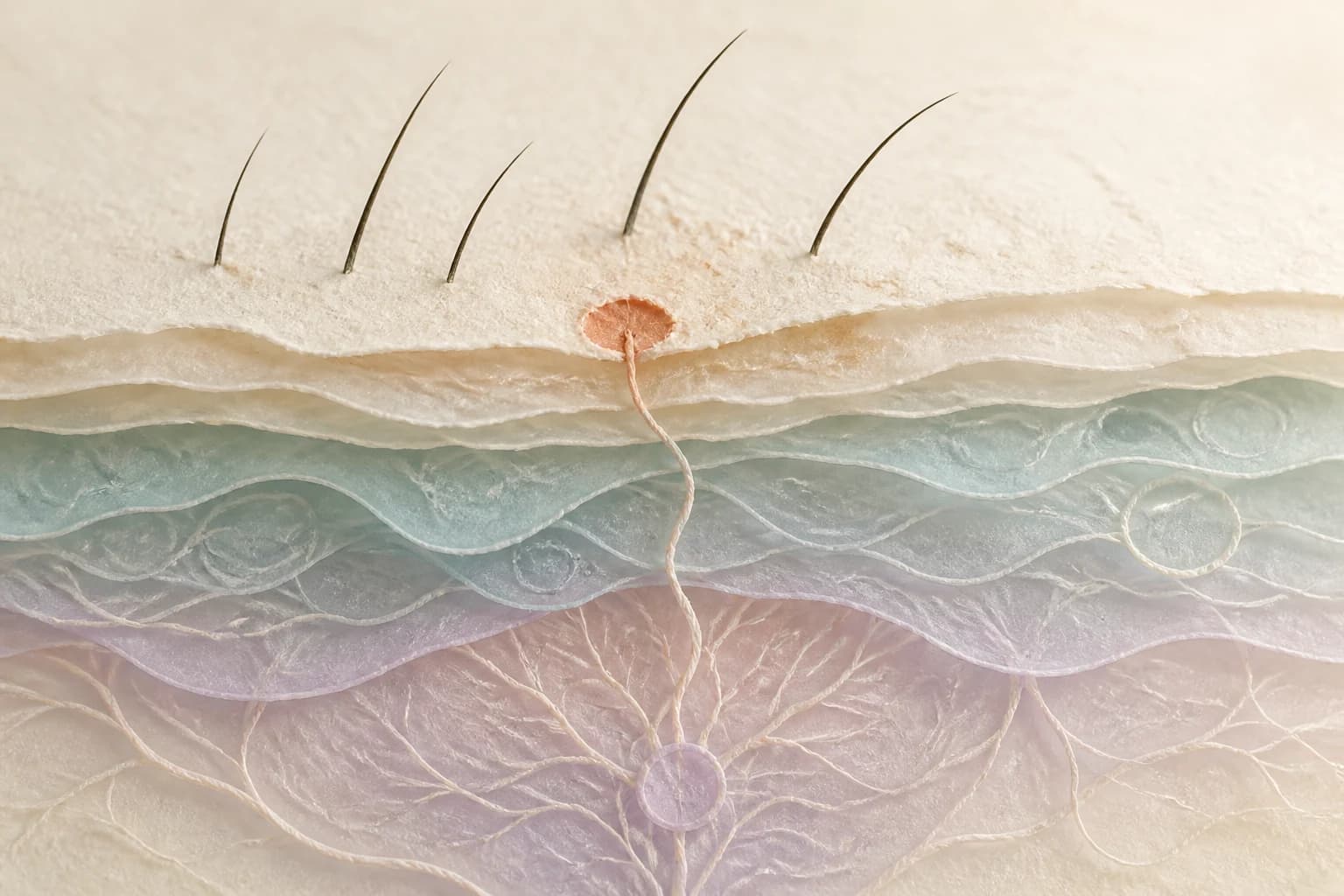
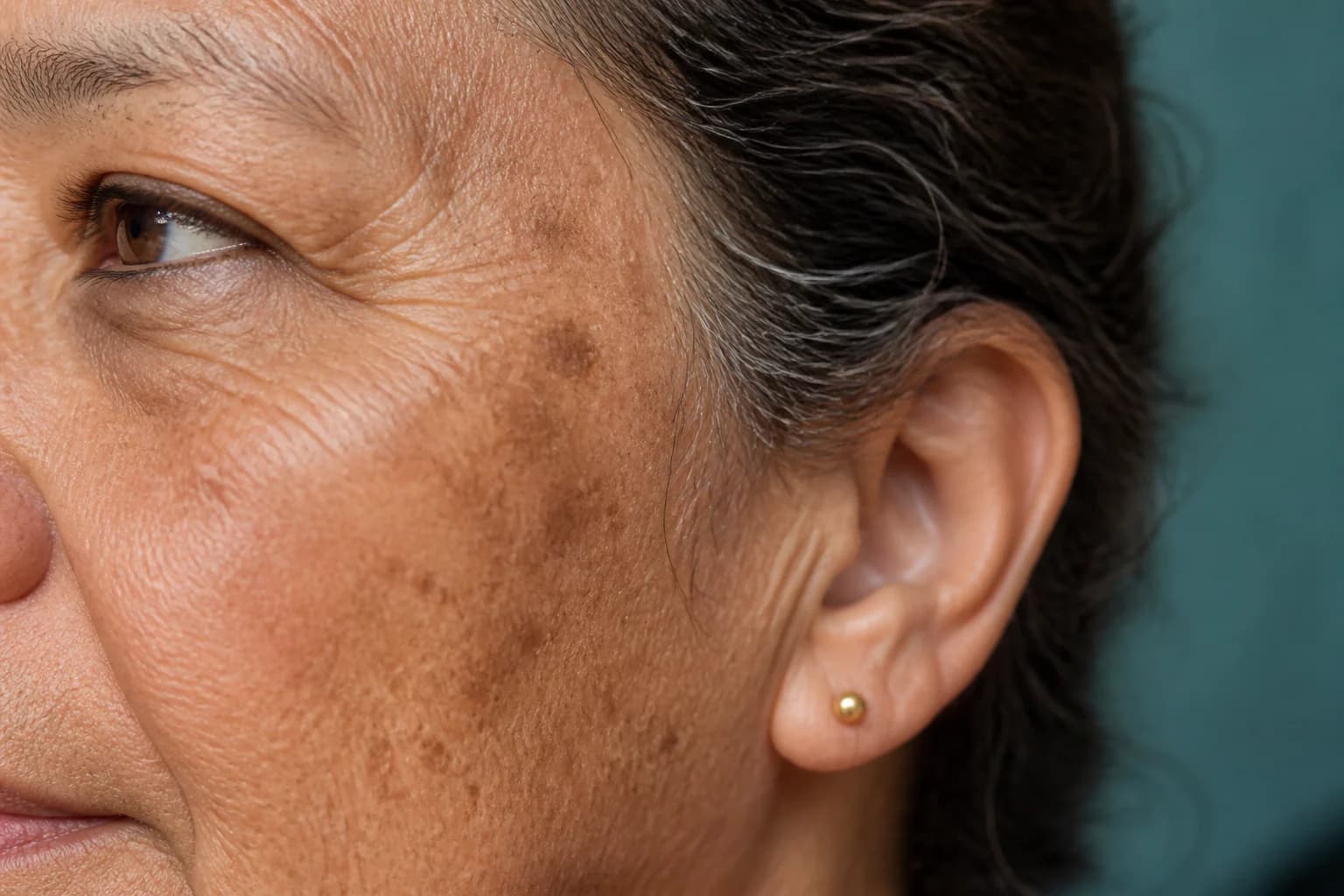
Mottled pigment, coarse texture, or elastosis on sun-exposed skin
Randomized evidence supports 24% less photoaging progression with daily broad-spectrum sunscreen over 4.5 years.
Compare exposed with protected skin, review UV and tanning history, and examine the skin directly.
Photodamage does not estimate whole-body age.
Evidence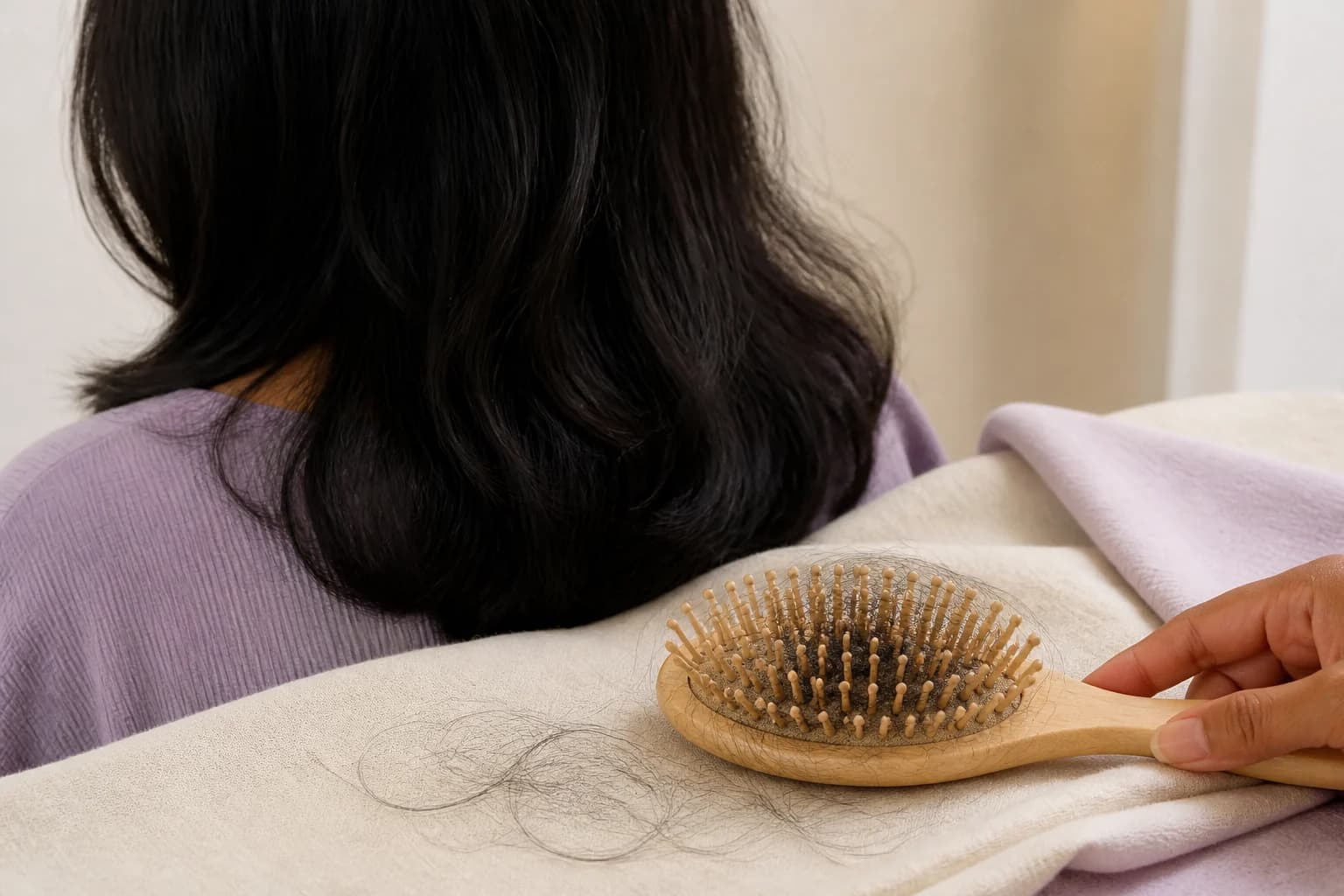
Sudden diffuse hair shedding
Diffuse shedding often becomes noticeable a few months after a physiologic stressor.
Work backward two to three months through illness, surgery, birth, rapid weight loss, stress, medications, nutrition, and the scalp examination.
Patchy loss, scarring, inflammation, or persistent shedding needs a different workup.
Evidence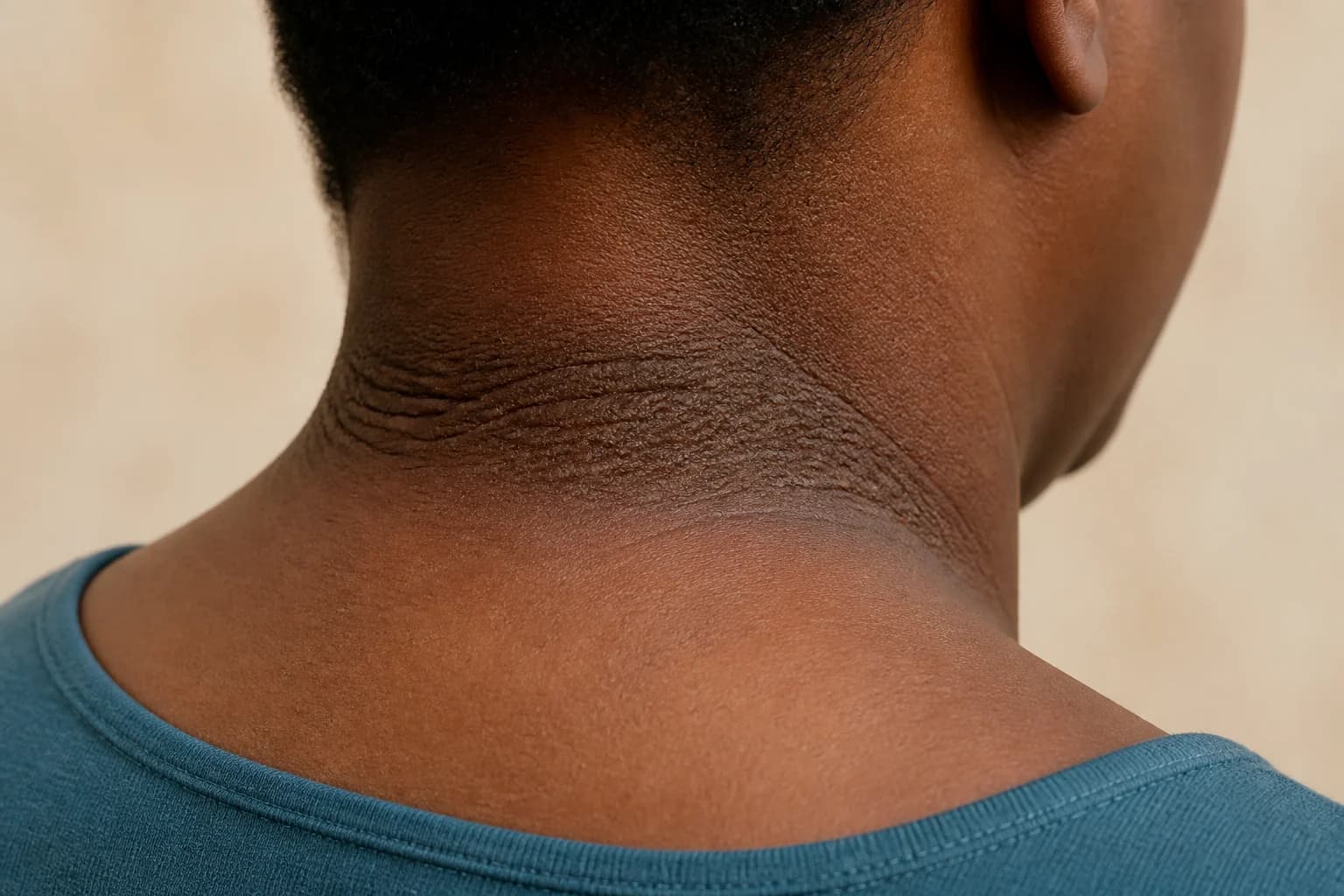
Velvety thickening and darkening at the neck or folds
A 2026 systematic review assessed acanthosis nigricans as a marker for metabolic syndrome in adults.
Confirm the skin finding, then review blood pressure, waist, glucose or HbA1c, lipids, medications, and PCOS context when relevant.
Appearance alone cannot diagnose diabetes or insulin resistance.
Evidence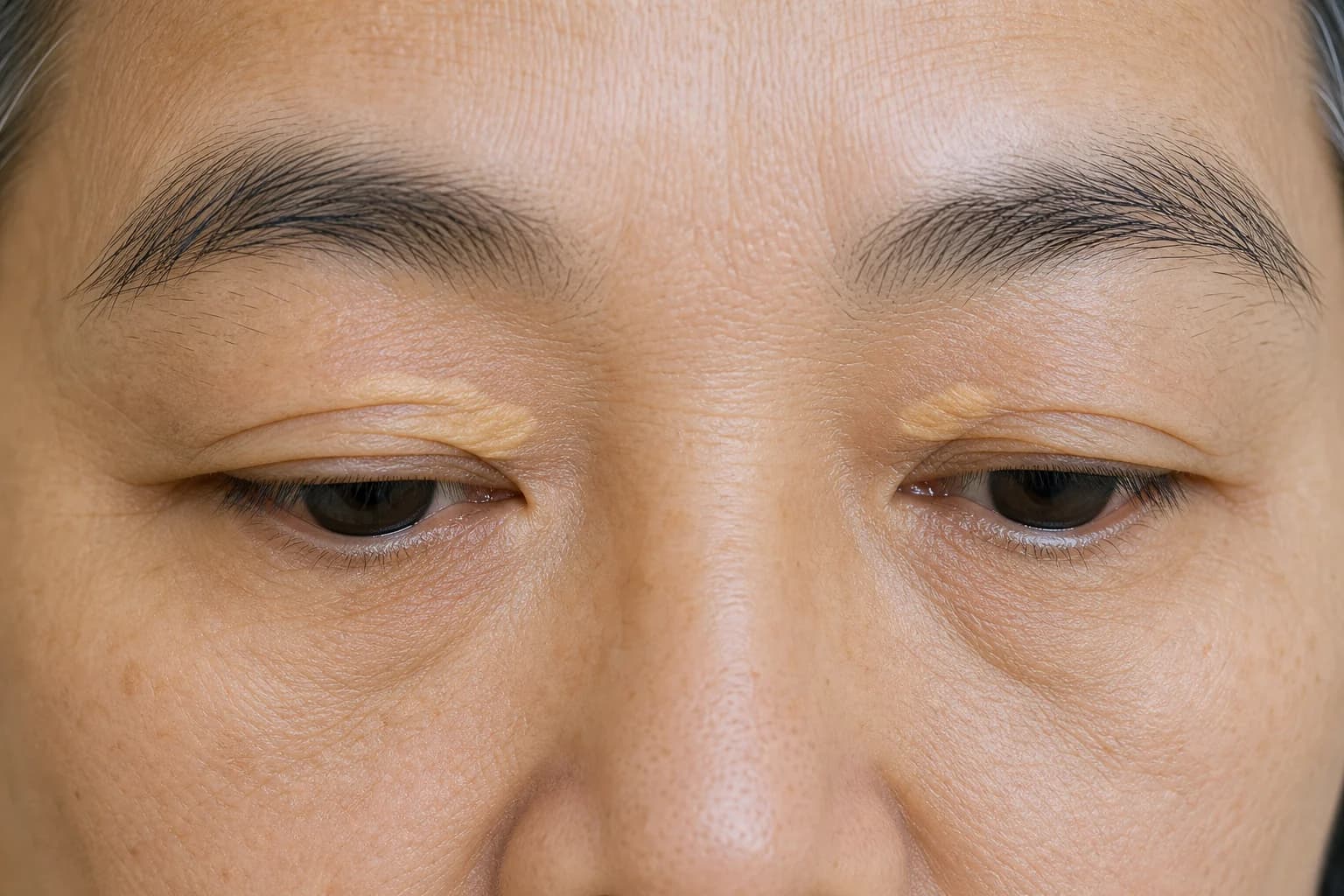
Xanthelasma
In 12,745 adults, adjusted hazard ratios were 1.48 for myocardial infarction, 1.39 for ischemic heart disease, and 1.14 for death.
Review lipids, ApoB when useful, blood pressure, glycemia, smoking, and family history.
Removal changes appearance; it has not been shown to remove the associated vascular risk.
Evidence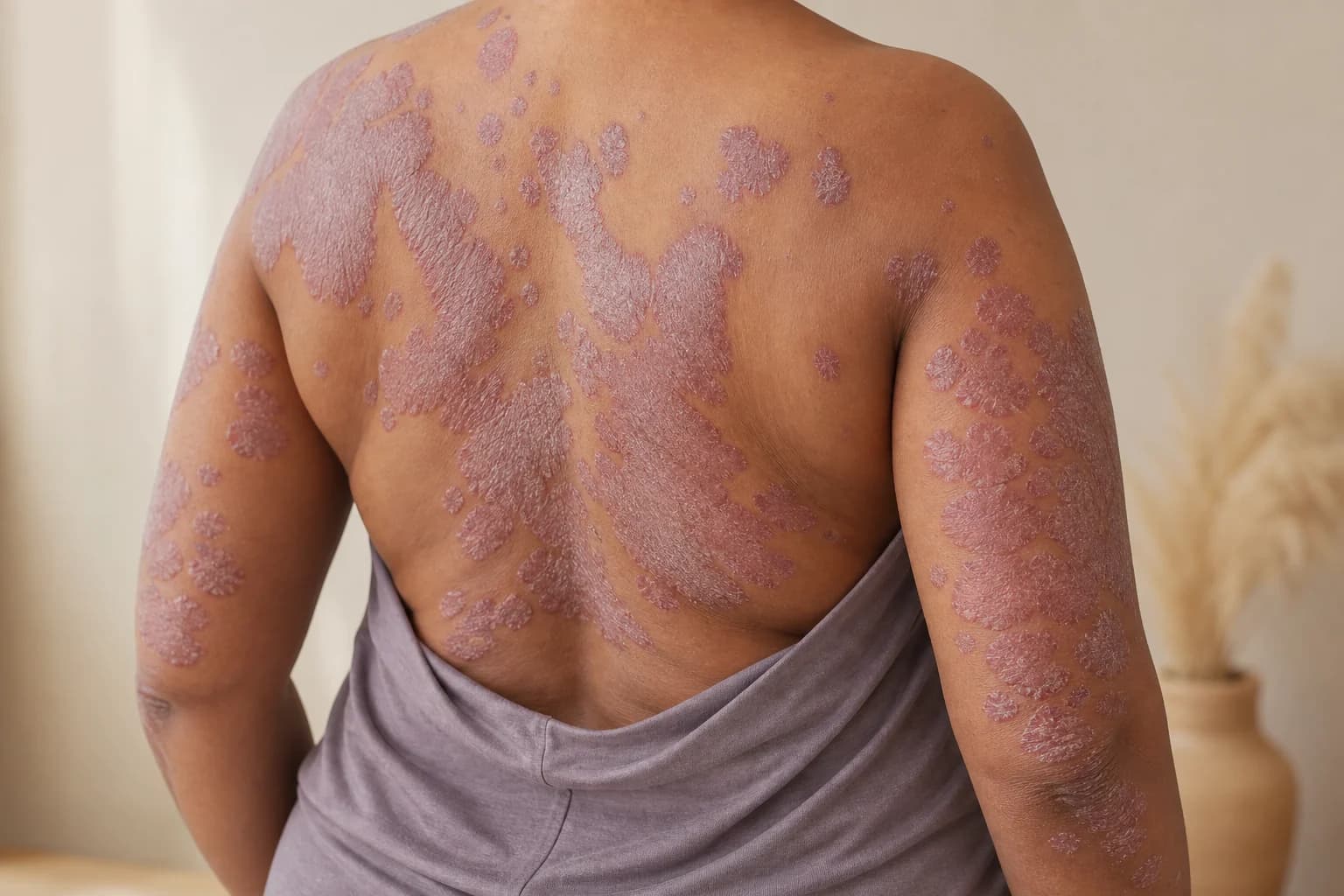
Psoriasis affecting more than 10% of body surface area
In a population cohort, more than 10% body-surface-area involvement was associated with an adjusted 1.79 hazard ratio for death.
Quantify severity, review cardiometabolic risk, and coordinate skin and primary-care ownership.
The mortality association is observational and does not prove that one treatment changes that risk.
EvidenceThe five-step rule from the talk.
- 01
Damage
Name the finding and map its distribution.
- 02
Repair
Check healing, shedding, recurrence, and recovery.
- 03
Function
Ask what changed in strength, mobility, or reserve.
- 04
Confirm
Use the direct examination or measure that tests the claim.
- 05
Follow
Assign an owner and a date for reassessment.
What to bring to an appointment.
- Your baseline, the exact start date, symptoms, and rate of change.
- Where the change appears and whether it is local, diffuse, symmetric, or spreading.
- Recent fever, illness, surgery, birth, rapid weight change, or major stress.
- Medications, supplements, hormones, exposures, and treatments.
- Changes in healing, strength, walking, exercise tolerance, or recovery.
Make the photo timeline usable.
55.1%
of 2,915 submitted images were useful
5.56×
higher odds when the image was in focus
- Same lighting, angle, and distance.
- One context view and one close view.
- Clear focus; add scale when useful.
- Date, symptoms, and treatment context.
Do not send medical images through ordinary email or social messages. Use the secure route given by the responsible clinical team.
What should be measured next?
If the claim is local skin disease
Examination, distribution, severity, dermoscopy, culture, microscopy, or biopsy when indicated.
If the claim is metabolic risk
Blood pressure, waist, glucose or HbA1c, lipids or ApoB, kidney function, and established risk assessment as indicated.
If the claim is a hair trigger
Timing, scalp examination, medications, diet and weight change, then targeted CBC, ferritin, thyroid, or other testing when the history supports it.
If the claim is aging reserve
A repeatable gait, chair-rise or SPPB, standardized grip strength, walking or aerobic capacity, and recovery over time.
Questions people ask about skin, hair, and health.
Can your skin and hair reveal your overall health?
Sometimes, but the useful signal is usually narrow. Photodamage can record cumulative UV exposure; sudden diffuse shedding can follow a physiologic stressor; acanthosis can raise concern for insulin resistance; and xanthelasma or extensive psoriasis can justify broader risk review. None of these findings measures whole-body biological age or establishes a diagnosis by appearance alone.
Does looking older mean you are biologically older?
No validated clinical test converts appearance into whole-body biological age. In 1,826 Danish twins aged 70 or older, perceived age carried population-level survival information, but it did not identify the mechanism or produce a reliable individual age score.
Do wrinkles, gray hair, or baldness predict lifespan?
Not after accounting for age in the Copenhagen City Heart Study. During 16 years of follow-up with 3,939 deaths, the degree of hair graying, baldness, and facial wrinkling did not predict a shorter lifespan.
Can sudden hair shedding signal illness or stress?
Yes. Excessive diffuse shedding can begin a few months after fever, illness, surgery, childbirth, rapid weight loss, major stress, or a medication change. The timing is often more useful than the hair's appearance. Patchy loss, scalp inflammation, scarring, or persistent shedding needs a different evaluation.
What skin changes can be linked to insulin resistance or cardiovascular risk?
Velvety thickening and darkening at the neck or folds can raise concern for acanthosis nigricans and insulin resistance. Xanthelasma has been associated with myocardial infarction and ischemic heart disease in a large cohort. Both findings require confirmation and broader risk assessment; neither proves disease on its own.
What is skin autofluorescence, and should I get it tested?
Skin autofluorescence is a device-based optical proxy for some fluorescent glycation-related compounds in skin. In 72,880 adults, higher values were associated with incident diabetes, cardiovascular disease, and mortality. The evidence is observational and device- and population-specific, and there is no proof that routine consumer testing improves decisions or outcomes.
Which skin or hair changes should be evaluated promptly?
Seek direct assessment for a changing lesion, infected or nonhealing wound, sudden patchy or scarring hair loss, new scalp inflammation, rapid unexplained change, or a visible finding accompanied by systemic symptoms. This guide should not delay urgent or in-person care.
How should I photograph a skin or hair change?
Use the same lighting, angle, distance, and background; include one context view and one focused close view; add scale when appropriate; record the date and treatment context; and use the secure route provided by the clinical team. A photo without history or examination is not a diagnosis.
References
Primary studies, later reviews, and professional standards used in the talk and this guide.
- 01Christensen et al. Perceived age as clinically useful biomarker of ageing. BMJ. 2009.
- 02Hughes et al. Sunscreen and prevention of skin aging. Ann Intern Med. 2013.
- 03van Waateringe et al. Skin autofluorescence and cardiometabolic outcomes. Diabetologia. 2019.
- 04Schnohr et al. Longevity and gray hair, baldness, and facial wrinkles. J Gerontol A. 1998.
- 05Boersma et al. Skin autofluorescence and cause-specific mortality. Sci Rep. 2024.
- 06Pascual-Morena et al. Skin autofluorescence and cardiovascular outcomes: meta-analysis. Clin Res Cardiol. 2025.
- 07Christoffersen et al. Xanthelasma and ischemic vascular disease. BMJ. 2011.
- 08Noe et al. Objective measures of psoriasis severity predict mortality. J Invest Dermatol. 2018.
- 09Guralnik et al. Short Physical Performance Battery and later outcomes. J Gerontol. 1994.
- 10Studenski et al. Gait speed and survival in older adults. JAMA. 2011.
- 11Roberts et al. Standardized grip-strength measurement. Age Ageing. 2011.
- 12Katragadda et al. Technique standards for skin-lesion imaging. JAMA Dermatol. 2017.
- 13Jiang et al. Usefulness of patient-submitted teledermatology images. JAMA Dermatol. 2022.
- 14Saade et al. Teledermatology diagnostic accuracy by image-acquisition method. Int J Telemed Appl. 2025.
- 15Martyin et al. Diagnostic accuracy of teledermatology: systematic review. Front Med. 2026.
- 16American Academy of Dermatology. Teledermatology standards.
- 17American Academy of Dermatology. Hair loss or excessive hair shedding?
- 18Morrow et al. Acanthosis nigricans as a marker for metabolic syndrome: systematic review. J Am Acad Dermatol. 2026.
For health founders
Build care people can follow.
The CareCore Stack covers clinical judgment, product decisions, and running a health business.