What Poor Sleep Does to Your Body
Adults generally need at least 7 hours of sleep. One bad night is usually recoverable. Repeated poor sleep is different: it can make cravings, glucose control, blood pressure, immune response, and training recovery harder.
Threshold
Less than 7 hours is a red flag for adults. The repeated pattern matters more than one ugly night.
Mechanism
Sleep affects appetite, insulin sensitivity, blood pressure, immune response, and recovery at the same time.
First move
Start with timing, caffeine, alcohol, and apnea risk before supplements or sleep-stage scores.
Interactive physiology map
What your sleep score misses.
A bad night happens. The question is whether short, broken, or irregular sleep is now showing up in appetite, glucose, blood pressure, immune response, or recovery.
How to read it
Scroll. The map follows the section you’re reading.
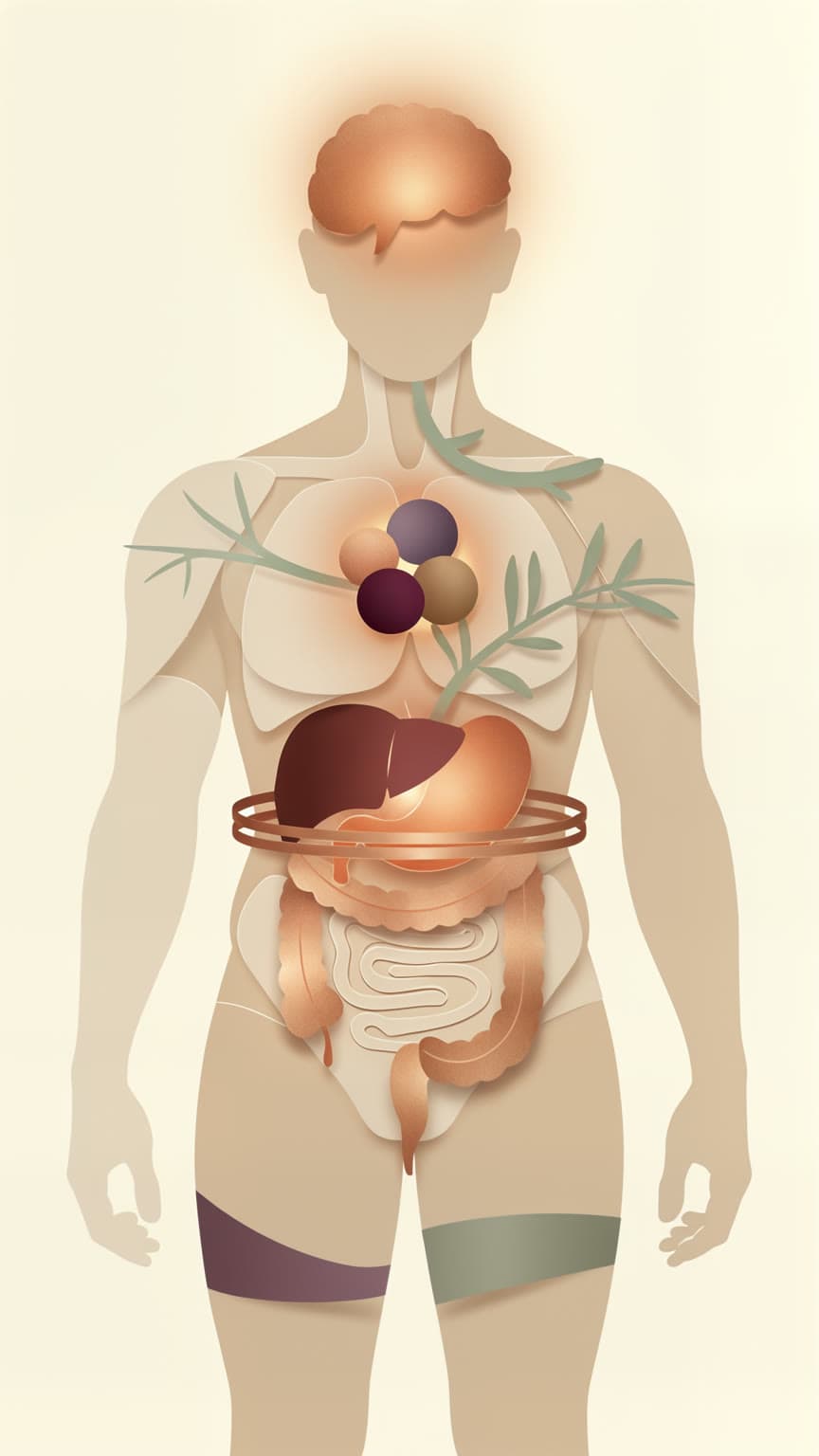
Active system
Brain
Attention and impulse control
After a short night, it is harder to pause before snacks, scrolling, or another easy reward. Plans made yesterday take more effort today.
What you may notice
Cravings, irritability, extra scrolling or snacking, less patience.
What to check first
Watch for the pattern: short night, harder decisions later.
Sleep-restriction studies show more hunger and food desire. Hormone findings vary, but the practical signal is simple: appetite can get harder to regulate.
What you may notice
Bigger portions, late-night hunger, stronger pull toward snack foods.
What to check first
If cravings spike after short sleep, fix sleep timing, caffeine, and alcohol before blaming willpower.
Sleep restriction can impair insulin sensitivity. In one six-week study in women, fasting insulin and HOMA-IR worsened without meaningful fat gain.
What you may notice
Higher fasting glucose or insulin, bigger spikes after familiar meals, afternoon crashes.
What to check first
Look at sleep timing, alcohol, late meals, stress, and apnea risk before over-reading one CGM trace.
Short sleep is linked with higher cardiovascular risk and can raise sympathetic activity. In real life, the clue may be higher resting heart rate, lower HRV, or more volatile blood pressure.
What you may notice
Wired-but-tired mornings, higher resting heart rate, lower overnight HRV, more BP volatility.
What to check first
Trend HR, HRV, BP, alcohol, late exercise, and apnea symptoms together. Do not let one wearable score run the plan.
A 2023 meta-analysis linked objectively short sleep around vaccination with lower antibody response. That does not mean one rough night breaks immunity. It means sleep belongs in the context.
What you may notice
More illness after stacked short nights can be a clue, not a diagnosis.
What to check first
Protect sleep around vaccines, travel, high-stress weeks, and hard training blocks.
Poor sleep narrows the gap between normal stress and overload. The same workout can feel harder, soreness can last longer, and pain can feel louder.
What you may notice
More soreness, lower motivation, worse workouts, lower libido, bigger crash after the same workload.
What to check first
If performance dips, check sleep timing, alcohol, late meals, late intensity, and total recovery load before buying another supplement.
The short answer
One bad night can make tomorrow harder: stronger hunger, messier glucose, more reactive blood pressure, thinner attention, less recovery. That is physiology, not a character flaw.
The clinical question is whether short, irregular, or fragmented sleep has become the default, and whether apnea, alcohol, late caffeine, stress, pain, menopause symptoms, shift work, or medication effects are part of it.
Framesleep is basic physiology, not a wellness trophy.
Thresholdmost adults need at least 7 hours.
First passwake time, morning light, caffeine, alcohol, apnea symptoms, and context before devices.
Check these before another sleep tool
Most people jump to a device, supplement, or sleep-stage score. I would start with the variables that actually change physiology: wake time, light, caffeine, alcohol, late meals, late exercise, snoring or gasping, pain, stress, and medication timing.
Wearables can help if they make the pattern clearer. Resting heart rate and HRV trends are usually more useful than one proprietary sleep score. Sleep-stage estimates are rough. Do not treat one low deep-sleep number as proof that your brain failed to recover.
Sleep signal priority order
Duration and regularity
- Why it matters
- Short and irregular sleep can stress multiple systems.
- How to use it
- Track bedtime, wake time, and actual sleep opportunity before interpreting anything else.
Apnea symptoms
- Why it matters
- Snoring, gasping, morning headaches, and resistant BP can indicate a treatable sleep-breathing disorder.
- How to use it
- Escalate to clinical evaluation instead of self-optimizing around it.
Resting HR and HRV trend
- Why it matters
- Usually more useful than most sleep-stage estimates.
- How to use it
- Use weekly trends, not single-night drama.
Glucose and BP context
- Why it matters
- Sleep loss can worsen insulin sensitivity and blood-pressure control.
- How to use it
- Check when symptoms, risk, or repeated patterns make the result actionable.
| Signal | Why it matters | How to use it |
|---|---|---|
| Duration and regularity | Short and irregular sleep can stress multiple systems. | Track bedtime, wake time, and actual sleep opportunity before interpreting anything else. |
| Apnea symptoms | Snoring, gasping, morning headaches, and resistant BP can indicate a treatable sleep-breathing disorder. | Escalate to clinical evaluation instead of self-optimizing around it. |
| Resting HR and HRV trend | Usually more useful than most sleep-stage estimates. | Use weekly trends, not single-night drama. |
| Glucose and BP context | Sleep loss can worsen insulin sensitivity and blood-pressure control. | Check when symptoms, risk, or repeated patterns make the result actionable. |
This is education, not personal medical advice. Escalate symptoms that suggest sleep apnea, dangerous sleepiness, severe insomnia, arrhythmia, or uncontrolled blood pressure.
What not to overclaim
Sleep is powerful enough that it does not need hype. One bad night does not cause diabetes, heart disease, immune failure, or fat gain. Repeated poor sleep can push risk in the wrong direction, especially when apnea, depression, pain, alcohol, shift work, medications, or chronic illness are in the mix.
If sleep is repeatedly short or broken, the body has less margin for nutrition, exercise, attention, and prevention. That is the point worth acting on.
Do not sayone bad night ruins your metabolism.
Do sayrepeated short sleep can impair insulin sensitivity in human studies.
Do not saya wearable deep-sleep score proves brain damage.
Do sayuse wearable trends only if they help you make better decisions.
How I’d decide
Who it’s for
Adults who want a practical explanation for cravings, glucose, BP, mood, training quality, or recovery after poor sleep without turning sleep into another perfection project.
Who should skip it
Do not use this page to self-diagnose sleep apnea, insomnia, depression, perimenopause symptoms, medication side effects, or chronic pain. If you snore, wake gasping, have severe daytime sleepiness, or cannot function, treat this as a clinical problem.
Measure before / after
Start with sleep duration, wake-time regularity, daytime sleepiness, snoring or apnea symptoms, alcohol, caffeine timing, late meals, late exercise, BP, resting heart rate, HRV trend if useful, glucose markers when relevant, and mood or craving patterns.
What I’d do first
I would start with wake time, morning light, caffeine cutoff, alcohol, exercise timing, and apnea screening. If that does not explain the pattern, I would look at glucose, BP, resting heart rate, HRV trend, medications, pain, stress, and menopause-related symptoms.
What would change my mind
I would stop optimizing and escalate quickly if poor sleep comes with witnessed apneas, gasping, resistant hypertension, arrhythmia symptoms, severe mood changes, dangerous sleepiness, shift-work impairment, or persistent insomnia.
Frequently Asked Questions
What does poor sleep do to your body?
Poor sleep can affect the brain, appetite, glucose control, blood pressure, immune response, and recovery. A single bad night is usually recoverable. Repeated short or fragmented sleep is the pattern that deserves attention.
How many hours of sleep do adults need?
Most adults need at least 7 hours of sleep per day. Some people vary, but consistently sleeping under 7 hours is a useful red flag, especially with daytime sleepiness, cravings, high blood pressure, glucose issues, or poor recovery.
Can poor sleep affect blood sugar?
Yes. Randomized human studies show that sleep restriction can impair insulin sensitivity. If glucose markers worsen, sleep timing, regularity, apnea risk, alcohol, late meals, and stress belong in the workup.
Should I trust my sleep score?
Use sleep scores as rough trend tools, not diagnostic truth. Resting heart rate, HRV trend, sleep duration, wake-time consistency, symptoms, and blood pressure are usually more useful than one proprietary score.
References & citations
- 1.CDC FastStats: Sleep in Adults
- 2.Chronic Insufficient Sleep in Women Impairs Insulin Sensitivity Independent of Adiposity Changes
- 3.A single night of sleep deprivation increases ghrelin levels and feelings of hunger in normal-weight healthy men
- 4.Sleep Duration and Cardiovascular Disease Risk: Epidemiologic and Experimental Evidence
- 5.The impact of sleep deprivation on food desire in the human brain
- 6.A meta-analysis of the associations between insufficient sleep duration and antibody response to vaccination
Related Guides
Turn the guide into the right next decision.
If this page raised a real clinical question, start with the practice details. If you are still learning, get the weekly letter. If you are comparing tests, use the testing hub before buying another panel.