What a rigorous mouse study changed about my supplement choices.

Hi there,
I cut a longevity supplement from my protocol this week.
Not because of cost or inconvenience (although the pill fatigue is real). New data changed my mind.
Astaxanthin was a winner in the longevity research program in 2023.
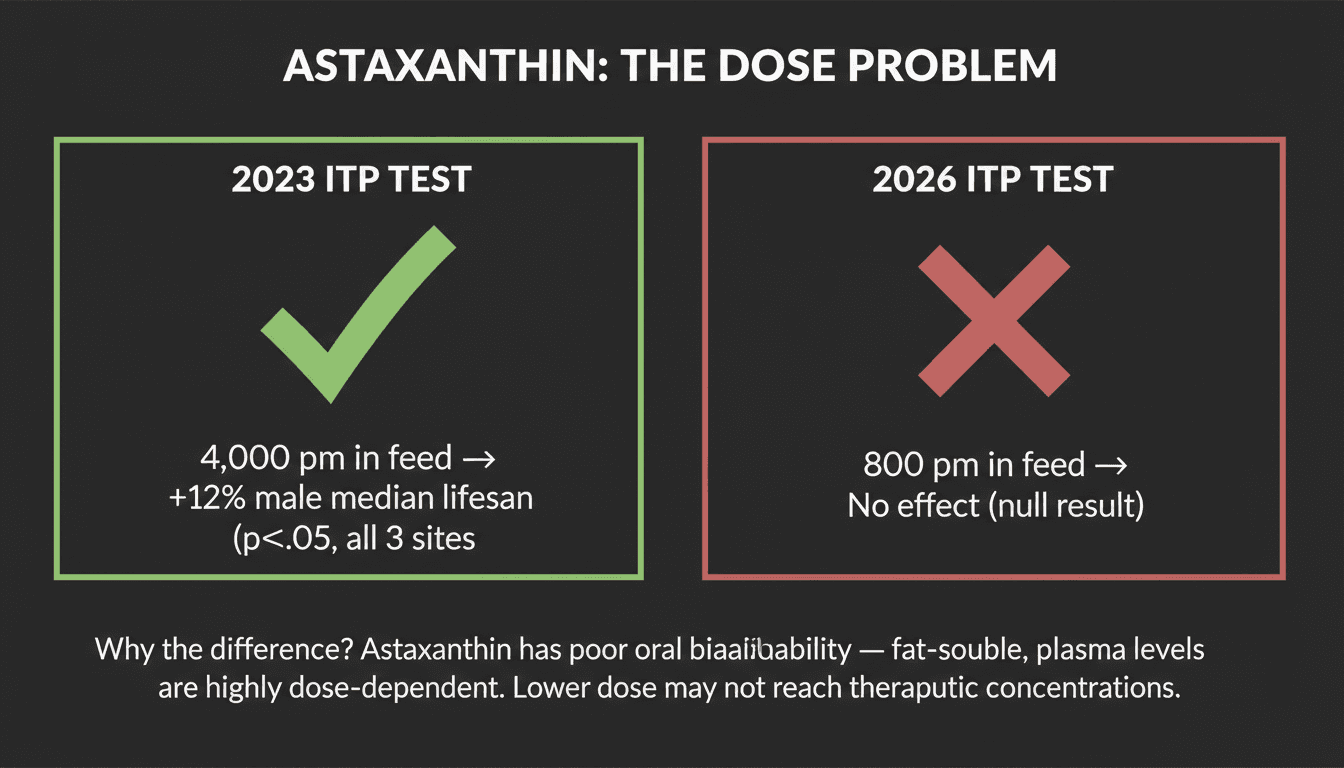
The 2026 ITP report tested astaxanthin at a lower dose in another cohort of the same mouse cross. It did not find a lifespan benefit.
When the evidence changes, I reconsider what I take.
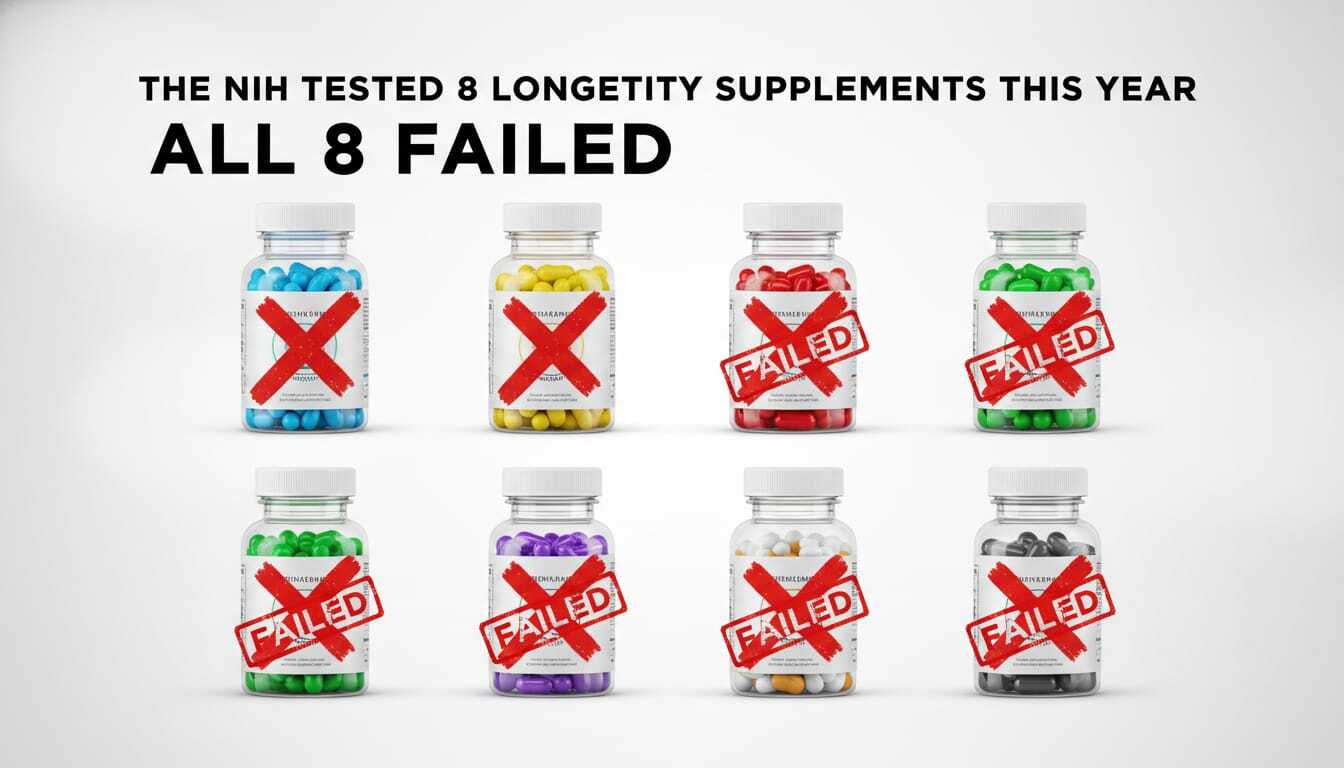
The 2026 ITP paper reported no lifespan increase from eight compounds or combinations in genetically diverse mice. Several were drugs, not supplements. Those findings inform my confidence; they do not settle the human question.
I use four questions to decide what stays in my protocol.
TL;DR
THE DEEP DIVE
Why I pay attention to the ITP
Every week, a new study reports that some compound "extends lifespan in mice." The paper gets tweeted, the Reddit threads erupt, supplement companies update their websites, usually within 48 hours, almost always before anyone checks the methodology.
A result from one mouse strain at one lab still needs replication.
The Interventions Testing Program is built to fix exactly that problem.
The NIA-funded program uses three sites and genetically heterogeneous UM-HET3 mice. That improves the test beyond a single strain and site, though four parental strains do not reproduce human genetic diversity.
Since 2002, the ITP has tested over 60 compounds. Fifteen have significantly extended lifespan.
The program deliberately tests plausible candidates. Many do not extend lifespan under the conditions tested; dose, delivery, timing, and sex can affect that result.
Examples with positive ITP results
The NIA’s current list includes rapamycin, acarbose, glycine, canagliflozin, several estrogen-related agents, and other drugs and compounds. These are mouse lifespan results, often limited by sex, dose, or schedule. They don’t tell us what people should take.
The pattern is hard to ignore: mostly metabolic interventions (glucose regulation, mTOR inhibition, AMPK activation), not antioxidants. Mostly male-specific effects (ikr). The antioxidant hypothesis: the one driving most supplement marketing, has not performed well in ITP testing.
AKG: Two Strikes
Alpha-ketoglutarate has a compelling backstory.
It's a TCA cycle intermediate: a molecule your cells already use in energy metabolism and amino acid synthesis. Supplementing was theorized to "mimic caloric restriction," a mechanism with strong longevity data across species.
The original Buck Institute study found lifespan effects in one mouse model. Human clock claims largely trace to a retrospective 42-person study of Rejuvant, a formulation containing calcium AKG and vitamins, after about seven months. Without a placebo group, it could not isolate AKG’s effect or show that people aged more slowly.
The ITP has now tested AKG in two separate cohorts:
First cohort (2020 data): Treatment started at 18 months, deliberately matching the age protocol in the original Buck Institute positive study. Null result.
Second cohort (2022 data): Treatment started at 7 months: an earlier intervention to test whether timing was the confounder. Also null.
Two different protocols. Both null.
A null mouse lifespan result does not rule out every possible effect. But the small, uncontrolled human clock study is also too weak to establish clinical benefit.
AKG has not shown that it extends human life. A lower methylation-age estimate in an uncontrolled study is not enough to recommend it for longevity.
Astaxanthin is more complicated
An earlier ITP report, published online in December 2023, found a 12% increase in median male lifespan with a 4,000-ppm target dose. It did not show a significant late-life survival benefit.
I started taking it, partially because of this study and mostly because of some other studies (below).
The 2026 report found no lifespan increase with the lower-dose astaxanthin protocols.
The later study used an 800-ppm target dose, versus 4,000 ppm in the earlier positive study, with different starting ages. Those changes could matter, but the experiment does not prove which difference caused the null result.
The authors note that these null results do not rule out effects under other conditions. That leaves a question open; it does not answer it.
So is astaxanthin dead? No. Is the 2023 finding invalidated? Also no.
A rigorous mouse study found a benefit. Another, at a lower dose and different starting ages, found none. We still don’t know whether dose, absorption, timing, or something else explains the difference.
Human studies report changes in some inflammatory and oxidative-stress markers. A 2026 review included 15 human studies, not necessarily 15 comparable randomized trials. They don’t tell us whether people live longer, have fewer cardiovascular events, or think better.
Changes in markers and longer life are different claims. I'm less confident about the longevity case, and I have way too many supplements. So I’m dropping this one.
THE CEO'S PROTOCOL
What I take, what I cut, and the questions I use when evidence changes.
My Protocol
I'm not going to give you a 40-item supplement list. I'm going to tell you what I'm actually optimistic about, what I cut personally and for most of my patients, and where I'm genuinely uncertain.
What I'm most optimistic about:
Rapamycin. The repeated mouse findings make me optimistic. I’m a believer, but human lifespan benefit remains unproved. It is a prescription drug with real risks and contraindications; any off-label use needs a clinician and a monitoring plan.
Acarbose. I think this drug gets too little attention in longevity discussions. It treats diabetes and has positive mouse lifespan data, especially in males. I want to see it studied further. We don’t yet know whether it extends life in healthy adults.
Where I'm not convinced:
SGLT2 inhibitors have established uses in diabetes, heart failure, and chronic kidney disease. My uncertainty here concerns off-label longevity use in people without those indications. Male-mouse canagliflozin results do not establish a benefit only for men, or a lack of benefit for women. Genital infections and other risks still belong in each clinical decision.
GLP-1 receptor agonists have proven benefits for specific conditions and populations. They have not established a general human lifespan effect. Their dosing and delivery also differ from the ITP’s usual dietary approach.
My actual framework:
When considering a longevity intervention, I ask: what do animal studies show? What do human trials show? Does the mechanism make sense? What are the risks, cost, and burden? Astaxanthin’s mixed mouse results lowered my confidence. AKG’s human clock findings remain weak. Rapamycin’s mouse record is strong, but it still has unanswered human questions.
Truthfully, it is difficult to practice medicine in the longevity field, because the answers are simply not all there. I'm holding some things despite incomplete data, because mechanism is strong and safety profile is acceptable. That's a judgment call, not a formula. I'll always communicate my why to anyone who is curious.
What the ITP Can't Test
The ITP has limits that matter when you interpret a null result.
The ITP generally tests interventions that can be delivered in the diet. Delivery and stability can limit which agents it can study. That constraint does not tell us whether an excluded treatment works.
The ITP can study some intermittent schedules: it has tested cycling and short-duration rapamycin. Those schedules still do not capture every human regimen or injection protocol.
Lifespan is central to the program, but Stage II can also examine health, pathology, and mechanism. A lifespan null does not mean every measure of health failed.
Use it as the best pre-clinical filter we have. Don't use it as a clinical verdict. A null in ITP mice doesn't close the human question, but it should raise your bar for confidence.
KEY TAKEAWAYS
The ITP is a strong, multi-site mouse research program; human outcomes still matter.
The 2026 report found no lifespan gain under the tested conditions.
Astaxanthin’s dose and timing differed from the earlier positive study. Why the results differ remains uncertain.
AKG’s mouse nulls and weak human clock data warrant caution.
Sex-specific mouse results cannot determine treatment benefit by sex in humans.
QUICK HITS
🧬 Repeated aging-clock measurements may add prediction. A longitudinal Nature Aging study linked clock changes to mortality risk. That doesn’t yet tell us how often to retest or whether acting on a commercial score improves health.
💊 Early senolytic trial data. Rubedo announced preliminary Phase 1 findings for RLS-1496 in skin conditions. Those are early safety findings reported by the company. They don’t yet show that it reverses skin aging or works as a treatment.
💉 Semaglutide did not slow early symptomatic Alzheimer’s progression. The two evoke trials found no superiority over placebo at two years. That tests treatment of existing disease, not whether GLP-1 drugs prevent dementia.
🐭 More remaining life for old male mice: An August 2025 study of oxytocin plus an ALK5 inhibitor reported about 74% longer mean remaining life. Total median lifespan rose 14%. The treated female mice did not live longer. Human benefit is unknown.
🧬 Cancer can distort an aging clock: A targeted blood-methylation model developed and validated in Chinese cohorts estimated age, but cancer samples, especially leukemia, could produce much older scores. The study did not validate an early-cancer screening test.
😔 Depression and aging-clock estimates were linked. The study reported an association across several clocks. It does not show that treating depression slows biological aging. Depression deserves treatment for its direct harms, regardless of a clock score.
🩸 ApoB targets may be worth the cost: A JAMA computer simulation coauthored by Allan Sniderman found ApoB-guided treatment intensification could be cost-effective for statin-eligible US adults without atherosclerotic cardiovascular disease. The finding depends on the model’s goals, prices and assumptions; it doesn’t settle individual testing decisions.
🏋️ Fitness and methylation-based risk estimates. An Aging Cell study linked higher cardiorespiratory fitness with lower DNA-methylation risk scores. The association does not show that fitness edited those scores or prevented every disease.
THE BIGGER PICTURE
The ITP 2026 results are easy to misread as a failure of longevity science. They're the opposite.
A positive study at one dose and a null at another leave several explanations open. Dose and bioavailability may matter, but these results alone do not establish a narrow therapeutic window.
When discussing supplements, I want to see strong preclinical evidence, human trial data, mechanism plausibility, safety profile, and a clear-eyed calculation of supplement burden versus demonstrated benefit. Not influencer endorsements. Not single-lab mouse studies that haven't been replicated. Not cellular mechanisms that sound plausible but haven't cleared a rigorous screen.
We need more ITP-style programs. More multi-site replication. More transparency when findings don't hold.
We need studies that can change our minds.
FROM THE LONGEVITY SHOW ⭐
Rational Biohacking: A Framework for Scientific Longevity and Wellness
The framework I use to decide what stays in my protocol, and what gets cut, is something I've built over years of clinical practice and digging into the evidence. I broke it down in full in this episode. If the ITP data made you want a cleaner system for evaluating longevity claims, this is the place to start. The four questions I described above? This is where they came from.
Also, as a bonus because I’m so excited about it, I just dropped Part 2 of our Lipid Series on YouTube. I spent a long time researching and planning this one, so excited to hear your thoughts. Check it out here!
Keep learning,
Hillary Lin, MD
Co-Founder & CEO, Curator
Was this useful? Forward The Longevity Letter to someone who would benefit.
Want to turn your wellness brand into a full-service health destination? Learn about Curator's platform or Get Started Here
Events listed when this issue was published
👱🏻♀️👩🏻🦰👩🏻👧🏽👧🏾 Livelong Women's Health Summit, April 17-18, 2026, SF, CA. Delighted to join 50 other thought leaders in speaking on women's longevity! (Code HILLARY50 for $50 off)
🎤
The Aging Code Summit, May 26-27, Mosesian Center for the Arts, Greater Boston. I'll be on the clinician panel discussing how aging research translates into real interventions.
Dry Eye Society of the Americas, July 10-11, 2026, NYC. Dry eyes are a growing problem and symptom of deeper issues tied to longevity. For clinicians - join us.
Reader-supported partners
These links and offers appeared in the original issue. Terms may have changed.
🐟 Seatopia, sustainable, sashimi-grade seafood checked for microplastics and mercury (Code HILLARYLINMD for $20 off)
⏱️ Timeline: Urolithin A, studied for muscle mitochondrial biology. The original partner offer may have changed.
🍺 ZBiotics: a probiotic designed to break down acetaldehyde in the gut. It has not shown that drinking promotes longevity.
🧲 CoreViva, whole-body MRI screening for early disease detection (Code CARECORE for $200 off)
🧠 NeuroAgeTx, the most comprehensive brain aging package at up to 61% off for Longevity Letter readers
🧬 GlycanAge: a glycan-based immune-aging estimate. It does not diagnose aging or prove that a plan reverses it.
Advanced diagnostics
Want to know your biological age? Check out our testing page for epigenetic age testing with physician consultation, including TruDiagnostic TruAge and SystemAge by Generation Lab.
Have a question or topic you want covered? Reply to this email.
Was this forwarded to you? Subscribe here to get The Longevity Letter every week.
The Longevity Letter
A weekly read on tests, treatment, and claims.
New issues look at what the evidence supports, what is premature, and what to skip.