Last year's miracle longevity supplement just got destroyed
Hillary Lin, MD·
The everyday drink that adds years to your life, plus more longevity news from June 1-7
The Longevity Letter
Longevity & Health Insights
Hi there,
Quick reminder—you're receiving this because you signed up for Elevate X's waitlist or Dr. Lin's newsletter. You can unsubscribe at any time. To set up your Curator healthspace or learn more, fill out our quick onboarding form or email us at hello@gocarecore.com.
Why we threw away a perfectly good name
Elevate X was great—it represented how we were elevating brands, but Curator gets to the core of what we are: the clinical backbone that allows creators and brands to launch licensed digital healthspaces in days, not years. Think Shopify for healthcare, but with actual doctors behind personalized protocols and prescriptions.
Doctato was nixed by unanimous vote (outside the co-founders) for some reason.
Other names we considered: Extend Clinic, Mediful, Healthramp, and Doctato. We still really like Doctato and it's now used for all our internal testing 😂
Now for this week's longevity news...
Subscribe or share our newsletter for longevity updates
Your coffee habit is extending your life, but you're probably doing it wrong
New research on 46,332 Americans just revealed yet another result showing coffee drinkers live better, longer. Nurses drinking 2-3 cups daily had 17% lower mortality risk—but only if they kept added sugar under 2.5g per cup and saturated fat under 1g per cup.
Here's the problem: the average American coffee drinker adds 4g of sugar per cup (38% over the threshold) and loads it with cream. The study found zero mortality benefits for sweetened coffee, making your daily Starbucks order worthless from a longevity perspective.
I'm always wary of observational studies, especially nutritional ones, but there's been quite a lot of data consistently showing health benefits of coffee so there's probably some truth to coffee's link to health and longevity. Theories cite caffeine protection of brain cells and polyphenols that lower inflammation and prevent cell damage.
Your new protocol: Drink 2-3 cups of black coffee daily, or limit yourself to 1 teaspoon of sugar and a splash of milk per cup (or use skim/low sugar milk like Fairlife). If you can't handle black coffee, try adding cinnamon or vanilla extract instead of sugar. The 17% mortality reduction disappears the moment you turn your coffee into dessert.
Exposé on a pricey longevity supplement
The taurine supplement craze that had everyone from biohackers to Bryan Johnson popping $50/mo pills was based on faulty science. New research shows taurine levels don't decline with age—they actually increase in this study's older monkeys and mice (except the male mice cohort). The earlier studies that launched their inclusion in energy drinks like Red Bull and Monster? They didn't account for population genetics and baseline health differences.
So supplementing extra taurine may do nothing (or worse, it can drive cancer growth).
Damage control: If you're taking taurine supplements, don't panic—but you can probably cancel your subscribe and save. Instead, eat shellfish, dark meat chicken, or turkey twice a week. Your body makes what it needs, and real food provides the cofactors supplements miss.
Would you buy a $200 blood test that knows how you'll die?
Stanford and Harvard researchers are now using $400-800 blood tests that grade your organs like a school report card—and catch diseases before symptoms appear. One vial of blood reveals how well your heart, kidneys, and liver are aging compared to your chronological age.
Vero (Stanford spinout) plans consumer beta testing this year at $200 per test. 😲 This is gold—the data predicts cancer risk, dementia likelihood, and even how your gut will handle that glass of wine.
Your move: These proteomics reports beat genetic tests for personalized medicine because they capture how your lifestyle actually changes your biology. Can't wait for Vero? Generation Lab offers organ aging tests now for $500—pricey, but available.
Move over island resorts—Millionaires want data-driven longevity vacations
In 2025 more than ever before, there's a fundamental shift: "alpha executives" are ditching tropical vacations for data-driven optimization retreats. Think less poolside mojitos, more metabolic testing and biohacking protocols.
This isn't just changing how resorts operate—it's creating a new premium market segment that pays for measurable health improvements over relaxation. For service providers, this represents clients willing to spend serious money on evidence-based interventions.
Book Your Trip: Check out "Sustainable Weight Loss Week" at Michelin awarded Canyon Ranch or get a treatment from their secret spa menu right now (stays from $1500 a night—😱).
Subscribe or share our newsletter for longevity updates
Does looking better count as longevity—or even health?
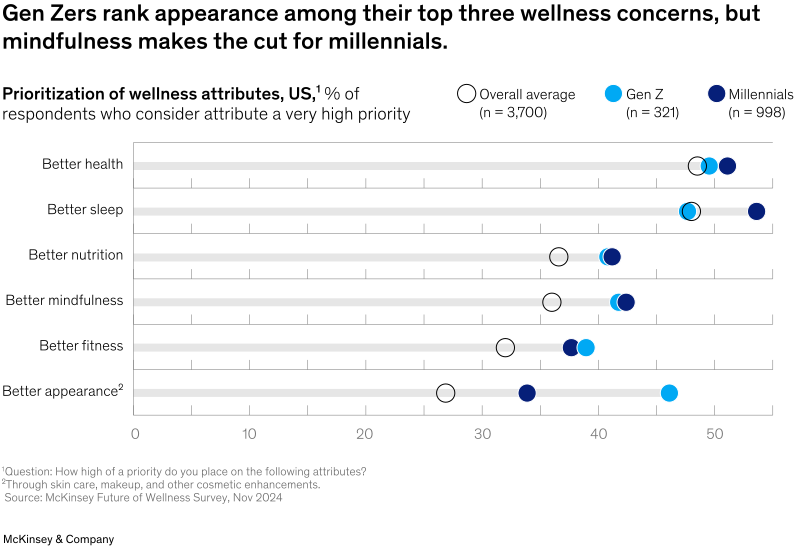
New McKinsey research on 9,000+ consumers reveals a shocking spending pattern: Gen Z and millennials represent just 36% of US adults but drive 41% of the $500 billion annual wellness market. Meanwhile, consumers 58+ make up 35% of the population but only 28% of wellness spending.
Some interesting findings: Gen Z bumped "better appearance" from their #6 wellness priority in 2023 to #3 in 2024, while millennials still care more just getting some sleep. Apparently, looking good for TikTok now ranks higher than actual mental health for the youngest adults.
Meet the "maximalist optimizers": Gen Z and Millennials are the digitally obsessed consumers who buy everything from IV drips to beauty apps, conduct PhD-level research before each purchase, then immediately post about it on social media. And since they're apparently bankrolling the wellness (and longevity) industry, pro tip is to cater to their needs for science, data, and effect on their selfie.
That's a wrap on this week's longevity intel. Forward to a colleague who needs to age backwards, and remember: the best time to start optimizing your healthspan was 20 years ago. The second best time is now.